

The Bush Theatre rolled out the orange, yes, orange, carpet last night for the world premiere of Emma Dennis-Edwards’ ‘Not Your Superwoman.’ Starring Golda Rosheuvel and Letitia Wright as mother and daughter duo Joyce and Erica, the show examines their relationship following the death of their family matriarch, Elaine. Both journey to their ancestral homeland of Guyana to spread Elaine’s ashes, and discover a lot about themselves, and their history, along the way. Rosheuvel and Wright offer powerful performances in a show that viscerally addresses loss, trauma, identity and healing – whilst laying a smackdown on the ‘strong black woman’ trope.
The box-like stage juts out to the audience, meaning that, wherever you sit, you get a unique angle of the drama. It is intimate, as if we are looking at the characters through a shop window, they are observed on all sides. What struck me at the beginning of the show was Jai Morjaria’s lighting design. The lighting is like a character in itself, and although both Joyce and Erica only really interact with luggage and chairs, we know where they are through the lighting. The airport is a cold blue, but when we reach Guyana, we are bathed in a warming glow of orange, one that mirrors the marketing campaign and the theatre’s lovely orange carpet. Gion Ricardo Green’s projections also add to this, allowing us to see what the characters see, making for an immersive and involving experience. As Erica discovers her past, we do too.

Rosheuvel and Wright turn in powerful and punchy performances as Joyce and Erica. The script requires them to be funny, argumentative, angered, devastated… the list continues, and you can see that they are constantly giving 110 percent. Both are particularly impressive when they alter their physicality to portray Elaine and younger versions of themselves.
Rosheuvel’s Joyce is very much the ‘fun mum,’ often leaving daughter Erica to pick up the pieces. As the play progresses, Erica forces her mother to confront her past, while Erica tries to make peace with it in order to face her future. Due to the intimate nature of the story, and their performances, it is easy for the audience to relate to. We all have lost somebody, we all have complicated family relationships, we all have a past.
The play interrogates the type of multigenerational trauma that people of colour in particular face. Although there is a longing to go back to the past, and ancestral homeland as symbolised by Erica, Joyce knows that going back into the past will bring up all kinds of pain. Elaine knew this too. It is something that I have realised as I have grown up, immigrant parents’ priority was to provide, provide, provide. To them, hugs and kisses was not going to keep a roof over their children’s heads. The play does well to empathise and validate both women, it is Erica’s right to want to know more about her past, but we do recognise the pain that it will bring up for Joyce. The show encourages the audience to see the situation from both points of view and says things that are often left unsaid in POC families. Neither women are at fault, both women are just dealing with the hand that they were dealt. And how do they deal with this hand? Become Superwoman.
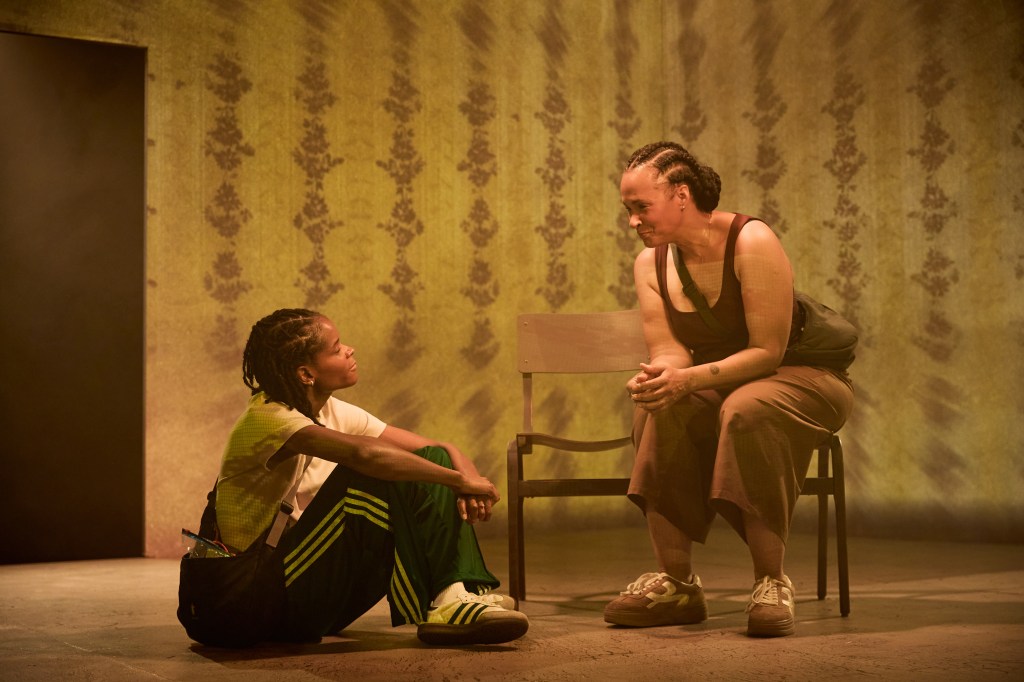
Although Joyce and Erica spend the entirety of the play together on this trip to Guyana, they still cannot quite be honest with each other, instead quietly telling themselves to keep it together. This is where the show takes down the ‘strong black woman trope,’ – it shows us the consequences of what it is like to live with that label. Majority of the audience were people of colour, and, although the story may tread on familiar territory, I could see how they were affected by the piece. People laughed, and people cried. You know that it has been a good night at the theatre when you are watching something that has such a profound effect on the audience.
Erica and Joyce also reach some kind of conclusion. I was concerned that the show might be open ended, however, we get a tender embrace. It is not a soliloquy, but it is just as, if not more, cathartic. In a hopeful moment they both express to each other that they will try to better understand one another. This is enough to know that there is hope, and where there is hope, there is potential progress for these women, and for all those that share their story.
4/5
Thanks for reading!
Tickets are currently sold out, more information can be found here: https://www.bushtheatre.co.uk/event/not-your-superwoman/
Photography by Richard Lakos
 Khambay's Words, Words, Words