

The Bush Theatre’s latest offering, ‘After Sunday,’ certainly presents an intriguing concept. Written by Bush alumni Sophia Griffin and directed by Corey Campbell, the play revolves around Ty (Corey Weekes), Daniel (Darrel Bailey) and Leroy (David Webber), who are part of a Caribbean cookery group led by occupational therapist Naomi (Aimée Powell). The group is held at a secure hospital, and whilst the characters all have different experiences and outlooks, they are drawn together by their love of good food, and its healing power. The show takes time to peel away the layers of each character to present an insightful portrayal of men’s mental health, and trauma. Although at times it can be argued that the fly on the wall style does mean that the show is light on plot, and a touch of spice, the dynamic and raw performances of the cast definitely leave you hungry for more.
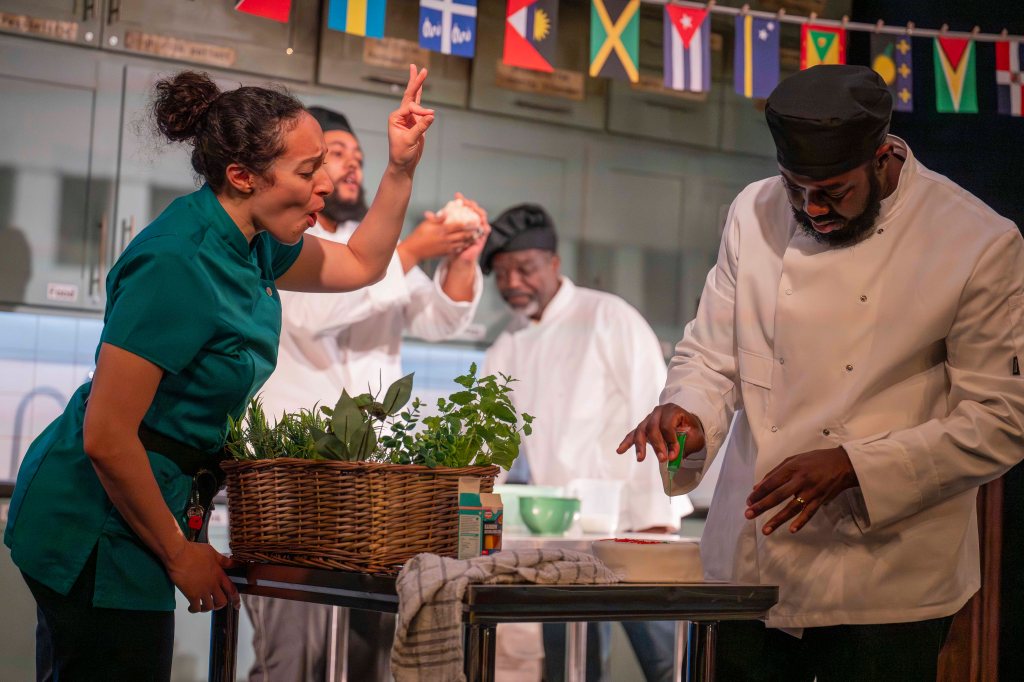
The world building and atmosphere of the show is immediately impressive. The set has been meticulously crafted by Claire Winfield, and the finer details help to immerse you into the story. This set is also fully functioning. Hands are washed, dumplings are fried, so not only are the cast remembering their dialogue, but they are quite literally cooking up a storm in front of you. Again, the smells, particularly the hot oil, push the outside world further away allowing you to focus in on the action in front of you. Ali Hunter’s lighting design and XANA’s score also help to emphasise and contrast the moments of high drama and the moments of calm. I am somewhat mixed though about the intense, slow movements performed by the characters in-between scenes. They seemed an unnecessary distraction in a show that primarily presents a naturalistic tone.
Speaking of, the show is more character driven that plot driven. It does not solely crescendo at the end like most shows, but peaks and troughs through its runtime. This can lead to the glossing over of some potentially interesting ideas. The play shows us with its characters and setting that it is a commentary on masculinity, but it fails to capitalise and deeply interrogate black masculinity for example. This kind of subtly is the result of the fly on the wall style, meaning that some ideas never quite come to the boil.

For me, Powell’s Naomi stands out. Balancing a tricky home life, and three tricky students, Powell is the anchor that the other three cast members swirl around. Each student requires different handling, which showcases Powell’s varied abilities. Her subtle shifts from joy to despair, and her outright rage towards her superiors are visceral and believable. Hot on her heels is Webber, who brings real depth to the conflicted Leroy, especially when he talks about his fractured relationship with his daughter.
Whilst the play may be thin on plot, and at times its movements a tad jarring, the cast ensure that ‘After Sunday’ is eminently watchable. Bolstered by its world building and ability to present believable characters, the show touches on a range of themes which provide plenty of food for thought.
3.5/5
Thanks for reading!
‘After Sunday’ is playing at the Bush Theatre until the 20th of December!
Tickets here: https://www.bushtheatre.co.uk/event/after-sunday/#book
Photography by Nicola Young
 Khambay's Words, Words, Words