
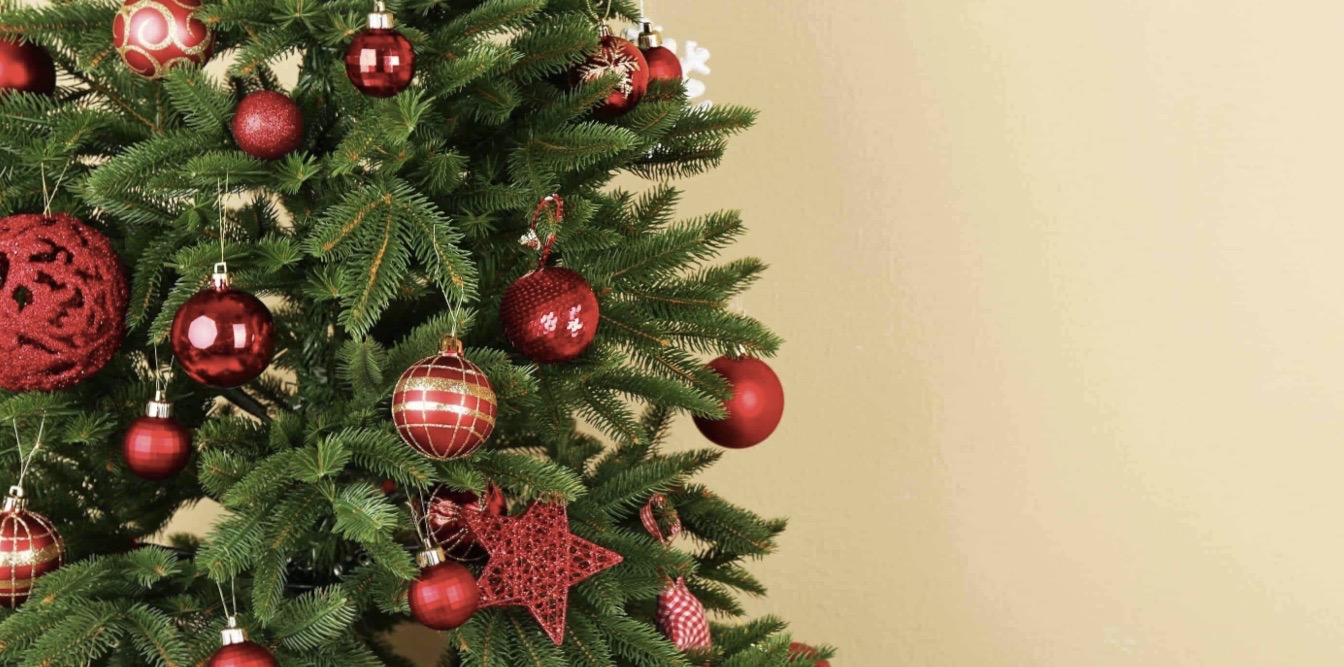
As soon as November hits, I’m sure that everybody begins seeing Christmas trees popping up all over the place! And then, before we know it, we are taking them all down again come January! Christmas trees are typically evergreen conifer, spruce or pine and are typically decorated with baubles, lights and tinsel. But where did this festive staple come from?
Before we get to the modern Christmas trees that we all know and love, lets cast our minds back a few hundred centuries. It was Pagan tradition to worship trees, a common practice for the Vikings and Saxons. They would decorate the house with evergreen at New Year to ward off evil spirits.
Jumping forward, Christmas trees popped up in the Medieval era. In Biblical terms, the tree that springs to mind is the Tree of Knowledge from Genesis, which is closely connected to Adam and Eve. Eve was tricked by Satan to eat from the Tree of Knowledge which constituted the Fall of Man, bringing sin into the world. However, the Tree of Knowledge was not the only tree around, there was the Tree of Life. This tree is representative of personal growth and interconnectedness.
It was this tree that was referenced in the Medieval Plays historically staged on Christmas Eve, the name day of Adam and Eve. In these plays, the tree was decorated with apples, a reference to the Forbidden Fruit, and white wafers, a reference to the Eucharist. The tree then found its way into people’s homes, like the Nativity scene, with the apples being replaced by baubles.
Modern Christmas trees can be traced back to Central Europe, including Estonia and Latvia. It seems that we have the Protestant Reformers to thank for the evolution of the Christmas tree, as records indicate that a Christmas tree was present in the Cathedral of Strasbourg in 1539. Protestant Reformer Martin Luther is credited as the first person to have had added lights to an evergreen tree, and this early Renaissance time period matches the first dated illustration of a Christmas tree in 1576.
Fast forwarding to the Victorian era, the idea of decorating homes and churches WITH evergreens was common practice, the idea of decorating an individual, small tree did not really come to fruition until 1800, where Queen Charlotte introduced a decorated Christmas tree at a party for her children. Most people associate the decorated Christmas trees with Queen Victoria and her husband Prince Albert. Before their marriage in 1841, Christmas trees were more of a royal family tradition, but following various advertisements in magazines, they were adopted by wealthier middle-class families and the tradition widely spread. Coupled with Charles Dickens, the Victorians are typically credited with creating the Christmas that we know today.
I hope you all had a good Christmas, and a Happy New Year 2026!
Thanks for reading!
 Khambay's Words, Words, Words