The Changing Nature of Witchcraft in the 16th and 17th Centuries

Up to 40,000 people died during the early modern witch craze.[1] Throughout this time, peoples’ understanding of witches frequently changed, in relation to ‘maleficia’ and the nature of witches, their gender, the law, the Reformation and the scepticism that emerged during the Enlightenment.

It was originally believed that witches practised magic, or ‘maleficia,’ on their own.[2] Theologians and lawyers later argued that the ‘essence’ of witchcraft was a pact with the Devil.[3] Now this was worse than previous ideas, and more ludicrous, as people were accused of secretly meeting with the Devil at sabbaths.[4] At these ceremonies, they would take part in rituals that mocked the mass.[5] Through this activity, witches directly threatened Christendom, as they took part in heretical practices.[6] It was the Devil who brought all sin into the world, and Protestants and Catholics sought to eliminate Him.[7] The Devil’s collusion with ordinary people meant that the threat of evil was ever present. See the change? First witches work alone, now they work with the Devil. This belief led to an increase in witch hunts, as peoples’ fear of witches, as well as the religious desire to stamp out evil, increased.

At first, people thought that only females could be witches… sorry ladies. This belief was solidified in Heinrich Kramer’s ‘Malleus Maleficarum,’ published in 1486, which claimed that women were more ‘impressionable’ to the charms of the Devil, due to their ‘fragile feminine sex.’[8] 75 to 85 percent of tried witches were female, which showcases the impact of Kramer’s work.[9] Apparently women were better placed to carry out the Devil’s work, as their domestic roles in the household, such as cooks and midwives, gave them the opportunity to poison food and kill new-born babies.[10] Accused women also did not conform to the ideal image of passive womanhood.[11] The indictment against Scot Margaret Lidster in 1662 described her as a ‘witch, a charmer and a libber,’ the latter term being a negative connotation of a ‘liberated’ and free-thinking woman.’[12] The idea that witches were women rebelling against the social norm was a prominent one throughout the sixteenth century.

However, Christina Larner argued that ‘witchcraft was not sex specific,’ and this was true.[13] Catholics and Protestants acknowledged this, attributing the idea to the gender ambiguous Biblical quote ‘Thou shalt not suffer a witch to live.’[14] Catholics noted that men could also attend sabbaths, explaining the rise in male prosecution for witchcraft.[15] Rita Voltmer demonstrates this change when examining the Rhine-Meuse region in the city of Trier, where a number of boys claimed to have attended the sabbath in order to provide musical entertainment.[16] This reflected the male role in village life, as men were pipers and drummers.[17] The idea spread due to the publication of the ‘Tractatus de confessionibus maleficorum et sagarum,’ in 1589 by Peter Binsfield, the Bishop of Trier, which recounted his experience of the Rhine-Meuse trials.[18] This led to an increase of printed images and etchings of men at the sabbath, meaning that both men and women could be convicted and condemned.[19] That’s some twisted gender equality right there. Male witches also inverted the traditional values of their sex, as women did, as the former were depicted as poor husbands and father figures, and effeminate, weak men.[20]  The Devil suddenly became even more scary as he could corrupt men and women.

Changes to the law allowed a greater rise in witch hunts, as people became more willing to accuse their peers of witchcraft.[21] Traditionally witches were tried using accusatorial methods, in which the suspect knew the accuser.[22] Said accuser could also be put on trial if the charges against the defendant turned out to be a load of rubbish.[23] As the accuser was at risk, people were unwilling to testify. The inquisitorial method remedied this.[24] Under this system, only legal authorities could bring cases forward, and a confession was required before execution, which was usually obtained through intense questioning and torture.[25] Torture was used as lawyers did not believe that witches acted alone, and they sought the names of their conspirators.[26] This change encouraged people to accuse others, as those doing the accusing were not put at risk themselves.[27] The inquisitorial Method led to more deaths in Germany, Switzerland and Southern France.[28] So, changes in the law meant big changes for witches.

Differing Catholic and Protestant ideas too affected witches. Protestants believed that the threat of the Devil was forever present.[29] They downplayed the threat of witchcraft and instead were more concerned with the threat of Satan.[30] Catholics agreed about the threat of the Devil, but some believed that the rival Protestant faith was itself the work of the Devil, leading to accusations of heresy and heightened religious conflict.[31] Catholics continued to persecute Protestants in order to purify the world of Satan’s heresy, and planned to do so internally by resisting temptation, and externally, by prosecuting witches and heretics.[32] Witch hunting was severe in places that harboured conflict between Catholics and Protestants, and especially affected religious minorities living on the boundaries of states with different religions, such as Germany and Scotland.[33] The world officially went nuts.

Scepticism and enlightened attitudes also played a role. Some witch hunts ended due to the ludicrous nature of the accusations, and the lack of proper evidence for witchcraft.[34] This was supported by peoples’ doubts over the existence of witchcraft, such as Johann Weyer and Reginald Scot.[35] This led to tighter controls being issued by the superior central courts, such as the Parlement of Paris.[36] The Parlement decreed that all witchcraft convictions needed judicial review, which was adopted in 1604.[37] With proper restrictions placed on witch trials, practices such as torture to obtain confessions were halted, leading to a decrease in prosecutions. The legal constraints made it harder for the authorities to obtain a guilty verdict. People stopped accusing others of witchcraft, believing that their case would be dismissed.[38] Therefore, cases declined… mainly because people started to engage their brains.

Religious ideas about the Devil too aided the decline of prosecutions. Leading Protestant thinkers, such as Luther and Calvin, maintained that God was sovereign and would always prevail against the Devil, as stated in the Bible.[39] Protestants took the Bible as the word of God, and discarded ideas that were not explicitly recorded in it as invalid.[40] The Bible did not mention Devil worship, and instead detailed how God actively restrains the Devil, which prompted Protestants to argue that witchcraft was not a threat.[41]

From gender to religion, law to scepticism, beliefs about witches and their nature changed frequently throughout the 16th and 17th centuries. It’s lucky that common sense prevailed and eventually led to the decline of witchcraft prosecutions.

Thanks for reading!

Stay safe, stay inside. Read something cheerful.


[1] T. Blanning, The Pursuit if Glory: Europe 1648-1815, (London 2008), pg. 464

[2] B. Levack, The Witch Hunt in Early Modern Europe, (London, 2006), pg. 8.

[3] M. Wiesner-Hanks, Early Modern Europe, 1450-1789, (London, 2013), pg. 434.

[4] Ibid., p. 434.

[5] Ibid., p. 434.

[6] Levack, The Witch Hunt in Early Modern Europe, p. 8.

[7] R. Scribner, ‘The Reformation, Popular Magic, and the “Disenchantment of the World”’, The Journal of Interdisciplinary History, 23 (1993), p. 479.

[8] Wiesner-Hanks, Early Modern Europe, 1450-1789, p. 434.

[9] Ibid., p. 433.

[10] Ibid., p. 433.

[11] Ibid., p. 437.

[12] Ibid., p. 437.

[13] A. Rowlands, ‘Witchcraft and Gender in Early Modern Europe’ in B. Levack (eds.) The Oxford Handbook of Witchcraft in Early Modern Europe and Colonial America (England, 2013), pp. 449-467, p. 453.

[14] Ibid., p. 455.

[15] Ibid., p. 455.

[16] Ibid., p. 455.

[17] Ibid., p. 456.

[18] Ibid., p. 456.

[19] Ibid., p. 456.

[20] Ibid., p. 457.

[21] Wiesner-Hanks, Early Modern Europe, 1450-1789, p. 434.

[22] Ibid., p. 434.

[23] Ibid., p. 434.

[24] Ibid., p. 434.

[25] Ibid., p. 434.

[26] Ibid., p. 434.

[27] Ibid., p. 434.

[29] Levack, The Witch Hunt in Early Modern Europe, p. 112.

[28] B. Levack, The Oxford Handbook of Witchcraft in Early Modern Europe and Colonial America, p. 473

[30] Ibid., p. 113.

[31] Ibid., p. 114.

[32] Ibid., p. 114.

[33] Ibid., p. 122.

[34] Wiesner-Hanks, Early Modern Europe, 1450-1789, p. 439.

[35] Ibid., p. 439.

[36] B. Levack, ‘The Decline of Witchcraft Prosecutions’ in D. Oldbridge (eds.) The Witchcraft Reader (London, 2008), pp. 341-348, p. 342.

[37] Ibid., p. 342.

[38] Wiesner-Hanks, Early Modern Europe, 1450-1789, p. 439.

[39] Levack, The Witch Hunt in Early Modern Europe, p. 128.

[40] Wiesner-Hanks, Early Modern Europe, 1450-1789, p. 129.

[41] Ibid., p. 129.

The Queer Displacement of Desire in ‘Frankenstein’ and ‘Dracula’

Today we navigate through the dangerously queer displacements of desire in ‘Frankenstein’ and ‘Dracula’! Before we start, some definitions:

‘Displacement’ originates from Freud and is defined as the unconscious ‘shifting of energy’ from one person to another, the ‘energy’ in question being desire. [1]

‘Queer’ refers to anything that opposes the dominant ideals that humanity is supposed to conform to.[2]

Victor Frankenstein’s creature and Dracula are therefore queer, as they subvert the conceptional ideals of humanity, being an artificially created monster and an undead vampire. I know, scary stuff.  The queer displacement of desire involves the subconscious, a lack of control, the invasion of the mind and body, the formation of a network of queer, non-heteronormative relationships and finally, death. Read on if you dare!

The queer displacement of desire first pops up via the subconscious in ‘Frankenstein.’ Victor Frankenstein’s established love for Elizabeth Lavenza is pitted against his desire to animate the creature. The queer displacement of Victor’s desire is first explained in Victor’s dream, in which, after kissing her, Elizabeth transforms into Victor’s mother, before he catches sight of the ‘miserable monster.’[3] In Victor’s subconscious mind, his desire for Elizabeth is displaced by his obsession with the creature. His kissing of Elizabeth offsets the events within the dream, creating an ideal image of heterosexual relations. This romantic gesture upholds heteronormative ideals, but quickly rejects them when the creature appears, as he becomes the object of Victor’s romantic desire. This relationship fully subverts heteronormativity, and is queer, as Victor appears to have romantic feelings for an artificially created being of the same gender. The shifting images in Victor’s dream directly correlate to the queer displacing of his desire, in favour of the creature. Haggarty validates this, arguing that queerly displaced desire raises questions about male homosexual desires.[4] Victor’s queer, non-heteronormative desire for the creature, displaces his desire for Elizabeth, as outlined by his subconscious mind. Victor cannot control this, suggesting that he cannot control the queer displacement of his desire. All in all, dreams are complicated and crazy things.

A lack of control in relation to the queer displacement of desire is also apparent for Jonathan Harker in ‘Dracula.’ Jonathan’s heterosexual desire for his fiancé Mina Murray is displaced in favour of the Brides of Dracula, which is displaced further by an encounter with Dracula himself, leading Maurice Hindle to assert that ambiguous desires drive the novel.[5]

Jonathan’s desire to marry Mina allows the reader to understand the magnitude of his displaced desire, as he finds himself thrilled and repulsed by the Brides of Dracula.[6] Jonathan describes that their teeth ‘shone like pearls against the ruby’ of their lips. The references to jewels suggest that their beauty is artificial, unnatural and downright creepy. Despite their queer appearance, Jonathan still has a ‘burning desire’ to be kissed by them, emphasising that his desire has fully shifted away from Mina in favour of the Brides.

Jonathan lacks control in this scenario as he takes the place of the female, as he ‘waited,’[7] and wanted, to be penetrated.[8] Jonathan refers to the Brides as animalistic, implying their role as predator and his as their prey.[9] His masculinity is fully subverted by the Brides, who adopt this masculinity by being sexually dominant. Jonathan instead displays a ‘feminine passivity’ towards them.[10] This example of ‘sexual inversion’ further emphasises the queer nature of Jonathan’s displaced desire, as he has entered into a relationship that has disrupted heteronormative gender roles, as the women are sexually dominant, and the male is submissive.[11] This is some real old fashioned thinking here.

Jonathan’s lack of control, and desire to be penetrated, is further explored by Dracula’s entrance. Dracula interrupts the Brides’ seduction of Jonathan by declaring that ‘this man belongs to me,’ taking full ownership and control of Jonathan.[12] At this point Jonathan loses control fully, as he falls ‘unconscious’ and is at the mercy of Dracula.[13] He later wakes up in his ‘own bed,’ to find that his ‘clothes were folded and laid on the bed.’[14] This implies that Jonathan was undressed by Dracula. It appears that Dracula’s claiming of Jonathan refers to Dracula’s sexual ownership of Jonathan, and control over his body. This hints at another queer displacement of desire that is non-heteronormative, due to the homoerotic undertones. Christopher Craft recognises the implication, arguing that Dracula’s penetration of another male is ‘threatened’ throughout the text.’[15] Craft’s use of ‘threatened’ implies that he recognises that no homosexual sex is explicitly stated, but also confirms that Craft believes this idea to be disruptive to the norm.

Mina too lacks control in her relationship with Dracula, and this results in the forced invasion of her mind. After forcing her to feed on him, Dracula declares that Mina shall come to his ‘call’ as he has forged a telepathic connection with her.  Dracula declares that Mina is now of his ‘flesh,’ implying that they are the same person, in a scenario that Hindle compares to ‘forced enslavement.’   As a result of her displaced desire, Mina’s mind is invaded by Dracula, allowing him to take full ownership of her, and enslave her. Dracula’s connections with Mina and Jonathan lead to a complicated network of queer, non-heteronormative relationships.

The pairing of Jonathan and Dracula, and Dracula’s assault of Mina leads to the development of a network of queer, non-heteronormative relationships. Mina is found with her face forced in Dracula’s ‘bosom,’ and her ‘white nightdress smeared with blood.’[16] We don’t know whether Jonathan and Mina have consummated their marriage, and her encounter with Dracula hints to this action, subverting her traditional union with her husband. Robert Tracy speculates that this scene represents consummation, as Dracula’s bite is seen to be penetrative and therefore sexual.[17] The white of Mina’s nightdress, which is representative of her purity, is stained by blood, a reference to the breaking of her hymen and loss of her virginity, creating an unholy union between herself and Dracula. Tracy recognises the queer nature of this, explaining that this ‘consummation’ creates a triangle that transcends and disrupts the loyalties of marriage, the bond between husband and wife.[18] Dracula’s encounters with Mina, and Jonathan, and the various queer displacing of the characters’ desires, disrupts the institution of marriage, creating a network of queer and non-heteronormative relationships. Similar networks are also formed in ‘Frankenstein,’ between Victor, the creature and Elizabeth, as outlined by Victor’s dream.

The network of queer, non-heteronormative relationships between Dracula, Jonathan and Mina are forged due to Dracula’s overpowering sexuality, which is an important aspect of the queer displacement of desire. Despite her distress, Mina notes that she ‘did not want to hinder’ Dracula, when he forced her to feed on him.[19] Here she changes from an unwilling to willing participant in this action, implying that Dracula unlocks her sexual desires, and that she indulges in them with him. Her desire for Jonathan is queerly displaced in favour of Dracula in this moment. Judith Weissman is unsurprised by this, citing Dracula’s unprecedented, unmatched sexual performance as the reason why Mina succumbs to him.[20] Such a union between a human and supernatural being is especially queer, as Mina is supposed to be one of ‘God’s women,’ a figure that would be antithetical to the ‘devilish’ Count.[21] [22] It appears that the overall sexiness of vampires is overpowering yet attractive to humans, as demonstrated by Jonathan’s encounter with the Brides, and Mina’s with Dracula… and apparently ‘Twilight.’ This is queer, as the satanic-like vampires are able to seduce even the purest of humanity, such as Mina. To varied extents, both Mina and Jonathan indulge and allow this unholy sexual union, emphasising the queer nature of their displaced desires.

Death is the outcome of the queer displacement of desire within the Gothic novel. Victor’s dream implies that he has created death instead of life, as after kissing Elizabeth, she becomes ‘livid with the hue of death.’[23] This foreshadows her death at Victor’s hands, as he has prioritised the creature over her. Haggarty too observes this, noting that Victor’s displaced desire for the creature and his neglect of Elizabeth leads to her death.[24] This is highlighted by Victor’s misinterpretation of the creature’s warning, that he shall be with Victor on his ‘wedding night.’ Victor rudely forgets that Elizabeth will too be present on their wedding night, as traditionally it is when the marriage is consummated. Duh. This supports the idea that Victor harbours homosexual feelings for the creature, as Victor chooses to delay the consummation of his marriage and pursue the creature instead. This implies that Victor’s desire has been fully displaced away from Elizabeth, leaving her vulnerable. Unsurprisingly, Elizabeth is later found ‘lifeless and inanimate.’ Elizabeth’s death is the result of Victor’s queerly displaced desire, and her demise frees Victor to pursue the creature for the rest of the novel. Elizabeth’s death is similar to that of Mina’s assault in ‘Dracula,’ demonstrating that the tension caused by the queer displacement of desire reaches its peak at moments that are sexually charged, as like the creature, Dracula throws ‘his victim back upon the bed.’[25] Ultimately, the displacement of desire describes a shift in lustful thoughts from one to another, and it is unsurprising that the climax of such conflicting desires sometimes results in death.

The queer displacement of desire away from the heteronormative is dangerous within the Gothic novel, as it just causes a load of grief and sometimes death. Just steer clear of vampires and artificially created monsters, and you’ll be fine.

Thanks for reading!

Stay safe, stay inside. Read something cheerful.


[1] Salman Akhtar, Comprehensive Dictionary of Psychoanalysis (London: Karnac Books, 2009) p. 263.

[2] David Halperin, Saint Foucault: Towards a Gay Hagiography (Oxford: Oxford University Press, 1997) p. 62.

[3] Mary Shelley, Frankenstein (Oxford: Oxford World Classics, 2009), p. 39.

[4] George Haggarty, Queer Gothic, (Illinois: University of Illinois Press, 2006) p. 58.

[5] Bram Stoker, Dracula (London: Penguin Clothbound Classics, 2011) p. xxxv.

[6] Ibid., p. 45

[7] Ibid., p. 45.

[8] David Punter and Glennis Byron, The Gothic (New Jersey: Wiley-Blackwell, 2004) p. 232.

[9] Ibid., p. 45.

[10] Ibid., p. 232.

[11] Bram Stoker, Dracula (London: Penguin Clothbound Classics, 2011) p. 232.

[12] Ibid., p. 45.

[13] Ibid., p. 45.

[14] Ibid., p. 48.

[15] David Punter and Glennis Byron, The Gothic (New Jersey: Wiley-Blackwell, 2004) p. 232.

[16] Bram Stoker, Dracula (London: Penguin Clothbound Classics, 2011), p. 300.

[17] Robert Tracy, ‘Loving You Always: Vamps, Vamps, Vampires, Necrophiles, Necrofilles in Nineteenth-Century Fiction’ in Sex and Death and Victorian Literature, ed. by Regina Barreca, (London: Macmillan, 1990) pp. 32-59. p. 34.

[18] Ibid., p. 44.

[19] Bram Stoker, Dracula (London: Penguin Clothbound Classics, 2011), p. 306.

[20] Ibid., p. xxxiii.

[21] Ibid., p. 201.

[22] Ibid., p. 300.

[23] Mary Shelley, Frankenstein (Oxford: Oxford World Classics, 2009), p. 39.

[24] George Haggarty, Queer Gothic, (Illinois: University of Illinois Press, 2006) p. 58.

[25] Bram Stoker, Dracula (London: Penguin Clothbound Classics, 2011), p. 301.

Defeating Covid-19 with ‘Little Women’

This post contains full spoilers about ‘Little Women’!

Louisa May Alcott’s semi-autobiographical novel has charmed the hearts of Americans for generations. I only took notice of it following the release of Greta Gerwig’s adaptation in December 2019, which prompted me to read the book. Although I wouldn’t describe it as the most gripping read, it has heart, and I can understand why so many readers care greatly for the four March sisters. Their own distinct characters ensure they are individuals, who stand apart from one another. Each could probably have their own novel, and it’s surprising that Alcott can pull off such distinctly different women in a world and time where women were mainly domesticated and marginalised. There are timeless lessons that one can pick up from the novel, which, in this period of uncertainty are really more relevant than ever.

The novel also succeeds in being a feminist novel without having the need to ram it down your throat. Its tender and touching emphasis on the matriarchy and its importance is well handled on several occasions, see here:

‘They all drew to the fire, mother in the big chair with Beth at her feet, Meg and Amy perched on either arm of the chair, and Jo leaning on the back, where no one would see any sign of emotion if the letter should happen to be touching’[1]

The image of the ‘little women’ crowding around their mother is a heart-warming one, which subtly tells the reader that, although they want their father, they don’t need necessarily him. In other words, a family doesn’t need a strong, patriarchal figure to ensure all hell doesn’t break lose. It’s subtle, but it’s there. The girls and their mother form an interconnected network of sisterhood, which gives them enough strength to overcome to the trials and tribulations within the novel. With their mother at the centre, these girls feel they can face anything, which is a true testament to the power of motherhood and the matriarchy. Laurie too benefits from this, as before the sisters came to him, he was a lonely, ‘solitary’ figure.[2] This emphasises the benefits of the matriarchy, and the healing power that it brings. This also, by extension, explains the benefits of family, and how we need to rely on each other in times of crisis, such as Covid-19.

Although some people may think that the novel is written about women for women, the lessons within can be universally applied. Meg, the eldest March daughter takes some time away from her home to be with friends but is ridiculed and is the subject of ‘foolish gossip.’[3] Mother March swoops in to comfort her distressed daughter, to emphasise that, above all else, the happiness of her daughters is of primary importance.[4] From this we learn what is important in life, that people are happy. It also teaches people that women shouldn’t tear down other women, and by extension no one should tear down or mock anyone else. Especially in times of crisis such as this, people should be supportive of one another, but this gesture also should extend to the normal as well as the abnormal. Some people criticise Meg, as her dream is to be a loving wife and mother. People jump in to say that this is anti-feminist, as her desire essentially is to serve. However, surely feminism advocates the idea that women should be allowed to do what they want to do, and this is what Meg does. Her dreams are no more or no less than any other character, and Mother March’s sentiment that, all she wants is for her daughters to be happy, emphasises the importance of motherly love and subtly advocates autonomy for all, regardless of gender.

The novel’s enduring message is one of hope, as following Beth’s death, things appear pretty bleak for the March family. Styled as the most innocent and pure of all the sisters, several incidences of foreshadowing implied to me that Beth may not survive. Despite this major disruption to the March family dynamic, through relying on the lessons their mother has taught them, and by binding together as a family, the end of the novel seems hopeful. Meg, Jo and Amy are happily married, which is what they wanted, and their parents are pleased with this development also. The family’s reliance on each other is what pulls them through their grief, and it appears that this message in particular is more relevant than ever. The last image echoes that of the earlier pages, with Mrs March gathering her family together, expressing her love and devotion to her children. This again, emphasises the importance of family, and its ability to act as a constant in all of our lives. Although Beth’s untimely death disrupted this constant, the maintenance of the March’s remaining family networks, bonds between mother and daughter, sister and sister, wife and husband and all other familial ties, ensured that the March family returned to stability, through their resilience, strength and undying hope.

So, in these troubled times, take a lesson from the ‘little women,’ support each other, have faith and have hope.

Thanks for reading!

Stay safe, stay inside. Read something cheerful.


[1] Lousia May Alcott, Little Women, (London, Penguin English Library, 2018) p. 13.

[2] Ibid., p. 69.

[3] Ibid., p. 112.

[4] Ibid., p. 114.

Being a Conscious Reader, the Consciousness and Hamlet

The term ‘consciousness’ is used to describe a person’s perception or awareness of something else, and as an English literature student, exploring the conscious mind of a character is how one truly gets to know them. By exploring their innermost fears, desires and loves, the true nature of a character’s personality can be revealed. The writer provides the consciousness of the character, and then the conscious reader will have to be susceptible enough to make good use of it. It is also important as a reader to be conscious of symbols and motifs in novels, so that we can understand the text in full. These motifs and symbols could be anything from colours to Biblical references.

The conscious reader would be able to recognise Thomas Hardy’s use of colour in his 1891 novel ‘Tess of the D’Urbervilles,’ as the title character’s frequent association with the colours of red and white is clearly a reference to her dual personality as whore and chaste virgin. Red represents sexuality, and white represents purity. The conscious reader would develop this further, perhaps in reference to Freud’s ‘Madonna-whore complex,’ a dichotomy that explores the two personas that a woman could conform to. For more on that, follow the footnote![1]

For example, in Mary Shelley’s 1818 novel ‘Frankenstein,’ the Monster refers to himself as Adam. The conscious student will recognise that this is a reference to the first man placed on Earth, Adam, placing Frankenstein as God the creator, and the Monster as his first human creation. This analysis aids our understanding of the story as a whole, and the mentality of the Monster as he considers himself to be the first and only member of his own kind in existence.

The above two examples demonstrate the importance of being a conscious reader, and what a conscious reader will be able to find when interrogating a text. The above example of Frankenstein can be used to bridge the gap between the conscious reader and the consciousness of a character. Shelley provides an insight into the consciousness of the Monster by allowing him to refer to himself as Adam, and the conscious reader will then pick this up, explore it and end up with a better understanding of the Monster. Still following?

Another text that utilises the idea of consciousness in order to allow the audience to understand the characters involved more fully, is Shakespeare’s iconic tragedy ‘Hamlet.’ Hamlet’s own psyche and consciousness is explored through his seven soliloquies; seven speeches that the character delivers when he is alone on stage, explaining his inner thoughts, feelings and struggles. These seven speeches revolving around the consciousness of Hamlet provide plenty of material for the conscious reader to scrutinise.

Hamlet is set on a revenge mission to kill his uncle king Claudius, who had previously murdered Hamlet’s father and former king. Shakespeare draws inspiration from traditional revenge tragedies in the writing of the play, but also uses Hamlet’s own consciousness to break such conventions.

In traditional Greek tragedy, the act of revenge would occur quickly within the narrative, thus prompting the end of the play. Hamlet deliberates for five acts, and keeps the audience updated on the goings on within his mind via his seven soliloquies. This allows the play to develop on the traditional idea of Greek tragedy and address bigger questions.

The play itself is not just about the act of revenge but is more about the inner workings of Hamlet’s mind. His famous declaration of ‘to be or not to be’ is proof of this, as Hamlet explains to the audience that he is contemplating suicide. Without such insights into the characters mind, our understanding of the play would be greatly affected. Shakespeare utilises the idea, and literary technique, of ‘consciousness’ within the play to offer a tragedy that is of greater psychological complexity than the tragedies that have gone before.

Shakespeare is given this merit through the deployment of the seven soliloquies, and insight into the consciousness of Hamlet. Through the addition of these seven speeches, Shakespeare ensures that the audience can fully understand the character of Hamlet and his inner turmoil, thus reinventing the idea of a Greek tragedy. This is a clever move from Shakespeare, as the technique he deploys is one that gives the play greater depth.

‘Hamlet’ is widely praised for its complexity, and Shakespeare’s active interest into the conscious mind of his characters explains why. Hamlet is conscious of the fact that he has been asked to commit murder, and that he cannot carry this out without sufficient evidence. It is this struggle that he disseminates to the audience via his soliloquies.

Hamlet’s reputation as a great philosopher, and his tendency to contemplate the larger questions in life, stem from his soliloquies, which stemmed from Shakespeare’s desire to create a revenge tragedy that explored and interrogated the consciousness of its characters.

Thanks for reading!

Stay safe, stay inside. Read something cheerful.


[1] https://khambayswordswordswords.blog/2019/11/10/the-use-of-colour-in-tess-of-the-durbervilles/

Aurangzeb: Dispelling Myths about Religious Intolerance

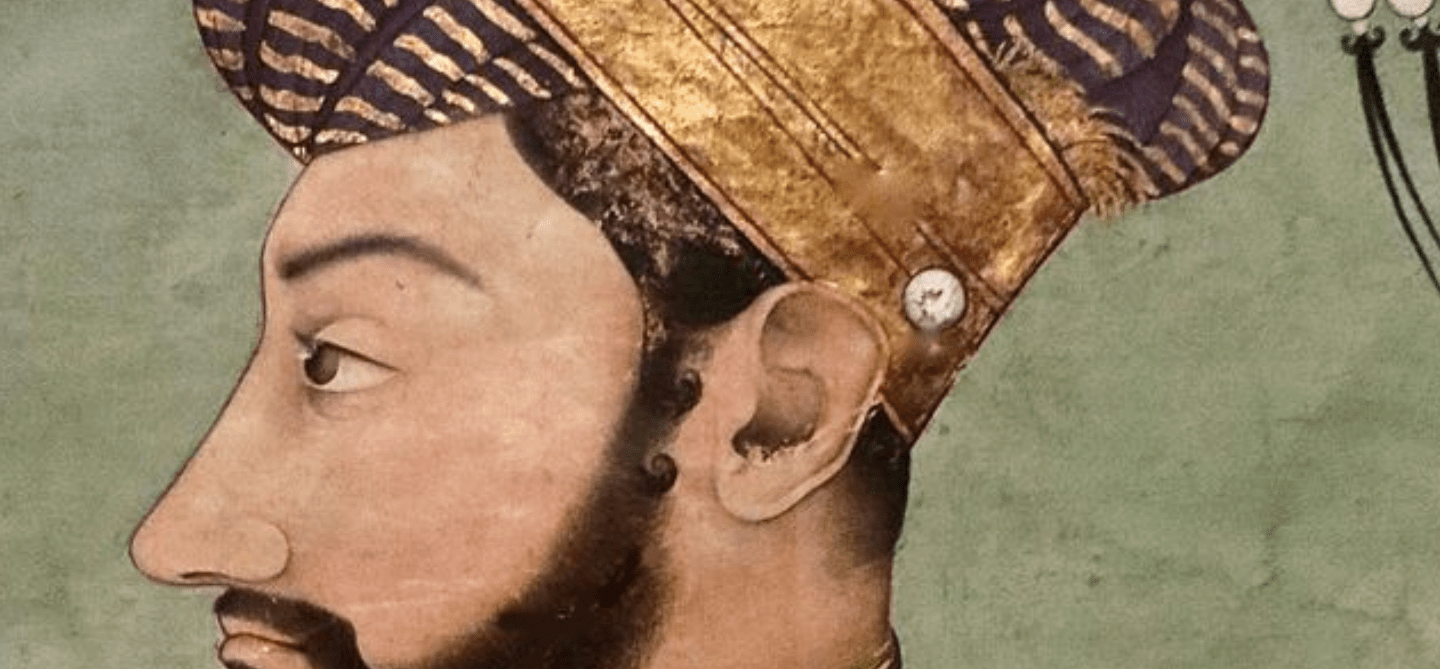
Emperor Aurangzeb is frequently viewed as a discriminatory figure, unlike his great grandfather Emperor Akbar, who is celebrated for his religious policy of tolerance. However, if we look past this, it becomes clear that Aurangzeb’s main concern was the maintenance of the empire, and not religion. What people view as Aurangzeb’s botched and discriminatory religious policy really isn’t one at all, as instead of a religious policy Aurangzeb was trying to maintain a larger policy of empire.

Bhimsen, a Hindu Kayastha memoirist, claimed that Aurangzeb had willingly sacrificed the ‘happiness of the subjects’ during his reign, suggesting that Aurangzeb had thrown out with his great grandfather’s policies of religious tolerance.[1] Another example of this is Aurangzeb’s banning of religious festivals eight years into his reign, such as Eid al-Fitr, Holi and Diwali.[2] On the surface this appears to display Aurangzeb’s religious intolerance, in comparison to Akbar, who welcomed different cultures and religious ideas. Aurangzeb also reinstated the Jizya tax, a tax specifically levied against non-Muslims within the empire in 1679, which further fuelled the image that he was a discriminatory, nasty piece of work.[3] Aurangzeb’s decision to tear down several Hindu temples also painted him in a religiously intolerant, in contrast to Akbar.[4] However, upon closer analysis we can actually see that Aurangzeb’s actions were not religiously motivated, unlike Akbar’s, but politically motivated for the maintenance of the empire. The maintenance and strengthening of the empire were Aurangzeb’s primary concerns, even if this resulted in accusations that he wasn’t prepared to give other religions the time of day.

At first it may appear that the restrictions Aurangzeb placed on religious festivals displayed his religious intolerance, but this isn’t true! In his writings, Bhimsen Saxena describes a festival that occurred every twelve years near Trimbak, Maharasthra, in which armed bands fight one another, which lead to fatalities.[5] Frenchman Jan de Thevenot describes the Muharram celebrations in his work, writing that in Golconda in 1666 to 1667, violence was standard between Muslims and Hindus.[6] At the Murharram celebrations of Burhanpur in 1669, fifty people were left dead.[7] Aurangzeb wasn’t happy about this, and was also disturbed by the use of ‘obscene language’ used during the festivals of Holi and Diwali.[8] Unlike nowadays, it appears that back in the day, festivals were violent and unruly events, which often ended in death. Based on these facts, Aurangzeb’s decision to ban such gatherings should not be linked to some sort of religious policy, but linked to his desire to maintain order and stability within his empire. In this situation Audrey Truschke notes that Aurangzeb’s key concern was ‘public safety,’ not religion.[9] Aurangzeb adopted the idea that pleasing everyone was not essential to the running of a successful empire. His banning of such festivities was not related to some sort of religious policy, but related to his desire to preserve the empire, and prioritise the safety of those within it. Makes sense, right?

Aurangzeb’s reinstallation of the Jizya tax in 1679 was also not religiously motivated but was motivated by his larger policy of empire instead. Satish Chandra recognises this, arguing that the reinstallation of the tax was in response to the current economic crisis.[10] The tax was reinstalled to fund money for the maintenance of the empire, not to discriminate against non-Muslims. The tax also provided much needed work and employment to those within the empire, and admin posts were given to Hindus.[11] The fact that Aurangzeb provided work for Hindus further supports the idea that he was not religiously intolerant towards them, but more concerned about the state of the economy within the empire and not the religion of those within it. See, he’s not that bad really!

Aurangzeb is also known for destroying several Hindu temples across the empire. Richard Eaton notes that Aurangzeb only destroyed just over a dozen temples, and that he did order the construction of some.[12] Aurangzeb only destroyed temples for valid reasons, such as Benares’ Vishwanatha Temple in 1669, and Mathura’s Keshava Deva Temple in 1670.[13] Both temples acted as bases for political unrest within the Mughal empire, which prompted Aurangzeb to take action. His destruction of the above temples was not religiously motivated but motivated by his desire to ensure peace within the empire. The Keshava Deva temple was patronised by Dara Shukoh, Aurangzeb’s brother and main rival to the throne, and after several uprisings in 1669 and 1670, Aurangzeb destroyed the temple to put down the political unrest that it had encouraged.[14] Aurangzeb believed a good ruler was one that ensured expansion of the empire, and he did so by putting down political unrest.[15] Again, this decision was not motivated by some sort of religious policy, but a larger policy of empire.

Aurangzeb even said that he was not massively concerned with the religion of others, drumming home the fact that he was more concerned with his empire. A Muslim from Bukhara who had entered Mughal service in the late 1680s argued that the emperor should take the religion of people into account before they were allowed to enter into Mughal service. Aurangzeb rejected this proposal, asking ‘what connection have earthly affairs with religion?’ This clearly shows his disregard towards the subject of religion, in favour of the subject of empire.[16] He also noted that ‘for you is your religion and for me is mine.’[17] Aurangzeb was willing to recruit people of all faiths into Mughal service, demonstrating yet again that all his decisions revolved around the maintenance of the empire. It also shows that Aurangzeb was not intolerant towards people of other faiths as people have incorrectly stated. In the first twenty one years of Aurangzeb’s reign, twenty one percent of the Mughal nobles were of the Hindu faith.[18] This is only one percent off from the amount of Hindu Mughal nobles in Akbar’s reign, which disapproves the common perception that Aurangzeb discriminated against non-Muslims.[19]

So here we can see that Aurangzeb shouldn’t be criticised for what some perceive to call his “religious policy.” I hope I’ve proved that, despite common misconceptions, all of Aurangzeb’s actions, as described above, were undertaken for the maintenance of the empire, his number one priority.

Thanks for reading!

Stay safe, stay inside. Read something cheerful.


[1] B. Metcalf and Metcalf, A Concise History of Modern India, p.30.

[2] Truschke, Aurangzeb: The Life and Legacy of India’s Most Controversial King, p. 74.

[3] Ibid., p. 376.

[4] S. Chandra, ‘The Religious Policy of Aurangzeb during the Later Part of his Reign – Some Considerations’, Indian Historical Review, Vol. 47, 1-2 (1986-7), p. 373.

[5] Truschke, Aurangzeb: The Life and Legacy of India’s Most Controversial King, p. 74.

[6] Ibid., p. 74.

[7] Ibid., p. 74.

[8] Ibid., p. 74.

[9] Ibid., p. 74.

[10] Chandra, ‘The Religious Policy of Aurangzeb during the Later Part of his Reign – Some Considerations’, p. 380.

[11] Ibid., p. 376.

[12] Truschke, Aurangzeb: The Life and Legacy of India’s Most Controversial King, p. 84.

[13] Dale, ‘India under Mughal rule’, p. 85.

[14] Ibid., p. 86.

[15] Asher and Talbot, India Before Europe, p. 228.

[16] Truschke, Aurangzeb: The Life and Legacy of India’s Most Controversial King, p. 58.

[17] Ibid., 58

[18] Ibid., 56

[19] Ibid., 56

Covid-19 and Dystopian Literature

Now, as a student of both English and History, I’m not surprised that both topics have the ability to predict the future. We are living in unprecedented times, and probably facing the biggest crisis most of us will face in our lifetimes. The first thing I thought of, when I watched Boris enforce a quarantine, was that what was occurring in the world was like something I have read in a book. Those books are usually part of the Dystopia family, a genre that explores what will happen to the world, and humanity in the far future following some sort of apocalyptic event… in other words, it looks at a world where everything has gone to BLEEP.

A simple definition of the genre is the opposite of utopia, an idea outlined by Thomas More in his work, ‘Utopia,’ written in 1516. If utopia is the perfect world, dystopia is the direct opposite. There are different types of dystopia, and the genre evolves in response to different crises at the time, much like the one we currently find ourselves in. We get ‘Farenheit 451’ following Hitler’s abominable book burnings, ‘The Day of the Triffids’ follows fears about communism and the oncoming Cold War in the 1950s, and so on… People have also picked up on the fact that Dean Koontz’s ‘Eyes of Darkness,’ written in 1981, predicted the rapid spread of a virus originating from Wuhan in 2020. Now is the time to take literature seriously. This may not be the most cheerful subject in these times but prepare yourself for a whistle-stop tour of the Dystopian genre!

George Orwell’s ‘1984,’ published in 1949, has been in our minds for some decades now, due to rises in technology and its ability to become more invasive… and humanity’s ability to be lazy. Conspiracy theories about Alexa’s secret government connections hark back to Orwell’s “telescreens,” and even Facebook showing me ads for things I’ve mentioned in conversation contributes to the idea that we are always being watched by ‘Big Brother’… and I don’t mean Davina McCall’s smash hit on Channel 5… even though the title of the show is lifted from Orwell’s own mind. The idea of being controlled and constantly watched sits firmly with the idea of Totalitarian Dystopia, a world in which we have no control, and where the concept of freedom is a distant memory.

Aldous Huxley followed up Orwell’s harsh world in 1932 with his softer dystopia ‘Brave New World,’ in which people are willingly controlled by a drug named “soma,” distracting characters like Mustapha Mond and Lenina Crowne from tension, worry and pain. They really don’t like the idea of talking about their problems, and instead dose up on drugs to suppress their inner pain. Sound familiar? The UK had hit a major economic depression in the year prior to the novel’s publication, perhaps explaining Huxley’s exploration of the conflicting interests of the individual and society, propelled by the growing widespread fear of Americanisation. In a novel that puts together drugs, Shakespeare, suicides and orgies, in retrospect it seems to have predicted the birth of contraception and the free love that swept the world in the 60s, and still does today.

Anthony Burgess cranks up the violence in his 1962 work, ‘A Clockwork Orange.’ The novel follows Alex and his “droogs,” gang, as they go around pillaging, rioting, stealing and generally just acting like a bunch of BLEEPs. Like dystopian novels before his, Burgess responded to the current context and situation, more specifically, the mass delinquency that followed the Second World War. Young men found themselves with little to do, and at the time, hippies and skinheads were blamed for encouraging violence in the post war period. Burgess tapped into that, and within the novel explored how said teens can be controlled, using the fictional “Ludovico’s technique,” which is effectively a barbaric procedure to reduce people to brainless bags of meat. I did say this wasn’t going to be cheerful. Burgess raises the question as to whether it is ok to treat anyone in this way, regardless of their crimes and behaviour.

‘The Handmaid’s Tale’ enters the world with a bang in 1985, coming from the mind of Canadian writer Margaret Atwood. The novel really is the big one if you want to look at sex and gender in dystopia. Atwood appears to have responded to the current form of feminism, which we retrospectively dub as Second Wave feminism. This focused on the woman’s role in the home, and how actions are specifically gendered. It also asserted that the patriarchy originated in the home, due to the dominant father figure, and that this ideology was imprinted on the children, which they then carried on, and into the world outside. Those who have read the novel will know that it centres on women’s ability to bear children, which is primarily a domestic issue. In response to Donald Trump’s authoritarian presidency Atwood rolled out a sequel, ‘The Testaments’ in 2019. This was probably one of the first incidences in which a dystopian novel had a female protagonist, an idea that really takes flight in the 21st century.

I’m going to briefly touch on Malorie Blackman’s 2001 novel ‘Noughts and Crosses,’ which has just aired on the BBC. I haven’t read it myself, but it’s an example of how the Dystopian genre can adapt to anything, as it describes a futuristic world in which racial segregation is enforced in favour of the African upper-class. It’s noteworthy for this, as well as its inclusion of a female co-protagonist in Sephy Hadley. Give it seven years and Suzanne Collins will give us female fighter Katniss Everdeen in ‘The Hunger Games.’

Cormac McCarthy’s 2006 depression fest ‘The Road’ responds to our current economic crisis, as the constant use of the word “grey” really drills home the fact that the Earth is dying. A man and boy, who remain nameless as, what’s the point in identification and attachment now, trek through America to safety, hiding from fearful landscapes and human cannibals along the way… whilst having an existential crisis. It examines the human condition following an apocalyptic event, looking at starvation and malnutrition… loo roll is the least of these peoples’ worries. As if my Year 13 wasn’t stressful enough.

This is really a small selection of novels birthed from the genre… I would do more, but I don’t want to depress anyone further.

So really, the point of this post has been to show people that artists are influenced by what they say and what goes on in their times. The only thing left for us to wonder is, what novels, poems or plays will we get that have drawn inspiration from the 2019-2020 Coronavirus pandemic?

Stay safe, stay inside. Read something cheerful.

Thanks for reading!

O! O! O! Othello’s Oddly Onnoying Onderdevelopment

Some criticisms of Othello

Now, I like Othello. Shakespeare brings the issue of race into his plays, and really paints a stunning portrait of a pure marriage that is slowly poisoned. Despite that being at the heart of the play, I found that a lot of other aspects of it are slightly underdeveloped… and even slightly annoying.

Let’s start with the main man. Being Shakespeare’s first explicit, in my view, black character, Othello earns himself an immediate reputation. He does have some great lines, and a tragic story, but apart from that, he is fairly passive. He is extremely gullible and is basically Iago’s plaything. Othello is really led by him and is led to the conclusion that Desdemona is being unfaithful. In this respect, Othello doesn’t have much agency, he doesn’t think for himself and he basically does what he’s told. In comparison to other Shakespeare protagonists, from Richard III to Hamlet, Othello oddly doesn’t do much, and appears slightly underdeveloped. We know he tells a killer story, but for a title character, who has the play named after him, he doesn’t really have the same presence and impact that Hamlet does. Othello is mainly known for being jealous, and although it is an interesting take on the emotion, it isn’t the greatest thing to be known for. Is there a particular reason that Shakespeare’s biggest black character is known for being a jealous wife killer? Is Shakespeare trying to make some sort of racist comment? That we will never know, but we can speculate.

Othello pretty much ends up playing second fiddle to the far more superior Iago, who is probably Shakespeare’s nastiest villain out there. But… that’s all there is to it really. He’s just a downright villain, slightly like Don John in ‘Much Ado About Nothing.’ He is interesting to read, but he’s just nasty, that’s it. I wouldn’t say he’s a three-dimensional character like Claudius from ‘Hamlet.’ His motivation is significantly underdeveloped, as he has a throwaway comment that he has a problem with Othello as he slept with his Mrs, Emilia. Iago’s actions are drastic, especially as they are based on a rumour. Coleridge swoops in to note this, declaring that the whole plot is based on ‘motiveless malignity.’ Coleridge is basically saying that Iago’s nastiness comes out of nowhere. When comparing Iago’s motives to the likes of Claudius, Richard III and Lady Macbeth, I’d back Coleridge any day. Also, Iago’s just very obsessed with sex. His motives are sex related, his plan to destroy Othello is based on Desdemona’s supposed sexual promiscuity. It’s all sex with Iago. He’s just a nasty sex obsessed man. And he also steals the show from Othello in Othello’s own play. That’s just rude.

Now I know women in Shakespeare don’t always have the easiest time, and apart from her sweet nature, Desdemona too is quite passive. She doesn’t even get a famous scene or line apart from her death scene. Lady Macbeth and Ophelia have some iconic lines and scenes, as does Beatrice, Juliet and the Nurse. Desdemona is just extremely kind, which although is endearing, it doesn’t make her that memorable. Her love for Othello is undoubtedly pure, as she loves him because of the stories he tells. Iago sours this due to his obsession with sex, and specifically Desdemona’s sex drive. Although she fights with her father and tries to reason with Othello, I can’t help but feel that she doesn’t stand out that much in comparison to Shakespeare’s other heroines.

Also, there’s that massive war that’s mentioned at the beginning, that the Turks are going to attack Cyprus, which is promptly dispensed with. It’s basically there to make Othello look like a hero, but apart from that, it just appears like a throwaway plot point. The Turks are destroyed by a storm, rendering them shipwrecked and very irrelevant. In Hamlet, the war is mentioned throughout, and comes full circle at the end of the play with the arrival and succession of Fortinbras, who serves as a foil to Hamlet and represents the rise of a stable kingdom. Fortinbras does all of this and only pops up twice in the play. I think that’s pretty good going. Iago’s hatred for Othello comes so out of nowhere that he probably could’ve tried to poison their marriage without any war with the Turks. It’s just that random.

The unsung hero of the play is by far Emilia, who fully dispenses with the patriarchy, her husband and all the passiveness that Shakespeare heroines are regularly accused of. I find her scene at the close of the play to be much more memorable than Desdemona and Othello’s dialogue. She becomes that strong female character that so many Shakespeare fans crave, despite her untimely death. Despite Iago’s underdeveloped motivations, to me, him and Emilia are much more memorable characters in the play, partly because they are both active agents who have pivotal roles within the plot.

In general, Othello is a great play on the surface, and there’s plenty of ‘marriage poisoned’ action to sink your teeth into. But when interrogating the characters, motivations and some of the plot points, it appears to slightly fall apart. Othello and Desdemona are supplanted as the most memorable characters by Iago and Emilia, the war with the Turks doesn’t really come to much, and if I were Othello, I’d be more jealous of characters like Hamlet and Claudius, who gain their iconic Shakespeare status for much more complex and intriguing reasons.

Thanks for reading!

Fact in Fiction: Anne Boleyn in ‘Wolf Hall’

An analysis of Anne Boleyn’s portrayal in Hilary Mantel’s acclaimed novel, ‘Wolf Hall’!

Anne Boleyn is a central character in the book ‘Wolf Hall,’ by Hilary Mantel. Thomas Cromwell’s rise to power centred on the annulment of Henry VIII’s marriage to Catherine of Aragon, as Cromwell was proactive in speeding up the divorce, and ensuring the ‘Dissolution of the Monasteries’ throughout 1536. This gained him great favour with the King. Ultimately, without Anne Boleyn, Cromwell would not have risen to power and as the novel is largely told from his point of view, a different take on Anne Boleyn is created, which is a wholly negative one. Throughout the book she is presented largely as a villainess, and as a schemer intent on tearing the kingdom away from Christendom and becoming queen, much to the despair of those at court. It’s definitely one for the Catherine of Aragon fans.

In a conversation with George Cavendish, a biographer of Thomas Wolsey, Cromwell discusses Anne’s betrothal and previous relationship with Harry Percy.[1] Cavendish proceeds to tell Cromwell that she did not actually love him. Cromwell asks whether she respected him, and Cavendish flatly tells Cromwell that “she didn’t. She liked his title.” These short, dramatic sentences suggest that Anne was only interested in Harry Percy for his status, as she wanted to elevate herself in the world. It presents her as a liar and villainess, as she pretends to love somebody to gain power and status. This also casts her as a bit of a femme fatale. The fact that other people react negatively to her also proves she is villainous, as there are not many people in the novel who show affection to Anne, such as her own sister, Mary.

Later on in the novel, Mary makes similar comments about her sister, warning Cromwell that Anne probably “has some ideas about what to make you.”[2] This cryptic comment portrays Anne as villainous, as beforehand Mary tells Cromwell that Harry Percy has been turned into a “madman” by Anne.[3] Although this is a negative portrayal of Anne, the comment about Cromwell does not insinuate any positive or negative feeling towards him, but as the comment about Harry Percy is made earlier, this quote is made to make Anne villainous, as again, she is using others for her own advantage. Anne’s villainy is emphasised as it is her own sister that informs Cromwell of her belief. As she is related to Anne it is surprising that Mary thinks so badly of her sister and this rejection reinforces Anne’s villainy in the novel.

It is clear that there is rivalry within the novel between Anne and Cromwell, probably because the book is written from Cromwell’s point of view.[4] Mantel notes that nowadays, Anne Boleyn is an “ambiguous character,” as little is known about her. This serves as the reason as to why Anne is portrayed how she is, as she is viewed through the eyes of her adversary, Cromwell.[5] From this we can learn that Anne is presented as a villainess due to Cromwell’s biased view, and therefore may be a victim to Cromwell’s own agenda and ulterior motives. As Mantel aimed to tell the story from Cromwell’s viewpoint, it would be in her interests to make him appear as a hero and as a likeable character, therefore making Anne Boleyn appear as a villainous character, although in history, it is usually Cromwell who is depicted this way. Hilary Mantel comments that she feels Cromwell sees Anne as a worthy opponent, believing that one must be destroyed before the other.[6]

In a conversation with Thomas Wyatt, Cromwell describes Anne to be a “calculating being.”[7] This gives the impression that Cromwell believes Anne uses others for her own purposes, and the use of the word ‘being’ insinuates that he does not view Anne as a human with emotion, but as an entity intent on destroying and using others. Anne really is taking hit after hit here… and it gets worse.

Cromwell believes Anne to have “hungry black eyes.”[8] This imagery presents Anne as animalistic, implying that she will feast on anything or anyone. As food is needed for one’s energy, Anne can be compared to a bear who uses people, food, for her own elevation, energy. This imagery presents Anne largely as a parasite, one who is willing to ruthlessly use others for her own gain. This gives the impression that Anne’s desires are evil and dangerous, as she is willing to use others for her own ends, and metaphorically, devour them.

According to contemporary accounts, Anne Boleyn did have black eyes in reality. Paintings that date back to the 1500’s of Anne also support this description, like the above image headlining this article. We can see from the painting Anne is accurately described in Wolf Hall, as in reality she had dark eyes and hair. It is clear from this image that all fictional portrays of Anne have been largely based on this painting and others like it, and one could possibly infer that Anne’s portrayal in Wolf Hall could be as accurate in personality as she is in the painting.

Cromwell later proceeds to tell Wyatt that he believes Anne likes to “torment” others for her own sport.[9] This presents Anne purely as villainous, as it is suggested she enjoys being cruel to others for her own amusement and pleasure. This seems odd to the reader, and makes Anne seem like a sadistic human being who enjoys other peoples’ pain, presenting her largely as a villain.

Later in the book Mary talks to Rochford about her sister, saying that for “Seven years she schemed to be queen.”[10] The fact that Anne has planned this for seven years shows she is desperate for power and provides a reason as to why she is seen as calculating, as she has one ultimate goal, making her seem villainous.

However, Anne could be seen as a victim of Thomas Cromwell, as the book is written purely from his point of view. Anne could be seen in this way, because he feels threatened by her, knowing that her power is growing. It could be argued that he fears she will overthrow him, and hates her, presenting her as a villainous and horrible person, in order to persuade others to agree and rise against her.

It would seem that Anne is largely portrayed as a villain in Wolf Hall, and a figure who uses others for her own advantage. By constantly commenting on her scheming ways and using animalistic imagery, Mantel, through Cromwell, portrays Anne Boleyn as a villain to a large extent. It is worth noting that Mantel’s Anne is not infuenced by the times we now live in, but solely on the idea of Cromwell’s protagonism, prompting Mantel to think that Cromwell would have viewed Anne Boleyn as a significant threat.

Thanks for reading!


[1] Hilary Mantel, Wolf Hall (London, 4th Estate Books, 2009) p. 78.

[2] Mantel, Wolf Hall, p. 346.

[3] Ibid., p. 346.

[4] Available at: https://www.youtube.com/watch?v=f3AD7URF5jc

[5] Available at: https://www.youtube.com/watch?v=f3AD7URF5jc

[6] Available at: https://www.youtube.com/watch?v=f3AD7URF5jc

[7] Mantel, Wolf Hall, p. 350.

[8] Ibid., p. 350.

[9] Ibid., p. 350.

[10] Ibid., p. 598.

Defending Estella from ‘Great Expectations’

A case for one of Dickens’ frostiest characters.

To match with the chilly weather that we are getting this January I thought I’d write about one of the iciest characters out there, Estella from Charles Dickens’ ‘Great Expectations.’ Her reputation precedes her, and I for one can’t understand Pip’s infatuation with her… or people’s hatred of her. Yes, she is coarse, and haughty and horrible to Pip but by the end of the novel, in my opinion, she becomes the most rounded character still around, whose journey has had actual meaning and impact. I got so bored of all the other characters that Estella was the only reason I could keep reading, and here’s why.

Estella’s initial behaviour towards Pip throws a narrative hook to the audience, as for quite some time we are asking ourselves why she is such an annoying little thing. Her behaviour is enthralling to Pip, and his motivation to become a gentleman stems from his, slightly annoying, obsession with her. Without her, there really is no story, as although she isn’t the physical money, she is the reason as to why Pip wants, and uses the money. It also presents, what the audience think will be, the greatest love story ever. It would probably send Shakespeare spinning in his grave, crying that his ‘The Taming of the Shrew’ had been nicked by Dickens. She’s also the cause of Pip becoming an unlikeable character, as a lot of the time, he considers what Estella would do, or what she would think, prompting his disapproval towards other characters like the boringly kind Joe. She may not influence every single character, but she influences the most important – Pip. That’s enough to cement her importance in the novel and Dickens canon, no matter how many people dislike her.

So, upon her introduction, Estella throws out certain signals to the reader and the characters. She propels the story forward as she gives Pip the motivation to become a gentleman, and wills the reader to stick with her, in the hope that she becomes a bit nicer, and in the hope that her and Pip run off into the sunset together. I am making the assumption now that everyone wants Pip and Estella to get together, and I think from the offset people just assume that it is going to happen… what makes her such a great character, and in my opinion the best in the novel, is that of course, this doesn’t happen. But more on that later.

Estella’s character development builds throughout the novel but isn’t stretched out enough to deter us from being interested. It becomes clear that, as Pip is the plaything of Estella, Estella is the plaything of Miss Havisham. Personally, I wouldn’t like the idea of living with a jilted psycho lady who should be in one of those McDonald’s ‘like getting your money’s worth?’ adverts… as she’s always in her wedding dress. In her later life she plucks up the courage to tell Havisham that she is the cause of her coldness, and the reason she cannot love. Estella has been conditioned this way, and has been forced to dispel one of humanities’ greatest instincts – to love and to be loved. She’s really a tragic heroine. We see that here:

“You stock and stone!” exclaimed Miss Havisham. “You cold, cold heart!”

“What?” said Estella, preserving her attitude of indifference as she leaned against the great chimney-piece and only moving her eyes; “do you reproach me for being cold? You?”

“Are you not?” was the fierce retort.

“You should know,” said Estella. “I am what you have made me. Take all the praise, take all the blame; take all the success, take all the failure; in short, take me.”[1]

Some critics think that we never truly get to know Estella, but she never really knows herself. A whole part of her, her ability to love, and be loved, is shut down by Havisham very early on in her life, and in Victorian society, there isn’t much else for a woman to do. Nobody can control someone else’s ability to love, we choose who we love and we ourselves are aware of it. Estella has this taken away from her, probably before she could even walk. For a character who has a whole part of her identity taken away from her before she understands it, I argue that we get to know Estella pretty well, and that she oozes with tragic complexity. Havisham has literally stolen Estella’s ability to love, and Estella is rightly mad about it. It’s here that we understand her, as she isn’t cruel to Pip as she is cruel herself but is cruel to him because she knows no different. She doesn’t have the capacity to be kind, and we can see that it greatly upsets her.

Estella also provides a real ‘EastEnders’ ‘duff duff’ moment, with the revelation that she is the daughter of Magwitch. The character provides a great dramatic revelation, one that drums home the main theme of the novel, subverted expectations. The haughtiest character in the novel is brought down to Earth by her paternity, which levels all the characters. No one is fully pure, no one’s status is fully preserved, there is social mobility and every character represents this in some respect. Estella’s ‘fall from grace’ is particularly notable, as she goes from one extreme to the other. She goes from being the most uppity little missy out there, to being the daughter of the lowest of the low. Dickens knows how to pack a punch.

Her abusive marriage to Bentley Drummle brings her to the end of her character arc, and this abuse, unfortunately, is what she needs. She has been moulded by Miss Havisham, and her suffering at Drummle’s hands breaks this mould. She now can start afresh, as she has had an emotional, traumatic experience that she can reflect on, and learn from. This experience makes her more vulnerable, and probably more empathetic. It is unclear what this abuse specifically is, but it obviously adds a dimension to what she has already suffered at Havisham’s hands, meaning this has shaken her up that bit more. Be it physical or verbal, it serves as proof that someone so brainwashed needs a significant experience to be roused from such a state, and clearly marriage to Mr Drummle is enough to compel Estella to change. In comparison, majority of the other characters just fade away, or conveniently die.

It’s so right that Pip and Estella don’t end up together, as if they did, her character development would have been hurried along in a fairly unnatural fashion. Estella isn’t ready to love after her marriage to Drummle, and it makes sense that Dickens left the ending ambiguous. We don’t know whether they get together, and it would be nice for them to in the future, but it wouldn’t make sense for Estella to be with Pip at the end of the novel. She is still discovering herself and how to love, and Dickens made the right in decision not to rush this huge development in the last few pages.

In comparison, Pip pretty much lands back at square one, having squandered all of his money. Sure, he learns things, but there’s not a lot of implication that he will grow, learn and develop. Estella will, and its right that this happens off the page, as she is now free from the grasp of Miss Havisham, and the grasp of Dickens’ pen.


[1] Charles Dickens, Great Expectations, (London, Penguin Clothbound Classics, 2008), Chapter 38.

The Gothic in ‘A Christmas Carol’

Searching for the Gothic in Dickens’ Christmas classic!

‘A Christmas Carol’ is a classic Christmas story, as it encompasses all that should be at the heart of Christmas. Love, joy, family… and a prize turkey that can feed the five thousand. It also gives us the lesson that people can change and that sometimes they should, in a quick hit of one hundred and seventeen pages… depending on your edition.

This happiness however doesn’t come about on its own, and is only really facilitated by Scrooge’s conversion, which in turn is only facilitated by the appearance of the three Ghosts… four if you count Marley.

If we want to find the Gothic in the novel, we should start with Dickens’ finest creation. Scrooge! He kind of fits into the archetypal Gothic patriarch mould, a figure that is tyrannical, uncompromising and relentless. We get this from Manfred, in ‘The Castle of Otranto,’ and the Marquis in ‘A Sicilian Romance.’ He squeezes all the money he can out of everyone he can, he seeks to control Bob Cratchit, refusing to let him put more coal on the fire, and is unforgiving towards the plight of all the poor and needy, thinking they should pop their clogs to ‘decrease the surplus population.’[1] What a nice man.

Trying not to be rude to the man but let’s be real here – he is bloody scary looking:

“The cold within him froze his old features, nipped his pointed nose, shrivelled his cheek, stiffened his gait; made his eyes red, his thin lips blue; and spoke out shrewdly in his grating voice.”[2]

There is an obvious harshness to his appearance, with the ‘pointed’ nose, and his ‘grating’ voice. ‘Grating’ brings up ideas of ‘scratching’ and ‘grinding,’ and you don’t really want to hear those kinds of tones at Christmas. He really he sounds like a dead man walking, especially as his lips are turning ‘blue.’ Fun fact, having blue lips is called cyanosis, which is induced by extremely cold temperatures or a lack of oxygen in the blood. A lack of oxygen would definitely result in death. His appearance perhaps doesn’t resemble the classic Gothic patriarchs I listed above, but his appearance is terrifying, and considering the Gothic is supposed to be antithetical to the civilised, Enlightened world, we can definitely place the haggard character in that category.

The Ghosts fit in well with this too, especially Marley’s and the Ghost of Christmas Future. It is the ‘otherness’ of the Ghosts that make them Gothic, as well as their ability to transcend the physical world and laws of nature.

With Marley especially there is the conflict between the living and the dead, and the physical and the ethereal. Dickens immediately messes with our minds, saying the ‘Marley was dead: to begin with.’[3] As a reader we are all screaming that once you’re dead, you’re dead – that’s the end, not the beginning. This brings out the supernatural element, establishing it early within the narrative. Marley’s ability to shapeshift is Gothic too, although perhaps not in the classic sense. Traditionally, the shapeshifting of Gothic characters links into their ability to change their character, like Catherine Earnshaw to Catherine Linton in ‘Wuthering Heights.’ Marley physically changes into the doorknocker, which is a fairly potent and distressing image, which showcases his physical shapeshifting abilities.

Marley’s ghost can also link closer to ideas about bodily monstrosity and body horror, as he is quite literally, falling apart. Every director makes a meal of Marley’s runaway jaw. It is a great moment. The presence of his chains is also confusing, as he is not a physical being, yet he is held down by physical chains. It is a Gothic image of confinement and restraint, as his body and mind are confined, he cannot be fully free. The irony of course is that he is constrained by his own heinous crimes. It is a classic trope in the Gothic genre to be refined and constrained, stopping full expression of the soul… again, I reference Catherine Earnshaw and Catherine Linton.

The Ghost of Christmas Yet to Come is also a very Gothic image, as there is the element of the unknown and the element of mystery. We literally cannot see who, or what, is there. It is therefore something we cannot understand, which again, ties nicely in with the Gothic genre. It is not a heteronormative being, it’s form cannot be understood by Scrooge, making it appear as a classic example of the ‘other.’ Its main function is to tell Scrooge that he is going to die, and to show him his fate. There is an obvious darkness to this, and the idea that in that moment, Scrooge is doomed. This too is a Gothic element, the foreshadowing idea of death, and the idea that meeting our maker cannot be avoided and is inevitable. Scrooge can put it off by turning into Father Christmas, but he can never truly avoid it.

Away from the physical appearances of the characters, we could even say that the novel is Gothic as it looks at the darker side of humanity. Scrooge is everything that he wouldn’t want someone to be, cruel, pessimistic, tyrannical… I could go on. The Gothic genre frequently looks at humanity and explores their darkest desires, such as Ambrosio’s lust in ‘The Monk.’ Scrooge’s desire perhaps isn’t that seedy, as he purely desires money. However, like Ambrosio, this desire pushes him to do bad things, and alienate all of those around him. Dickens pays attention to Scrooge’s desires that disrupt those around him for the worse, a trope that the Gothic genre frequently employs.

Scrooge really provides an anatomy of the human psyche, as we witness his conversion from miser to merry man. Here he appears to depart from the classic Gothic villains, who don’t get the chance to convert or change… as most of them all die. Again, Scrooge exhibits the Gothic trope of shapeshifting, much like Marley before him, as his character jumps from one end of the spectrum to the other. Proof that with a little help from some Gothic ghouls, everyone can embody the true spirit of Christmas.

Merry Christmas and a Happy New Year!

Thanks for reading!


[1] Charles Dickens, A Christmas Carol (London, Penguin Classics Read Red, 2007) p. 10.

[2] Ibid., p. 2.

[3] Ibid., p. 1.