‘Mexican Gothic’ and Decay

‘Mexican Gothic’ was published in 2020 and was written by Silvio Moreno-Garcia. Upon its publication its popularity quickly soared, and many likened the novel to the works of Guillermo del Toro and Daphne du Maurier.

The novel opens with young heroine Noemí receiving a disturbing letter from her cousin Catalina. Catalina fears that her husband, Virgil Doyle, is trying to poison her. Noemí flies to her cousins’ aid, and discovers at the Doyle’s household, High Place, a multitude of secrets.

The beginning of the novel pays homage to many of the original Gothic classics. Noemí likens High Place to an ‘abandoned shell of a snail,’ implying that the Doyle household is desolate, and has been forgotten by civilisation.[1] A snail shell is also fragile, perhaps a reference to Catalina’s fragile state of mind. It also might foreshadow the Doyle’s downfall at the end of the novel. Their position is not secure. The atmosphere of High Place is cold and unwelcoming, setting the scene for an eerie Gothic tale. At High Place, Noemí goes on to uncover a family curse, a history of incest and a deadly mycelium that has infested High Place and the Doyle family themselves. It is this that they use to stay alive. At the end of the novel it is revealed that the fungus can store memories and preserve the family history. This explains why the family intermarry, as to not pollute their bloodline and strengthen their own connection with the fungus. Before the truth about the fungus is uncovered, it is clear from the start that High Place, and its inhabitants are rotting from the inside.

It is noticed that Catalina is ‘ravaged by disease.’[2] While it is clear that Catalina is ill, the aggressive nature of the word ‘ravaged’ emphasises her fragility, and the violence of her illness. While she is ravaged by disease, whilst inspecting the library, Noemí notes that a book is ‘ravaged my mould.’[3] It seems, in High Place, that the superior power is bacteria or fungus. Nothing else can stand in its way, animate or inanimate objects are rendered helpless in the face of it. As the story deepens Noemí concludes that everything that the family touches ‘rots.’[4] Although she does not yet know that the family control this fungus for their own ends, it seems that she is beginning to associate the family with decay, not just the conditions of High Place itself.

Following on with this theme, during one her dreams, Noemí imagines that she is being regarded by Virgil, like a ‘butterfly pinned to a velvet cloth.’[5] Virgil is clearly controlling Catalina, and her status as a pinned butterfly references the ongoing conflict between man and nature. In this instance, the Doyle’s are winning this battle, as they control the fungus, and in this specific example, Virgil controls Noemí. She has supplanted Catalina as Virgil’s muse, and her helpless state foreshadows the growing danger that she faces at the hands of the family. She is being watched, and being acted upon in this scenario, as she is being acted upon by the fungus, even though she doesn’t know it.

An interesting image, which is present throughout the novel is the ouroboros. It is essentially the image of a snake that is eating its tail, it serves as the family emblem. The image itself appears to allude to self-destruction, as the snake is ingesting itself. The Doyle family, while using the fungus to stay alive, also destroy themselves to do it, sacrificing family members to the deadly fungus over the centuries. The snake’s self-ingestion may also allude to the history of incest within the family, a trick used by the Doyle’s to ensure their compatibility with the fungus, which is well suited to their bloodline. The infinite nature of the snake alludes to the enduring nature of the fungus and the immortality of the Doyle family.

When the truth is finally revealed, so is the irony of the situation. At the end of the novel Howard is essentially rotting away:

‘His skin was terribly pale… boils… emaciated… boils grew, as thick as barnacles… a corpse afflicted by the ravages of putrefaction, but he lived.’[6]

Howard plans, with the help of the fungus, to take over the body of Francis. In this description, again, the idea of being ravaged comes up, and it appears that Howard is afflicted with some kind of disease akin to the plague. After inhabiting the body of Francis, he plans to marry Noemí to continue the family bloodline. It is ironic that the family’s desire for self-preservation involves their own physical pain and decay. They sacrificed their own family member, Agnes, to host the fungus. Their immortality comes at a great price, and requires them to turn on each other, turn away from reality and from civilisation. Amongst all this destruction, it is further destruction that destroys the family and frees Noemí from the fungus. Agnes’ body is set on fire, and as the host, her demise weakens the family’s connection with the fungus.

At the end of the novel, Francis worries that he may still be infected with the fungus, having been exposed to it for a long time. Noemí assures him that together, they can persevere. A union between Noemí and Francis is hinted at, but not the one that Howard had imagined. Noemí in the novel is representative of the outside world, and it is her influence that saved Francis from his corrupt family. It was she who dragged him away from them and into the outside world. Out of the darkness of High Place, and into the light.

Thanks for reading!


[1] Silvia Moreno-Garcia, Mexican Gothic (London, Jo Fletcher Books, 2020), p. 21.

[2] Ibid., p. 24.

[3] Ibid., p. 38.

[4] Ibid., p. 69.

[5] Ibid., p. 80.

[6] Ibid., p. 203.

‘Bridgerton’ and South Asian Representation

I’ll be honest – the only reason that I watched the second season of Netflix’s ‘Bridgerton’ was to see the story of the Sharma’s. I was not as mesmerised by the first season as other people were and found it to be a bit too romanticised. I described it as period drama that lacked the darkness of Brontë and the sarcastic bite of Austen. However, the announcement that the cast of the second season would feature South Asian characters compelled me to watch. There was not much South Asian presence in the first season of ‘Bridgerton’ and I would allege that there is hardly any on television right now. The Sharma’s, particularly sisters Edwina (Charitha Chandran) and Kathani, or Kate (Simone Ashley) are at the heart of the second season, and with much of the discussion that has come with it.

Something that critics have noted is the historical inaccuracy of the very presence of the Sharma family. Namely, the fact that South Asian people would not have had the chance to rise so highly, and that the show does a disservice to our heritage and culture by not acknowledging Britain’s colonial past. Similar debates erupted around the presence of Lady Danbury and Duke Simon Hastings in the first season. Can we really expect a show like Bridgerton to be historically accurate? It is regency romance after all, which is not a criticism of the genre but just a reminder that it is not designed to be the historical fiction akin to Hilary Mantel’s ‘Wolf Hall.’ And if Kate or Edwina were to chastise the Caucasian characters for the atrocities that Britain committed against India… what would be the point in a show like this? If Kate were to raise this point, we would then see her marry Anthony at the end. Would people then argue that her character was somewhat hypocritical? It is a tricky debate to handle, but ultimately the show is here to entertain, and provide some light-hearted, soapy romance drama in period dress. Should Britain’s colonial past be discussed in this format? It would probably fit better, and strike harder, in a properly researched documentary.

However, this kind of thing does rear its head at an uncomfortable dinner. Kate’s white grandfather threatens to disinherit her because of, what we are told to believe, is sexism. When watching though, it seems like it is there in black and white, or rather brown and white. It then becomes more confusing as we then see an Asian mother chastise her Asian daughter, Lady Mary, for ‘polluting’ the family with her illicit love affair. This is a reference to the fact that Lady Mary’s lover, who she ran away to India with, was not of aristocratic standing. I found the whole thing to be a bit confusing, and I thought, is this a caste thing? The man that Lady Mary ran away with, Kate’s father, was of lower social standing. Could this have been the moment to explore Britain’s colonial conquests and prejudices? But then, would this have worked if the debate erupted between two Asian women?

Rightly or wrongly, what first stood out to me about the Sharma sisters was their skin colour. It is typical of Bollywood films to cast fairer actors and actresses in lead roles, as lighter skin is favoured in India. This is a reflection on the caste system, as labourers would work in the fields, and become more tanned, but also a leftover thought of colonialism in which white people saw themselves as intellectually and physically superior to the people of South Asia. Either way, I, along with family and friends have found it disheartening that our own skin tone is not favoured by our own home country. The fact that a Netflix show with a dark-skinned Indian woman at its heart was, for a time, the most watched show on the streaming service is something that should be praised. Chandran highlighted this when talking to Teen Vogue, noting that no one let her ‘forget’ that she was dark skinned growing up.

However, people have picked up on, and criticised other details about the Sharma family. One big question which has been raised is where the family actually come from. Edwina refers to Kate as ‘didi,’ which is Hindi for sister, yet the latter refers to the former as ‘bon,’ which is Bengali for sister. The Tamil word ‘appa’ is used when the girls refer to their father. Asian surnames also provide information as to where a family may hail from, and their caste, with critics pointing out that those having the northern caste name of ‘Sharma’ would not speak Marathi, a language that comes from Maharashtra, a state in western India. Obviously, India is a mix of hundreds, if not thousands of cultures and languages… but it is probably unlikely that one family interchanges between four different languages every day… or maybe the fictional Sharma’s do? Maybe this was done on purpose to show that the two sisters are accomplished? Or maybe this is just lazy. Maybe the name ‘Sharma’ was chosen just because it shares a prefix with ‘Sheffield.’ The show has said that extensive research was carried out to ensure the Sharma women were authentic… but who carried out this research? I do not really want to go naming and shaming, but, for example, if these researchers were Caucasian, would that just mean that, again, white people are telling Asian stories? It is Asian people that have pointed out these details – they know them without having to research. Surely Asian people are the font of all knowledge when discussing Asian culture and issues… just save time and ask them!

Although their surname could be confusing, upon viewing I was more bugged by the characters’ forenames. I have never been hugely passionate about the diversity debate as I perhaps should be, but one thing that has continually annoyed me is seeing South Asian actors on screen appearing as characters with Anglican or Christian names. A ‘Doctor Who’ special a few years back had an Asian actor appearing as ‘Mitch,’ and I just thought… what is the point? Anyone could have been cast in that role. And would you really meet an Asian man called Mitch? I highly doubt it. It does nothing for Asian representation. American sitcom ‘Parks and Recreations’ blew this out of the water by having Tom Haverford call himself Tom to avoid people getting confused about his real name. This happens in real life, I ‘anglicise’ my own name, so people find it less hard to say. I do not like the way it sounds, but I felt I had to do it. Actress Simone Ashley has done the same thing, her real name being Simone Ashwini Pillai. So, when it was revealed that Kate was in fact ‘Kathani,’ I was pleasantly surprised, and actually appreciative. ‘Kathani’ is also not one of the common Asian names that you see on television, immediately setting Miss Sharma aside from other Asian television characters. It was nice that the show made this extra bit of effort. As for the name ‘Edwina’ however… I will just have to let that one go. In the shows’ defence, I cannot think of how they would have been able to ‘Asian up’ Edwina’s name, without changing it completely.

However, it was nice to see Asian practices on screen, and for me these were the scenes that stuck out. One of the highlights was the Maiyan, or Haldi ceremony, as this is something I have taken part in at family weddings. The string cover of the theme of ‘Kabhi Kushi Kabi Gam’ was also a nice touch. Many people commented on Kathani’s oiling of Edwina’s hair as something that they related to too. This scene spoke to the bonds of South Asian sisterhood, and the closeness of Edwina and Kate in the show.

One Asian practice that did draw criticism though was Kate’s brewing of masala chai. Although it was nice that chai got a mention, and it was funny to see Kate chastise English tea, I agree with her, some criticised Kate’s brewing technique. Other people criticised its inclusion altogether, stating that something built off the back of colonialism should not be included. I am not sure how far I agree with the latter statement, as chai is a huge part of Asian culture. The Sharma’s are not just Indian for the sake of being Indian, the Asian actresses are not there to tick a box, their culture affects and informs their characters. That is the mark of good representation.

Thanks for reading!

Vaisakhi: A Brief History

harpalkhambay's avatarKhambay's Words, Words, Words

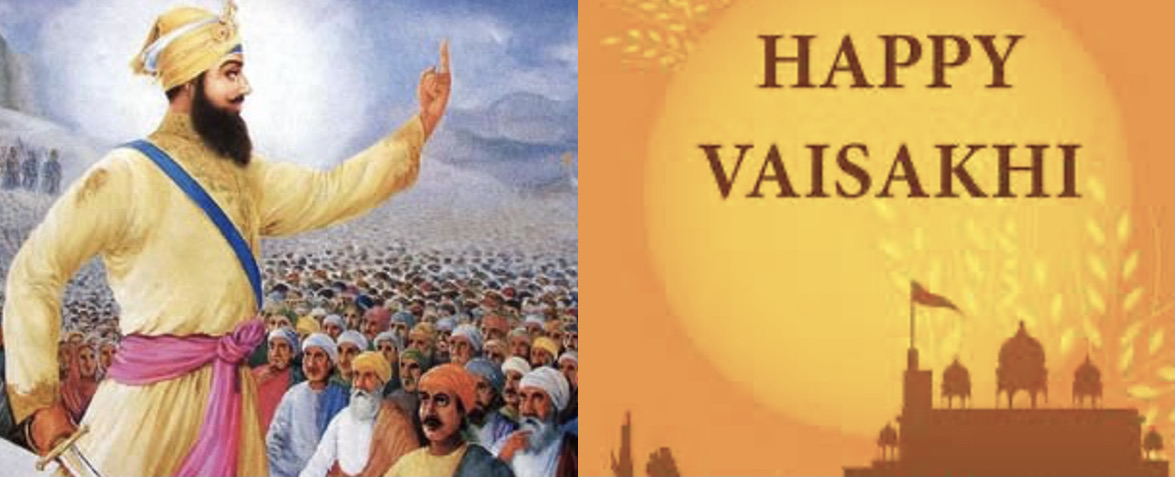
Vaisakhi is a festival observed by both Sikhs and Hindus in the Panjab. The festival is usually celebrated on the 13th of April, although in some years it has been celebrated on the 14th. Vaisakhi is a harvest festival for the people of Northern India, and for Hindus, Vaisakhi marks the beginning of the solar New Year. As well as cultural importance, the festival also carries religious significance for Sikhs. Guru Gobind Singh was crowned the tenth Sikh Guru on the 29th of March 1676. He was crowned following the martyrdom of the ninth Sikh Guru, Guru Teg Bahadur Singh, who was killed by Emperor Aurangzeb for refusing to convert to Islam. Vaisakhi marks the anniversary in which Guru Gobind Singh formed the Khalsa, on the 13th of April 1699. On this day, Guru Gobind Singh asked Sikhs to gather at Shri Anandpur Sahib and…

View original post 479 more words

‘Wuthering Heights’ at the National Theatre: An Analysis

Emily Brontë’s ‘Wuthering Heights’ is famously hard to adapt, in part because of the non-linear narrative and the nature of the protagonists. While the book has legions of fans, including myself, it is not difficult to understand why people would find Catherine Earnshaw and Heathcliff irritating, and why readers would find the narrative, and therefore book in general, difficult to get into. I feel like this is where Emma Rice’s adaptation of ‘Wuthering Heights’ both succeeds and fails.

Beginning with the narrative, Rice makes a bold, but good move, in cutting out the character of Nelly Dean, and replacing her with the character of ‘the Moor,’ (Nandi Bhebhe) which can be compared to a Greek chorus. Through song and dance, ‘the Moor’ tells Lockwood the story of the Heights. Critics often refer to the landscape as its own character, and one that influences all other action within the novel. Catherine’s and Heathcliff’s own volatility and wide nature reflect the untameable landscape. Just like Catherine’s and Heathcliff’s own connection with each other, they also share an unbreakable relationship with the land, first living on it and then returning to it in death. Rice takes this idea and personifies the landscape, making their connection even more tangible and explicit. This move also cuts the character of Nelly Dean and the many problems that she brings, namely her unreliability as a narrator.

The play is also quite good as continually demonstrating the otherness of the inhabitants of ‘Wuthering Heights.’ At the beginning Lockwood is seen struggling to fight against the harsh winds of the Moors, in a somewhat comical scene… but more on comedy later. Heathcliff, Hareton and Cathy Linton enter the scene, and are unaffected by the harshness of the weather. Immediately, the audience is aware that these characters are of a different breed to Lockwood, quite literally, as children of the Moors and of Yorkshire in general. The ghost of Catherine Earnshaw is seen in the background, at times wailing and screaming to imitate the harshness of the weather. In death, been subsumed by the landscape, physically, as she is buried within the Earth, and spiritually as her actions and movements reflect the harsh landscape.

While these points were all good, I did however think that Catherine Earnshaw was a weak link in the production. Not because of Lucy McComick’s acting ability but probably how she was directed. The dialogue was pretty faithful to the book, and in the book Catherine can be pretty unlikeable. It is up to the director and actress to find the subtlety, nuance and vulnerability in Catherine, as without that, the audience will not root for her. There was much screaming and wailing, which dampened the parts of the book where Catherine is supposed to be screaming and wailing, namely when she is losing her grip on reality towards the end of her life. By having her scream and wail pretty much all of the time, the impact of her final moments is lost… as she has been behaving this way all throughout the play.

When Catherine returned from Thrushcross Grange after being bitten by Skulker, she was dressed in a huge gown with big, puffy sleeves. It was like something out of a pantomime, and the whole performance was very camp. She seemed like a petulant child imitating maturity, when in the book it is made clear that she has matured, and is not as fierce as she was before. It was just all a bit jarring – but camping up her sense of newfound propriety, it just felt quite fake and unconvincing. When in the book, it is convincing to a degree… as she does change, as reflected when she chastises Heathcliff for his appearance. What is good though, is how she observes all the action for the remainder of the play – Catherine is always present, just as she is always present for Heathcliff.

Heathcliff, played by Ash Hunter, has some interesting additions. A line that stood out was when he was referred to as ‘black granite.’ Rice chose to portray Heathcliff as black, picking up on some of the hints of the novel. The idea of granite also links to Heathcliff resembling the ‘eternal rocks beneath’ as Cathy explains in her ‘I am Heathcliff’ speech. We also get to see Heathcliff’s childhood briefly in Liverpool, in which he is played by a puppet. It’s another good way of othering him from the other cast members. Despite this, he remains fairly the same throughout the play. There is no kind of crescendo, to his rage and anger which was building throughout the first half. He broods constantly, but never quite flips. In cutting his death scene, and the days leading up to it robbed Hunter of some good material to work with, as Heathcliff becomes increasingly volatile, yet vulnerable in his last few days. I feel like in most adaptations, and the book, Heathcliff becomes crueller and more volatile as the story progresses… and I did not see much progression. Heathcliff always seemed quite broody and restrained.

The play did try to mark the difference between characters through the use of comedy. The Linton’s and Frances are key examples, the former being overly pompous and the latter appearing as a somewhat dim-witted. These characterisations were used well, especially as they were minor characters. Frances was not around for long, and her overly feminine nature was used to mark her difference between Catherine. Although initially comedic, Isabella is later seen as a sympathetic figure, after her marriage to Heathcliff.

It is Linton Heathcliff (Katy Owen) that commits the crime of becoming too pantomime and therefore irritating. In a play that is inherently dark, it is incredibly jarring to watch a character for the entirety of the second half trying, and in my opinion failing, to be funny, through the use of short, snappy lines and physicality. Linton is sympathetic in the book, he is not a clown, and he is treated horribly by Heathcliff and forced to subject Cathy Linton to imprisonment. In the play, he is an irritating whose death could not come soon enough… and even this death was incredibly dragged out. He dominates the shorter second half, to the point at which Heathcliff’s death scene is not even witnessed properly but mentioned in passing by the Moor. Linton’s role should have been dramatically reduced, and it is partly his fault that the second half lost its way.

The play also ends like a rom com, with Hareton appearing in a pinny having just baked a Victoria sponge. Yes, Cathy softens him, but again, this jump is so jarring… and unnecessary. There are petals falling on the stage, and singing, the focus totally shifting from the previous generation. The play is rife with tonal extremes creating an overall feeling of tonal imbalance.

The structuring of the play also does not help this, as at the beginning we are given a lot of exposition about how all the characters are related. Why? Show don’t tell. It surely would be easier for the audience to just watch than to have all characters thrown at them, especially characters who all share similar names. The first half is longer than the second and ends with Cathy’s death. Surely the natural break is when Cathy and Edgar get married, as three years pass? This would allow a bit of time to digest what we have seen – it would make the time lapse more visceral, instead it happens straight away. It also robs the second half of having a better structure, and having more plot points to work with, as all we get is Linton ranting for most of the time.

The play definitely has good moments, and really inventive ideas, but I feel like structure and some of the key characterisations let it down.

Thanks for reading!

‘A Doll’s House’ and ‘The Merchant’s Tale’: Hidden Truths Will Always Be Revealed

In ‘A Doll’s House’ and ‘The Merchant’s Tale,’ secrets drive the plot forward, and their reveal occurs at the climax of each respective work. A hidden truth can be interpreted as a known secret that it kept secret deliberately, which makes the reader question why, and for whose benefit. When discussing truth and secrecy in these two texts one must also debate the impact of the revelations of such information, and their impact on the narrative. When looking at these texts it is fair to say that the truth is always revealed.

In Chaucer’s ‘The Merchant’s Tale’ and Ibsen’s ‘A Doll’s House,’ the reveal of May’s adultery and Nora’s secret loan form the basis of the climax of each text. In this respect, one can argue that the truth is always revealed, as the deception of the female protagonists is clearly unmasked, unfortunately for them. For Nora, the reveal that it was she who “saved Torvald’s life” is a surprise to Mrs Linde as well as the audience, who are quickly made aware that such an act was illegal in 1879. In the Victorian era, women and men were expected to operate in separate spheres, the woman being primarily concerned with the home, and the husband dealing with finance and business. Nora’s exits her own sphere by taking out the loan, and signing “papa’s name there” illegally. This emphasises the seriousness of the loan, and the need for it to remain secret, especially as Nora notes that Helmer would not want to “owe” anything to her. However, through the intervention of Krogstad and his “letter” Helmer learns of the loan, despite Nora’s protests against Krogstad’s plans. This demonstrates that the truth will always be revealed. May’s clandestine affair with Damyan is exposed when Januarie’s “sighte” is restored by Pluto. Although Nora kept her secret for the good and health of her husband, May’s secrecy appears selfish as she wishes to indulge in sexual pleasure. Perhaps one can sympathise with her from this perspective after her unpleasant wedding night with Januarie. Despite their different motivations, the reveal of the transgressions of Nora and May demonstrate that hidden truths are always revealed.

One must also assess the fallouts of the revelations within both texts to ascertain the writers’ approach to truth and secrecy. When looking at May, one could debate whether her deception is even revealed, as she manages to convince Januarie that what she did was to restore his sight. She notes that he has no “parfit sighte,” and that he who “misconcyveth, he misdemeth.” After Januarie’s revelation that he does genuinely care for her, perhaps he ignores her adultery, or is convinced that there is none. His act of stroking her “wombe” may demonstrate his acknowledgement of his illegitimate heir, or his obliviousness to her affair altogether. It was worse for a woman to have an affair, as her illegitimate child would not have the same family blood as her husband. When discussing the ending of the fabliau, it could be argued that truths are not always fully exposed, if we are to believe that May convinced Januarie that she was not unfaithful. From this perspective, it could be argued that writers note that the protagonists get their most desired outcome when the truth is revealed. If Januarie is acknowledging an illegitimate heir, May’s clandestine affair with Damyan may continue, effectively giving her what she wants. It should be noted that the greatest lies told in both texts come from women, which is perhaps inspired by the biblical figure of Eve and her eating of the forbidden fruit in the garden of Eden. Eve too fulfills the same function in Milton’s ‘Paradise Lost.’ This emphasies the severity of their defeat, as women were seen to be “creatures of an organised tyranny of men,” as argued by Eleanor Marx. This view argues that women were subservient to men, implying that their deception carries greater ramifications as it was not expected of them to rebel against man. There is no debate as to whether Nora’s secret remains ambiguous, as it is detailed in Krogstad’s letter as “delicately” as possible. Nora too realises what she wants after her deception is revealed, perhaps implying that when truth is revealed, it is so for the better.

Helmer’s reaction to the IOU makes Nora realises that there are no “miracles,” and this prompts her to realise that she is more than Helmer’s “songbird.” Nora’s wish, that Helmer would be able to “bear the burden” for them both fails to materialise, making her truly understand the man she married, and their marriage. She notes that she has just had “fun” and that her and Helmer had never exchanged a “serious word on a serious subject.” Nora realises that she is “first and foremost a human being,” and that she must get “some” experience of the world. Michael Meyer notes that the play explores everybody’s need “to find out the kind of person he or she really is, and to strive to become that person.” Before becoming that person, Nora must discover who she is, and the revelation of truth about the IOU prompts her to see her unrealized truth. This truth cannot be classed as one that is hidden purpose, but one that develops and is realised towards the end of act three. This can be likened to Holman Hunt’s painting ‘The Awakening Consciousness’ in which a woman struggles to break free of her husband’s grasp while gazing out of the window. It is conceivable to think that like Nora, this figure realises her own entrapment and wishes to break free. Nora only realises this with the revealing of her secret, leading the reader to believe that revelations of truth benefit those who are harbouring it. Nora gains her chance to discover who she is, through the revelation of her deception.

It is ironic that both females were so reluctant to give up their secrets despite the positive impact that it had, or could possibly have, on their lives. The revealing of their secrets allows the women to get what they want, although it is not they who give their secrets away. If it were their choice, hidden truths would have remained unrevealed, as it is external forces that forced their hands. Krogstad notes that he has the “means” to make Nora reveal her secrets, and does so despite her protests. Pluto’s gifting of Januarie’s “sighte” also reveals May’s adultery. It is interesting to note that although women hold these secrets over their husbands, which grant them a degree of power, it is other men that undo them and cause their downfall. Perhaps this can be linked to the words of Mary Wollstonecraft, who notes that women only want “power over themselves.” May and Nora lack that power as their deception is unveiled by male external forces that dominate them. From a feminist perspective, it could be argued that men are oppressing women, and not allowing them to make decisions for themselves. When discussing truth and secrecy, perhaps the writers of these novels are more negative towards women who harbour secrets, and require a man to do the moral, just thing of unveiling the truth. This demonstrates that men, perhaps, are the morally superior figures in these stories, as the women are portrayed as liars. Martin Steven’s agrees noting that Chaucer’s tale shows the “deceitfulness of women.” This could link in particular, to Chaucer’s own view of marriage. Chaucer’s sister in law was the wife of wealthy knight John of Gaunt, and it was rumoured that Chaucer’s wife was having an affair with Gaunt. Perhaps Chaucer’s own unhappy marriage inspired the character of May, the deceitful, adulterous wife.

Although these truths seemingly have a positive outcome, in both texts revelations of love and passion have the opposite affect. Chaucer’s fabliau is a satire of courtly love, an idea that Chaucer understood well after his translating of the French Romantic text of ‘The Romance of the Rose.’ Instead of completing a daring act of love, Damyan instead writes a note using a pen he “borwe” and secretly hands it to May. The fact that he had to borrow the pen emphasises how unequipped he is for the role of courtly lover. David L Shores notes that this acts as a “condemnation of courtly love convention,” arguing that Damyan displays no conventional aspects of the courtly lover. Damyan’s confession, that he is possessed with “Venus fyr” ultimately paves the way for the rest of the tale, and the birth of May’s secret. In this respect again, hidden truths appear always to be revealed, as can be seen in Damyan’s confession of love and the whole affair at the end of the tale. The difference here is that Damyan’s confession has a negative impact, most notably on the character of Januarie, who is being cuckolded.

Dr Rank too harbours his love and desire for Nora, and the revealing of this truth does not have a positive impact on his beloved. After declaring that he is ready to serve her, “body and soul,” Nora backs away declaring that it was “quite unnecessary.” This confession is a selfish one, as Rank has been harbouring this love for years. In this respect, again, hidden truths are always revealed, even if they are not well received. Despite this reveal, the details of Nora and Rank’s secret conversation in act three remain a secret, and act as a farewell between Nora and Rank, when she supplies him with the “light.” Such light could mean Nora herself and her spirit, which has sustained Rank for so long. In the case of Dr Rank, although some truths remain undeciphered, such as his conversation with Nora, his greatest secret is truly revealed.

Both Januarie and Helmer have an internal moral blindness to their own situations and failings. Januarie’s sexual prowess is revealed to be a fantasy by May, who claimed that his “laboureth” was not “worth a bene.” The façade of Januarie’s love making is revealed to the reader, and to May. Although this may not fall into the category of a hidden truth, as Januarie accepts it as truth and is oblivious to any other interpretation. Januarie is physically turned “blynd” by Pluto, and it is during this period that Januarie begins to realise his own failings. He notes that he is “jalos,” but that May should not take any notice. Januarie is humbled by the experience of being blind, and it appears that this is the only time that he can see clearly. It is ironic that during this time May is with the “lechour in the tree.” Throughout the poem the reader see’s the extravagant, virile image of the “Knyght” fall away, as he too acknowledges his own failings.

Unlike Janurie, Helmer displays this blindness throughout the play, and it does not falter. When Nora reveals her “duty to herself” Helmer combats this by arguing that she is firstly “a wife and mother.” Helmer shows no empathy and understanding towards her situation, much in contrast to Januarie and his wife. Helmer keeps denying and arguing with Nora, despite the audience’s agreement with her. When declaring that Helmer and her father have done a great “wrong” to her, Helmer notes that it was these two people hat loved her “most in the world.” Raymond Williams see’s the marriage of Helmer and Nora as “anti-romantic,” due to Helmer’s lack of empathy towards Nora and her situation. Although Nora reveals her true feelings to Helmer, following his learning of the IOU, he personally does not accept the truth, leaving one to question whether Nora’s truth is fully revealed. Or, like May’s adultery, one could argue that Helmer and Januarie’s understanding of the truth is somewhat ambiguous and may not be as clear cut as a fully understood revelation. It is at this point that Nora realizes she must leave, as Helmer does not understand her at all.    Nora’s deception, May’s adultery, Rank’s love and Januarie’s inadequacy are all examples of hidden and suppressed truths that have been revealed in these two texts. It is clear that in some of these examples, the truth has benefitted the characters that have been deceiving, like Nora, who realizes what she wants to achieve in her life. Januarie’s ambiguity at the end of ‘The Merchant’s Tale’ may also reveal that May has been allowed to continue her clandestine affair with Damyan. In these two texts, hidden truths are mostly revealed, albeit by external factors at time.

Thanks for reading!

Bhangraland is open! An interview with children’s author Kiran Lyall

Ready my interview with children’s book author Kiran Lyall here!

#WorldBookDay

https://www.funjabituition.com/post/bhangraland-is-open-an-interview-with-author-kiran-lyall

Read more about the history of Bhangra here:

Thanks for reading!

Were there major changes in the role of Parliament from 1529 to 1588?

It can be argued that until 1529, the monarch only rarely summoned parliament, and it appears that their main function was to grant taxation to fund wars. Parliament had only met four times between 1509 and 1529 for this reason. It is only from 1529 that one can see that Parliament met much more frequently, as Henry needed their aid to break with the Roman Catholic Church, during the Reformation. From this point, the influence and power of Parliament began to dramatically increase. Parliament appeared to be more involved, and more assertive, implying that there were major changes in the role of Parliament in the years 1529 to 1588, as they appeared to enable religious and financial change in England, making them a useful tool for the reigning monarch.

There were major changes in the role of Parliament from 1529 to 1588, beginning with the meeting of the Reformation Parliament in 1529. To secure his divorce from Catherine of Aragon, and take full control of his country, Henry decided to break with the Catholic Church in Rome, a seven-year struggle in which the action of parliament was vital. It is in this instance that the role of parliament can be seen to change dramatically when concerning religion. Royal Supremacy was eventually achieved in 1534, with Henry adding “Supreme Head” to his title the following year. A series of parliament acts enabled this, beginning with the significant Dispensations Act in 1534. This followed the First Act of Annates in 1532, which reduced all payments to Rome to five percent; leading to the Dispensations Act, which formally forbade all payments to Rome. This act made it clear to Henry and Cromwell that events were moving in the direction in which they intended, and that, in England, the role and presence of Rome was being reduced significantly. The Act of the Payment of the First Fruits stated that taxes that went to Rome when one was appointed a clerical position now went to Henry, and through this act of parliament, by 1536 Henry was receiving fifty-one thousand, seven hundred pounds. Financially, the Catholic Church in Rome was isolated from England, and now what only remained was the declaration of Henry’s supremacy. It was through the second parliament Act of Supremacy in November 1534 that Henry was granted caesaropapism. This meant that Henry was now in charge of land and the church. In the following months the role of the Pope was denounced, showing that there were major changes in the role of parliament during the Reformation as the acts they passed restricted the financial burden Catholicism opposed on England, and the role of the Pope in relation to religion. It can be seen that parliament’s role greatly changed in this respect, as they became concerned with matters in Rome as well as in England, and it was they who granted Henry Royal Supremacy, finally giving him the power that he had longed for. The events of the 1530’s also led to the idea of ‘king-in-parliament.’ This was the idea that the most powerful force in the country was the King when he acted with parliament, as opposed to him acting alone. The idea restricted Henry to an extent, as without working with parliament, his power decreased. This demonstrates how dramatically the role of parliament changed, as after securing the break with Rome, the King was seen to hold less power without the help of parliament. Parliament had initially been unequal to the monarch, but now it appeared equal if not more important, as without parliament’s support, Henry did not have full control over the Church or his country. The Reformation also increased parliamentary power for the long term, as it was only through parliament acts that previous laws, regarding the Reformation, could be reversed by Mary I. Throughout her reign (1553 to 1558) parliament was again used to change the religious status of England, as she reversed the religious changes that Henry VIII and Edward VI made in 1553 and 1554. Her aim was to restore England to Catholicism and back to Rome. Beginning with the meeting of the Reformation Parliament, the role of Parliament majorly changed, as politicians became far more concerned with matters of religion, and made decisions that affected England on a large, and global, scale. The growing power and influence of Parliament led to politicians becoming more assertive and, in their eyes, authoritative, particularly under Elizabeth I. After Sir Francis Walsingham discovered the Babington Plot in 1586, Parliament gathered a case against Mary Queen of Scots. It was discovered that a group of Catholics, led by Anthony Babington and John Ballard, planned to assassinate Elizabeth and place Mary on the throne. In this case, Parliament had a great influence over the indecisive Elizabeth, and Cecil forced her to sign the death warrant of her cousin, Mary. It was dispatched without Elizabeth’s permission, highlighting the audacity of those in Parliament, as they had defied the wish of the reigning monarch, demonstrating that their role had greatly changed, as here they took action without Elizabeth’s consent, even though she had always tried to use her royal prerogative as a means to restrict Parliament’s power. As well as their power, Cecil believed he had a great enough authority to dispatch the warrant highlighting the major changes in the role of parliament. Parliament’s role greatly increased in the early 1530’s, due to their prolific role in the religious matters of England, which gave them a greater importance and responsibility than in previous years. Parliament’s granting of Henry’s Royal Supremacy gave them great power and position, as without their help England would not have broken with Rome. This led to them having a greater sense of authority. For parliament, their success continued as people began to see Henry as less powerful without the aid of parliament. This greater sense of authority led to the assertive Parliament of Elizabeth I throughout her reign, as demonstrated by the way in which Mary Queen of Scots was dealt with in 1587. This bolder approach from Parliament stemmed from their heightened importance and role, beginning with the inauguration of the Reformation Parliament in 1529, as here the role of parliament changed majorly, due to their heavy involvement with religion and the break with Rome, leading to their increased power. 

However, it could be argued that there were not major changes in the role of parliament in the years 1529 to 1588, as there were only moderate ones. It appeared that over the course of Henry VIII’s reign, and at the start of Edward VI’s, parliament was used to alter and change the line of succession. There were three Succession Acts in March 1554, June 1536 and July 1543. After both being declared bastards, and being removed from the line of succession, Mary and Elizabeth were returned to it in 1543. Parliament was relied upon to alter the line of succession as Henry wished, and this can be seen as a moderate change in the role of Parliament as the decisions that were made did not grant Henry as much control as his Royal Supremacy. Parliament’s role changed, in the context of succession, due to the frequent changing of it. Parliament’s continuing assertiveness throughout the reigns of Henry VIII, Edward VI and Mary I led to conflict within the Parliament of Elizabeth I. In 1563 and 1566, the issue of succession was raised against Elizabeth’s wishes, as the issue had to be debated. This can be seen as a change in Parliament, as in previous years such an issue would not have been raised and challenged without permission of the monarch. However, as Parliament felt authoritative enough to incite the discussion, it can be decided that the role and status of Parliament had increased, due to the important role it had played in matters, such as the Reformation. Their discussion would have been unimaginable during Henry’s reign. Elizabeth did not respond well to their intervention, and sought to restrict Parliament. She suggested that they only discussed matters of ‘commonweal,’ which were matters concerning common good and the country. This led to the Freedom of Speech conflict, causing tension between Elizabeth and the House of Commons. In comparison, Henry’s Supremacy was a major change in the role of Parliament as they had the power to bestow such great authority on him, which does not compare to alterations to the succession, as it did not increase the authority of Henry and Parliament as much as the Reformation had, making this a moderate change. Also, despite the assertiveness of her parliament, Elizabeth was still in charge, unlike the Reformation when it was mainly Parliament alone that secured the break with Rome and gave Henry Supremacy, making this also a moderate change. This would lead to the conclusion that there were only moderate changes in the role of Parliament. 

On the contrary, it could be argued that there were only minimal changes in the role of Parliament between 1529 and 1588. Although Parliament was well utilised to break with Rome, it can be argued that even in this instance, this was achieved primarily through financial alterations made by Parliament. Before the summoning of the Reformation Parliament, Parliament was infrequently called to grant taxation, in order to fund wars. Parliament’s attacks on Rome initially began by reducing the amount of money that was sent to Rome by England, implying that although the task at hand was much greater, Parliament still approached the matter from a similar financial perspective, citing the minimal changes in their role, beginning with the first Act of Annates in 1532. The first actions of Parliament were purely based on matters to do with money, as they first sought to limit the amount of money Rome received from England. The Dispensations Act cut off all payments in 1534, and it was only in this year that ideas about Royal Supremacy began to take shape. It was the preamble of Cromwell’s draft of the Act of Restraint of Appeals in April 1533 that originally outlined Henry and Cromwell’s initial vision of Supremacy. It was this act that prevented Catherine appealing to the Pope. As the idea of Supremacy only began to form four years after the original Reformation Parliament was called, it can be argued that the role of Parliament changed minimally, as during the Reformation they were primarily concerned with matters to do with money. It could even be argued that Royal Supremacy was not part of Henry’s original plan and vision, but it was Cromwell’s initiative that brought the subject to discussion, further emphasising the idea that Parliament had planned to formally break with Rome in an economical sense, by reducing the amount of money they received from England. Parliament continued to debate over financial matters, such as the ‘First Fruit and Tenths’ bill in 1555, which kept the House sitting until three ‘o’ clock in the afternoon, which as seen to be abnormally late. Although this bill intended to change the decisions of Henry VIII, by returning money to the Church, it reinforces the idea that majority of changes and topics that were debated in Parliament were based on money, implying that the role of parliament changed minimally, as before, during and after, the Reformation parliament primarily concerned itself with financial matters. 

It is highly accurate to say that there were major changes in the role of Parliament in 1529 to 1588, due to their large role in the religious matters of England. The increased power of Parliament stems mainly from their role in the Reformation, and securing the separation from the Roman Catholic Church. Henry’s great reliance on Parliament in this period gave parliament a greater sense of power, as without their support, Henry would not have been able to secure his divorce and the reform he also desired. These events led parliament to have a greater authority which then allowed them to challenge following monarchs on matters such as Mary Queen of Scots’ execution in 1588. The Reformation appears to be the pinnacle of Parliament’s power, as it was during this time that the idea of the ‘king-in-parliament’ came into being, suggesting that without the aid of parliament, Henry was less powerful, emphasising the fundamentality of parliament. As parliament were essential to him and were greatly needed, one can see that the role of Parliament majorly changed in the years 1529 to 1588, due to their essential role played in the Reformation. 

Thanks for reading!

Valentine’s Day: A Brief History

harpalkhambay's avatarKhambay's Words, Words, Words

Nowadays Valentine’s Day is associated with love and commercialism. However, the origins of the day are far more interesting, tragic and violent. In ancient Rome, the pagan fertility festival of Lupercalia was celebrated in from the 13th to the 15th of February. The festival itself honoured Lupa, the wolf that suckled Romulus and Remus, the founders of Rome. The festival also honoured the Roman God Faunus, the God of fertility. Traditions on this day were somewhat more gruesome than traditions today and included animal sacrifice. Young women were whipped with the bloody skin of the animal sacrifices to ensure they were fertile for the next year.

In the 5th century, Pope Galasius I tried to Christianise the day by declaring it Saint Valentine’s day. There were many Saint Valentines that were canonised over the years but the one most associated with the day is the Saint that…

View original post 370 more words

Lata Mangeshkar and the Evolution of the Bollywood Song

India entered a period of mourning when it was reported that Indian playback singer Lata Mangeshkar passed on Sunday the 6th of February. A playback singer is a singer whose voice is recorded for use in films – the actor or actress essentially lip-sync the words, so that the singers voice can be dubbed over. A cultural icon, sometimes referred to as the ‘Nightingale of India,’ Mangeshkar recorded thousands of songs for films in over thirty six languages, and for her services to film was awarded India’s highest civilian award, the Bharat Ratna in 2001. Due to her status, she was awarded a state funeral.

Born in 1929, Mangeshkar began her music career in the 1940s, and also took on several small acting roles before deciding that she was ‘happiest singing.’ For decades she was the most in demand singer in Bollywood cinema. She also performed with her sister Asha Bhosle, on several occasions. Bhosle also noted that the two sisters never sought to compete with each other. Aside from this, her other passions included, the Beatles, Mozart, Cricket, the Sherlock Holmes novels and she was also a James Bond fan. She also had nine dogs, and confessed that she enjoyed the slot machines in Vegas!

Mangeshkar also took up composing in the 1950s and also experimented with producing. She collaborated with Yash Chopra on many occasions, and sang for the acclaimed film ‘Dilwale Dulhania Le Jayenge’ in 1995. Unsurprisingly, she went on to say that romantic films were the most popular in Bollywood. Upon her death, Chopra stated that Mangeshkar had ‘God’s blessings in her voice.’ Mangeshkar rose to prominence during the golden age of Bollywood, and part of this was the evolution of the Bollywood song. Not all music that comes from India is from Bollywood, 80% of it is. The Bollywood industry in general is much bigger than Hollywood, as the former has a greater film output.

Songs are common staples of majority of Bollywood films, regardless of genre and plot. This has been the norm since the Indian cinema industry began in the 1930s. Songs can be written in different languages, but most common are Hindi and Urdu, but Panjabi has been used. Urdu poetry has previously had a strong influence on Bollywood songs. Critics recognise that Hindi songs in Bollywood films incorporate and draw inspiration from various traditional folk dances and songs, like ‘Ramleela’ and ‘Nautanki.’

More recently, Bollywood has been influenced by the West. English has been incorporated into the songs, examples being 2010’s ‘Sheila Ki Jawani’ and 2007’s ‘Deewangi Deewangi.’ The idea that the Bollywood song should also reflect the mood of the scene in the film has also been explained as the influence of Hollywood films. This can be seen in one of Mangeshkar’s best known films, ‘Dilwale Dulhania Le Jayenge.’ Simran’s (Kajol) first song ‘Mere Khwabon Mein Jo Aaye’ reflects her desire to find out more about the man she has been dreaming about. Interestingly, villains do not sing in Bollywood films, as the arts are considered to be a mark of humanity, a quality which villains do not possess.

Genres of the Bollywood song include Bhajan, which refers to songs that have spiritual or religious meaning. The Disco genre became popular in the early 1980s, and since then there has been a greater focus to incorporate an electro feel to Bollywood songs, with the inclusion of instruments such as synthesisers. Again, the West can be credited with the rise in Bollywood songs that have incorporated this theme, especially in the 60s, when psychedelic rock was popularised by bands such as the Beatles.

Ghazal refers to Urdu poetry, which was instrumental in influencing early Bollywood music. This influenced lasted until the 1980s, but then was revived in the following decade with the 1990 film ‘Aashiqui.’ Qawwali, refers to devotional Sufi music, a good example of that being ‘Pardah Hai Pardah’ as seen in 1977’s Amar Akbar Anthony. This genre has also evolved, and more recently qawwali has taken on influence from Western culture, focusing on the genre of Techno. This can be seen in the 2005 song ‘Kajra Re.’ ‘Kajra Re’ was an ‘item number’ in the crime comedy film ‘Bunty Aur Babli.’ An item number is a song that is present in the film, but does not actually further the plot. Another example of this is the song ‘Chikni Chameli,’ as seen in 2012 film ‘Agneepath.’ The song is placed merely to build tension between warring drug lords Kancha (Sanjay Dutt) and Vijay (Hrithik Roshan). An item number typically features an alluring female dancer, and suggestive lyrics, as if to distract the main protagonists from the plot. Due to the subject matter of item numbers, they have come under scrutiny and criticism for their objectification of the female body. Although it is rarer, item numbers have featured men in the past, such as Abhishek Bachchan and Shah Rukh Khan.

It will be interesting to see how Bollywood music continues to evolve over the coming years, without the likes of trailblazers such as Mangeshkar.

Thanks for reading!

Race Relations in American Literature: 1850-2009

Relations between black people and white people has been a relevant and important topic, now more than ever. The issue has been discussed and critiqued in works of American fiction, beginning in the 1850’s with ‘Uncle Tom’s Cabin.’ These novels, generally speaking, reflected peoples’ perceptions of race relations at the time of their publication, and encouraged debate and change.

Harriet Beecher Stowe penned ‘Uncle Tom’s Cabin’ in 1852 in an attempt to reveal the horrors of slavery, and to attract the issue greater attention. Stowe herself had helped slaves escape the South, which encouraged her to view the institution of slavery from the black perspective. It was people in the North that initially fought against slavery, and discouraged its extension to the West, putting them at odds with the South, leading to the American Civil War. Stowe’s novel followed the passing of the Fugitive Slave Law Act, 1850. This law stated that everyone had to help catch runaway slaves, and refusal to do so would lead to a $1000 fine, and six months in jail. The South still advocated the existence of slavery, explaining Stowe’s decision to set the novel in Kentucky. In the novel, Uncle Tom is sold into the harsh world of slavery and is eventually whipped to death by his white owner Simon Legree, after sacrificing himself for his family. Uncle Tom is portrayed as a religious man, who is morally superior to the white people within the novel. This makes his savage murder all the more upsetting. Stowe’s novel made people acknowledge the harsh lives of slaves, and also set up the stereotype of the simple but kind black slave who is unfairly treated. The novel reflected the attitudes of Stowe, and other northerners like her who opposed slavery. According to legend, Lincoln even credited Stowe’s novel with starting the ‘great’ Civil War. The novel encouraged others to view slavery as an immoral institution, and its publication alone shows that perceptions of race relations were beginning to change.[1]

Mark Twain’s ‘The Adventures of Huckleberry Finn’ written in 1884, used satire and the perspective of a child to subtly critique the institution of slavery, maintaining some of the themes set up by Stowe. The book was published twenty years after the Civil War, and people still argued that black people were inferior beings, who were now out of the control of the state. Twain did not criticise slavery as heavily as Stowe did, as he wished to sell his book to the North and to the South, taking into account their differing views on slavery. The novel follows the relationship of black slave Jim and white child Huck Finn, as Finn begins to realise how harshly black people were treated slaves. Like Uncle Tom, Jim too is killed when sacrificing himself for his white owner, Tom Sawyer. Speaking through Finn, Twain’s views mirrored northern views that slavery was an unjust and unfair institution.[2]

Margaret Mitchell’s ‘Gone with the Wind’ proposed a different view of slavery to the previous novels. It chronicles the lives of the O’Hara family, living at their plantation at Tara, where the slaves are treated well and lead happy lives. When given the opportunity to eventually leave, black nurse Mammy decides to stay with white girl Scarlett. This idyllic view of slavery is interrupted with the freeing of the slaves following Lincoln’s ‘Emancipation Proclamation’ in 1863. This was a real-life act, that freed 3.5 million slaves. The social disruption caused by this forces characters in the novel to conclude that black people were better off as slaves. The novel taps into previous Southern beliefs about slaves at the time of the Civil War, and the ‘Positive Good’ argument. White people argued that black people could not take care of themselves, and therefore had to be cared for through the institution of slavery, for their own safety and protection. At the time of the novel’s publication, in 1936, President Franklin D. Roosevelt was pushing his ‘New Deal.’ These were a series of economic programs and reforms that were designed to help the American economy following the Great Depression. This appealed to black Americans, as they believed that the Deal would help them, and further the civil rights movement. However, this was criticised by white senator Josiah W. Bailey, in his 1937 ‘Conservative Manifesto.’ He protested at the amount of money being spent on New Deal programmes, inspiring others, especially in the south, to oppose further social and economic reforms. In retrospect, the reforms did not last, and only helped black people moderately. The novel accurately reflected perceptions of race relations at the time, as white people were unwilling to help black people, and still viewed them as inferior beings. This is highlighted in the book, through the characterisation of certain black characters, like the simple Uncle Peter, and the dishonest Prissy. Their portrayal reflected white people’s stereotypical perception of black people, which prompted their advocation of slavery, as they believed black people to still be inferior.[3]

The publication of Harper Lee’s 1960 novel ‘To Kill a Mockingbird’ follows the story of Tom Robinson, a black man who is falsely accused of rape. White lawyer Atticus Finch defends him in court, but the town condemns Tom because of his race. The novel is told from the perspective of Atticus’ daughter, Scout, who learns from Atticus that people should not be treated differently because of their race. Black journalist Ida B Wells argued that being accused of rape was the main reason why a black man would be lynched in the 1890s. Considering that the novel is set in 1933, it could be argued that Harper Lee took inspiration from this fact. The 1950s marked the beginning of the active Civil Rights movement, beginning with Brown vs Topeka in 1954, which led to the desegregation of schools. Rosa Parks refusing to give up her seat led to the Montgomery Bus Boycott in 1956, which, following black peoples’ refusal to board public buses, led to their desegregation. The Greensboro and Nashville sit-ins followed in 1960, as groups of students sat at lunch counters and refused to move. This led to the desegregation of lunch counters. The desegregation that occurred around the country showed that race relations were changing, as reflected in Harper Lee’s novel. The novel shows Tom Robinson as a respectable young man, in contrast to white characters such as Bob Ewell, an idea established in Stowe’s novel. These ideas mirrored the decision of the Supreme Court to desegregate certain institutions, as people in power began to actively implement laws in attempts to secure racial equality. It is upsetting to think that Scout’s advocation of absolute racial equality has not been fully realised, even today.[4]

Toni Morrison’s 1987 novel ‘Beloved’ tells the story of former slave Sethe, who is haunted by her baby that she killed in an attempt to stop it being sold into slavery. The baby, known as ‘Beloved,’ represents the haunting legacy of slavery. The novel looks at slavery in retrospect, informing the reader that although slavery no longer exists, its ramifications are still felt. Morrison lived in Ohio in the North, and her novel follows a long line of northern ideas, that slavery was an unjust and brutal institution. The novel was written in a period after the end of legal segregation, following President Lyndon B. Johnson’s Civil Rights Acts of 1964, which prohibited racism in public places, and 1968, which discouraged racism in housing and employment. The Voting Rights Act of 1965 gave government agents permission to ensure that voting practices were being carried out properly, and that black people were allowed to exercise their right to vote. The establishment of Affirmative Action, a set of laws ‘intended to end and correct the effects of a specific form of discrimination,’ emerged from the Regents vs Bakke case in 1978.[5] This demonstrates that the novel reflected changing perceptions of race relations at the time, as people in power continued to push for legal racial equality.[6]

In Kathryn Stockett’s 2009 novel, ‘The Help,’ white journalist Skeeter publishes the stories of several black maids in a book, giving them a voice and empowering them. For some, the inauguration of Obama as president in 2008 represented an end to racism and discrimination. 125,000 people assembled in central Chicago to see the announcement, and Civil rights activist, Jesse Jackson, who took part in sit-ins in the 1960s, was caught openly weeping with joy on camera. Obama himself heralded his presidency as a new era and people around the world recognised the importance of America’s first black president. Again, the novel raised the issue of race relations, and acknowledged the poor treatment of black people, as detailed in the novel. This acknowledgement from Stockett, who gained her ideas from Mississippi maid owners and maids, demonstrates that the novel accurately reflected changing perceptions of race relations.[7]

Majority of the novels accurately reflect the views of the author, and by extension, changing perceptions of race at the time of publication. Despite the changes that these novels have tapped into and encouraged, it seems that recent events have proven that so much more needs to be done to encourage and ensure racial equality.[8]

Thanks for reading!


[1] Harriet Beecher Stowe, Uncle Tom’s Cabin, (London, Penguin Classics, 1981).

[2] Mark Twain, The Adventures of Huckleberry Finn, (London, Penguin Classics, 2014).

[3] Margaret Mitchell, Gone with the Wind, (London, Pan Publishing, 2014).

[4] Harper Lee, To Kill a Mockingbird, (London, Arrow Publishing, 2010).

[5] Walter Feinberg, ‘”Affirmative Action” in. The Oxford Handbook of Practical Ethics,’ (ed.) H. Lafolette, (Oxford, Oxford University Press, 2005).

[6] Toni Morrison, Beloved, (New York, Vintage, 2007).

[7] Kathryn Stockett, The Help, (Penguin, 2010).

[8] Additional information taken from:

D. Murphy, Civil Rights and Race Relations in the USA, 1850-2009 (London, Pearson Education, 2016).

And my own knowledge.