

Throughout the reign of Elizabeth I, the issue of poverty and vagrancy was a prescient one. The social situation of the country led to a great deal of government action and laws being implemented, in an attempt to reduce the number of vagrants within England. The growth of population within towns can be seen toContinue reading “Was the growth of towns the main cause of poverty in the Tudor period, 1558 – 1588?”
Tag Archives: History
The Pencil Case: A Brief History

One of my favourite parts of going back to school was buying some brand new stationary… I’m a humanities graduate, what can I say? Pencils Back in ancient Rome, the equivalent of a pencil was called a stylus, which was a thin metal rod. This was used to leave marks on papyrus, or wax tablets.Continue reading “The Pencil Case: A Brief History”
D. H. Lawrence: A Brief Biography

On D. H. Lawrence’s birthday week, I take a quick look at his eventful life. David Herbert Lawrence is most well known for his erotic novel, ‘Lady Chatterley’s Lover’ but people often forget that he was also a poet and painter. ‘Lady Chatterley’s Lover’ probably gets the most attention because of the 1960 obscenity trialContinue reading “D. H. Lawrence: A Brief Biography”
Raksha Bandhan: A Brief History

Raksha Bandhan is a Hindu festival that takes place every year. Although the date changes each year, traditionally the festival falls in August. This is because the festival occurs on the last day of the Hindu lunar calendar month of Shraavana. Although traditionally Hindu, the festival has been absorbed in the culture of India andContinue reading “Raksha Bandhan: A Brief History”
Colonialism and the Crusades: Evaluating Joshua Prawer’s and Lucy Anne Hunt’s interpretations

This essay will critically evaluate two historiographical approaches to the nature of the crusades. An examination of these approaches will focus particularly on the concept of colonialism. Prawer’s 1973 work on the subject identified the Crusades as the ‘first European colonial society,’ due to the crusaders policy of non-integration with the natives.[1] Hans Mayer’s ‘Latins,Continue reading “Colonialism and the Crusades: Evaluating Joshua Prawer’s and Lucy Anne Hunt’s interpretations”
How was individual identity expressed materially in Tudor England?

This essay will argue that different forms of material culture allowed the people of Tudor England to express different aspects of their individual identity. A persons ‘identity’ is influenced by several different affiliations. The people of Tudor England were associated with concepts such as heraldry and social standing, religion, and gender. Each of these differentContinue reading “How was individual identity expressed materially in Tudor England?”
Pop Art: A Brief History

Pop Art is known for being visceral, bright and eye-catching. Although it has been around for less than one hundred years, it is probably one of the most instantly recognisable art movements. Originally developed in both Britain and America, Pop art was intended to move away from abstract expressionism, a movement which utilises grand, gesturalContinue reading “Pop Art: A Brief History”
Close Analysis: A Tudor Witch Bottle

The object is a salt-glazed witches bottle, which was discovered in Greenwich in 2004. Inside was a sample of human urine, bent nails and pins, a pierced leather heart, fingernail clippings, naval fluff and hair and sulphur and brimstone. The presence of these materials was illuminated by Joseph Blagrave’s ‘Astrological Practice of Physic’ which notedContinue reading “Close Analysis: A Tudor Witch Bottle”
Historical Fiction: Can it make sense?
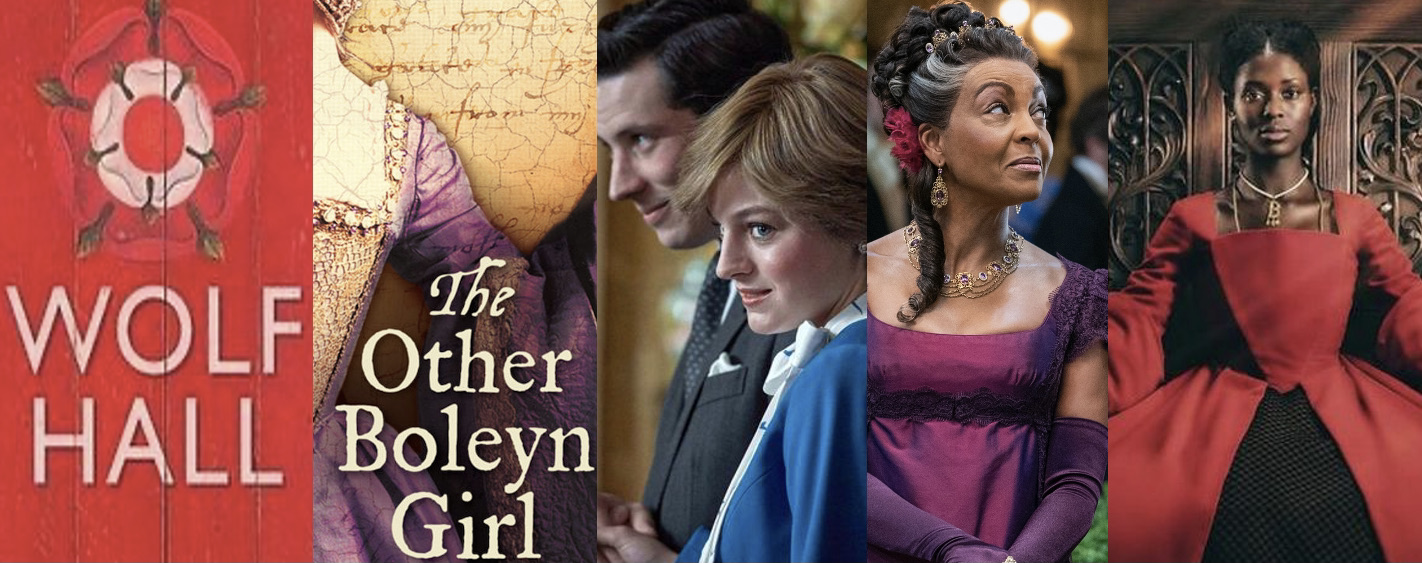
On the surface ‘historical fiction’ appears to be a contradictory term. ‘Historical’ clearly refers to events within the past, ‘fiction’ refers to ideas that are based upon the imagination. In theory these two ideas should not go together… so how do they? And what are the consequences? Hilary Mantel, author of ‘Wolf Hall,’ notes thatContinue reading “Historical Fiction: Can it make sense?”
Close Analysis: King Arthur’s round table at Winchester Castle
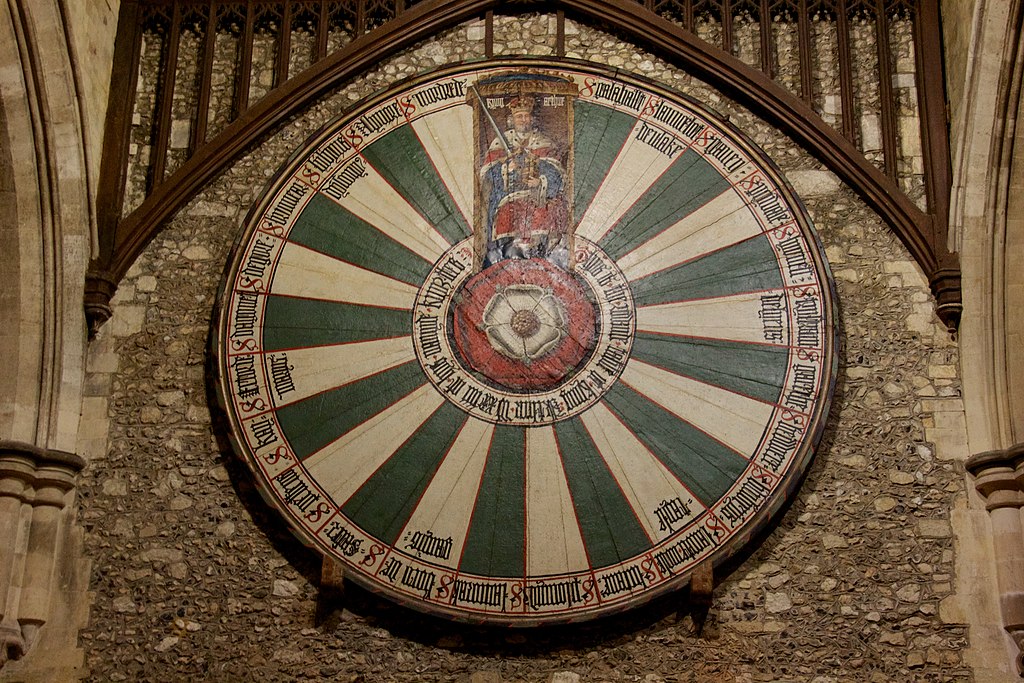
The object is King Arthur’s Round Table which is on display at Winchester Cathedral. The wood of the table dates back to the 1200s and was originally used at court for roundtable festivals. Edward I enjoyed Arthurian legends and the chivalric ideals they epitomised, and Martin Biddle argues that the table was created to celebrateContinue reading “Close Analysis: King Arthur’s round table at Winchester Castle”
 Khambay's Words, Words, Words