
TW: Sexual assault
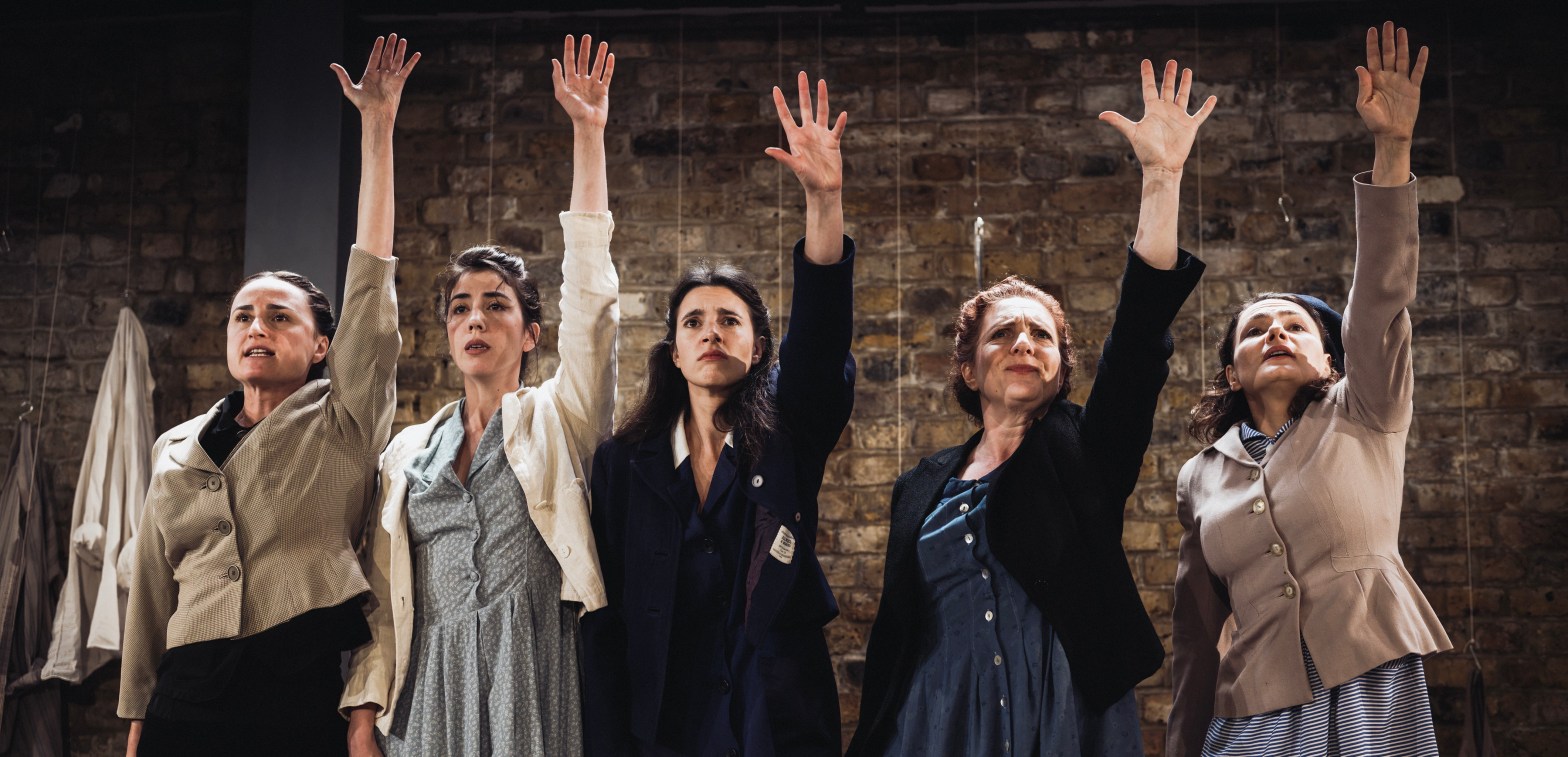
In a month of firsts, I ticked off another one yesterday by visiting Arcola Theatre for the press night of Banality of Evil: Hannah Arendt, France, 1940. The show follows a group of German Jewish women detained in Camp Gurs, a detention camp in France, following the outbreak of the Second World War. Focussing on 20th century political theorist Hannah Arendt, artist Charlotte Salomon and Communist schoolgirl Eva Daube, the show blends satire, physical theatre and deeply personal testimonies to create a powerful portrait of the risks of freedom and liberation – especially during its more restrained moments.
Staged in Studio 2, the intimate downstairs space, Carmen Neat’s set consists of a brick wall backdrop, hooks hanging from them to hold the women’s coats and sparse belongings. It serves as a literal backdrop of their oppression, the bareness of it emphasising their lack of possessions and lack of identity during their captivity. Quiet scenes where the women rest against the wall, closing their eyes to sleep is a striking visual, communicating their desperation, but innate strength.
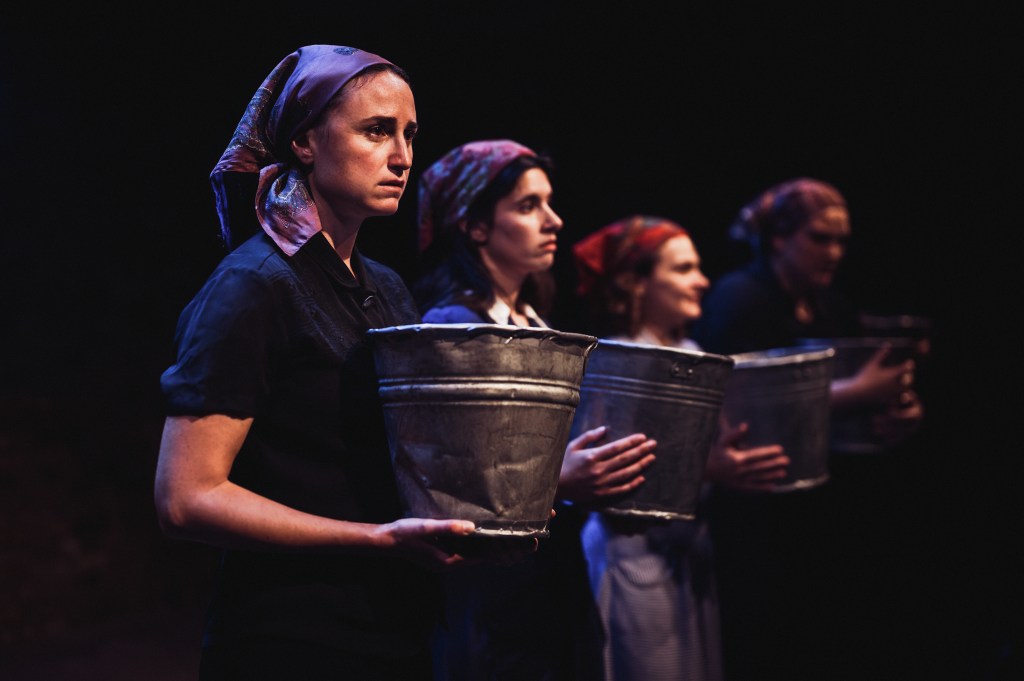
Considering this is all they have to work with, save some steel buckets, the cast do a brilliant job of making the space feel alive and lived in with their physicality. It is here that the show’s emphasis on physical theatre pays off, examples being the tapping of fingers on the steel buckets to simulate the sound of rain, and the women banding together to mimic the train from France to the camp. Tony Simpson’s lighting, particularly when he darkens the space, or simulates dusk to eerily cast shadows on the women, adds to the atmospheric isolation.
Photography by Alex Brenner
The production’s blend of satire, cabaret and physical theatre does make the show feel inventive, ensuring that it does not feel like a documentary. Moments that try to answer what these women did in their captivity work well to give life to the women behind the statistics – they sing, pretend the camp is a spa, and hold a mock trial for one of their fellow inmates. While Arendt (Mai Weisz) and Eva (Ariella Barnett) are wonderfully defiant, determined and grounded, Anna Eckhard brings a more ethereal quality to Charlotte – perhaps a reference to her real-life counterparts’ artistic nature.
However, certain ideas or performances feel over-egged. Scene names, ‘waking in hell’ for example, are de trop, and their frequent announcements, we get over twenty, take you out of the women’s world, and the actors away from their characters. A simulated sexual assault and scene of the cast squatting over buckets to depict dysentery feel unnecessarily graphic, proving less effective than the quieter, character-driven moments. Time may have been better spent detailing their escape from the camp, a pivotal moment in these women’s lives, which does feel glossed over.
Despite these shortcomings, the show sheds light on some remarkable women, who I found myself googling on the way home. Banality of Evil is a potent, and relevant, portrayal of female strength in the face of adversity, even if its quieter moments prove more affecting than its attempts to shock.
3.5/5
Thanks for reading!
Playing at the Arcola until 7th November!
Photography by Alex Brenner

