‘The Substance’ 2024: An Analysis

Coralie Fargeat’s Cannes 2024 winner ‘The Substance’ is an atmospheric, visceral tale about the ageing body. It follows Demi Moore’s character, Elisabeth Sparkle, as she begins to fall out of favour with TV Execs not due to any misconduct, but simply because her age is advancing. What follows is quite an incredible examination of many themes, including femininity, male objectification, celebrity and stardom.

The film opens on a star featuring Elisabeth Sparkle’s name on the pavement, in the style of the Hollywood Walk of Fame. The concrete seems permanent, but during the opening minutes of the film, it cracks as people walk over it. Although Sparkle’s celebrity seems permanent, it clearly is not. A passer-by drops his burger on the star, mopping up the tomato sauce. The smeared sauce is reminiscent of blood, referencing the body horror genre of the film, and the bloodiness of the films ending.

We then see Sparkle in the studio, streaming live on television doing her workout video. We follow her into the toilets, and she disappears into a cubicle. Dennis Quaid’s Harvey is then introduced. The camera is right up in his face, and he stands at the urinal whilst on the phone. The uncomfortable closeness of the angle coupled with the fact that he is handling his genitalia almost feels reminiscent of some kind of sexual assault. Following the MeToo movement, it is not inconceivable to think that in many situations, the camera could directly reference the viewpoint of a woman being subjected to unwanted male attention.

Harvey explains that he is going to fire Sparkle, and that he needs somebody who is ‘young,’ ‘hot’ and ‘now.’ He speaks about Sparkle in a derogatory way because of her age, which is especially ironic considering that he is no spring chicken himself. This scene quickly highlights the double standards between men and women, setting it up as a major theme throughout the film.

As already hinted at, Harvey is a predatory figure. This is fully realised in a scene where he dines with Sparkle. Sitting opposite her, he de-veins and messily eats several prawns. She in contrast does not eat. His physical dismembering, ingestion and discarding of these, formerly, living things directly references Harvey’s intention to discard Sparkle, after he has used her to fuel his career. His gluttony when it comes to food is the same when it comes to money and popularity and drives his decision to get rid of Sparkle. After he leaves, Sparkle notices a fly in her drink, floundering. She is the fly. Harvey did not formally sack her in that meeting, but she knows she is treading water.

This is what pushes Sparkle to use The Substance. This is organised via a phone call between sparkle and the mysterious organisation. These interactions, that deep male voice reminded me of scenes from horror films, such as ‘Scream.’ It added to the mysterious, and ultimately ominous, nature of The Substance. The elusive nature of the The Substance works well in the film, and, if one were to try and explain it fully, we would probably find ourselves caught in many logic knots. It mystery adds to its attraction, and helps to draw the viewer in. The sentiment that Sparkle and her improved self are one will be discussed in greater detail later. Sparkle’s ‘better version’ of herself is named Sue.

When Sparkle uses the substance, she does so in the bathroom and is nude. The clinical nature of the white tiled bathroom and her nudity are reminiscent of a hospital birth. This is fitting, as Sue crawls out of her back. Sue is almost ejected, in a strange birth that is in some ways similar, but also different, to a vaginal birth or caesarean. Sparkle also rests in a foetal position, again reinforcing the idea of birth. The physical ejection of Sue from Sparkle’s back foreshadows Sparkle’s later rejection of Sue. Sue, crawling out of Sparkle’s back, evokes the phrase ‘stabbed in the back.’ Later, Sue will do this, as she does not respect the balance. The violence enacted on Sparkle’s body as Sue emerges does not directly resemble the action of a stab but foreshadows and reinforces the idea that betrayal is imminent. Sparkle cannot see what is happening behind her, she is metaphorically and literally blind to it. She does not know what she is getting herself into and does not fully realise what has occurred until a week later when it is her turn to take over.

Sue auditions to join Sparkle’s network and impresses Harvey. Sue is markedly different from Sparkle, and not just because she is more youthful. Sue often wears pastels, in contrast to Sparkle’s darker blues, and is much gigglier. She frequently sports heart or star shaped earrings and sometimes wears her hair in a high pony. She reminded me of Ariana Grande, and my sister remarked that her jewellery looks like it’s from Claire’s Accessories. Sue is more girlish, which to some means more feminine, and by some, I mean Harvey and the men at the network. They are taken in by her childish innocence and naivete, and Harvey praises her for appearing ‘pure of heart.’ Without saying it, he is drawn to her because of what he perceives to be virginal qualities, girlishness and innocence. Sue is almost a blank canvas for all these older men at the network to project on. The male gaze that they hold dictates that she is virginal and innocent, and this is the reason why they like her – they feel like they can control her. In their eyes, she does not fall into the offensive and sexist category of ‘damaged goods,’ she is undamaged and untouched. All these male onlookers want to be the first.

There is one shot of her strolling down the street, sucking a lollipop and wearing sunglasses. It is reminiscent of the film poster of Stanley Kubrick’s 1962 adaptation of ‘Lolita.’ This quick frame fits the idea that this young woman is about to enter a world where she is going to be continuously preyed on.

Sue’s workout ‘Pump It Up’ is hardly a gruelling workout. There’s more hip gyration than hip thrusts. The network is blatantly trying to sexualise Sue, as has been the case with many a young female star, such as Ariana Grande or Britney Spears. During a later ‘Pump It Up’ a bulge pushes out of Sue’s right buttock. Those in the gallery asked to run it back, and conveniently there is one camera permanently angled at Sue’s buttocks. The crew gather in front of a screen to watch the footage back in slow motion, and much like real life, they are all male. Sue, and previously Sparkle, are constantly being objectified by all men in their life, and said men shield their blatant ogling by claiming that it is in a professional capacity. This scene feels very relevant especially considering the MeToo Movement.

The agreement is that when Sparkle gets seven days, Sue gets seven day, something which Sue promptly begins to disrespect. Even though it has been stated that both women are one and the same, it is so easy to forget that they are… because they are literally played by two completely different people. Sparkle refers to Sue as a ‘selfish bitch.’ It’s a real meta moment, as she is referring to herself. Obviously to the character it feels separate and looks separate as they are two different physical bodies. As Sue continues to disrespect the agreement, Sparkle begins to age rapidly, originally spreading from only one side of her body. The idea of two women, one old, one young, is physically represented by Sparkle’s body. One half of her is youthful, the other old and wrinkled. She is physically two halves of one woman at different stages of her life – the irony is that the two halves of women that she represents is representative of her current predicament. Demi’s hatred for another woman due to their youth speaks to the idea of female competition and resentment… it’s like Snow White and the Evil Queen.

Speaking of the Evil Queen, Sparkle then descends into stereotypical mad old spinster mode. While watching Sue on TV, Sparkle mocks her while cooking. She waddles around the kitchen, with grey unkempt hair and ferociously cooks ingredients in a frying pan that sparks and catches fire. She reads in her recipe book, as if she is reading from a book of spells and narrates that she next must ‘eviscerate the turkey.’ ‘Eviscerate’ means the removal of internal organs. Sue was birthed from Sparkle, and although no one removed her from Sparkle’s body, she came from it, in the same way that offal comes from the animal that it was originally housed in. While eviscerating a literal turkey, Sparkle wants to eviscerate her personal turkey – Sue. Sparkle’s wrenching of the offal out of the Turkey references Sue’s violent and bloody birth. Sparkle also screams while doing this, and this aggressive form of penetration into a passive body is reminiscent of sexual violence. It is quite an unsettling scene.

Many aspects of the female experience are referenced within the film, such as Sue’s birth. Later in the film, when needing a booster of Sparkle’s spinal fluid, Sue runs into the bathroom whilst suffering from a nosebleed. The stress of the situation makes her increasingly irritable, and her boyfriend, upon seeing the blood, jokes that she is irritable because it is her time of the month. He makes light of a serious situation, by concluding that Sue is overacting because she is on her period. It is incredibly dismissive.

There are plenty of examples throughout literature and film that suggest that the root cause of all women’s problems is their period. As it is seen as the gap between girlhood and womanhood it is a significant event, but certain works endow it with negativity. The opening scene of ‘Carrie’ references this, as Carrie getting her period is an incredibly traumatic experience and sets the tone for the whole novel. She had no supernatural experience before this event, her period offsets this chain and eventual death.

Sparkle decides that enough is enough and decides to put an end to Sue. The lethal injection is labelled as a ‘Termination.’ If this is not a direct reference to abortion, then I do not know what is. It could be argued that as Sue physically emerged from Sparkle, she is her offspring, her child. Sparkle is debating whether to abort her, the only difference is, Sue is a fully grown woman at this point, not in her womb. Perhaps because Sue is physically present, Sparkle cannot carry out the termination.

She realises that she needs Sue, she needs her youth, ‘you have to come back,’ she says. Visually, it is literally an old woman begging for the revival of her youth. She recognises that once women lose their youth, they are discarded, and she is desperate for it back. She is then discarded and dispatched by Sue when she awakes. It is quite horrible to see an old frail woman being brutally murdered… ageism is represented from all angles in this film.

Fast forward to the end of the film, when Sue makes her New Years Eve appearance. After being half terminated, and then injecting herself with some spinal fluid, she morphs into something unrecognisable. Sue wears a giant blue chiffon dress, proving that, no matter how you dress your body up, it is still going to change, and age. Sometimes we do not have control over Mother Nature, and when you try, Mother Nature can bite back and turn you into Monstro Elisasue.

As her body continues to mutate, a breast pops out of the side of her head, squelching onto the stage. It is probably the first time an audience has shied away from the appearance of a female breast, something regarded as beautiful is now deemed as repulsive. In everybody’s panic, Elisasue is pushed under a studio light. She is placed under the spotlight, her body scrutinised by the audience, just as how women in the public eye are scrutinised by everybody. She protests that she is the ‘same’ as she was before. The older versions of us and the younger ones are the same, society just does not view us that way.

In the end, the Elisasue breaks down, forming a mass of flesh with Elisabeth Sparkle’s original face at the centre. She crawls onto her start on the walk of fame, and eventually melts away. She is then cleaned up in the morning. She is forever to be a face on a paving slab, trodden on by society, a star that once brought her recognition is now her graveyard. Despite her best efforts, Elisabeth Sparkle and Sue have both been discarded by a misogynistic and patriarchal society.

Thanks for reading!

‘Wicked’ 1995: Race Relations and Good and Evil

Whilst reading Gregory Maguire’s revisionist Wizard of Oz novel, the thing that shocked me was peoples’ surprise at the novel’s existence. The glitzy, well-known musical has a larger following than the novel, despite the latter’s critical and commercial success. As a revisionist text, the novel seeks to give some background to The Wicked Witch of the West, or Elphaba to her peers. The novel details the events that led to her acquisition of the infamous title and documents her tumultuous friendship with Glinda. The two together stand at the opposite ends of the spectrum of good and evil, and everything else in between. The problem of evil, and its root, is a prevalent theme in the novel. However, and maybe this is because I am reading the novel in 2024, or because I am a person of colour, to me the novel was clearly about racism.

Before the novel shifts to the emerald tones of Elphaba’s skin, it opens in familiar territory, on the yellow brick road. Elphaba seethes as Dorothy and her companions march to the Emerald City and discuss the Wicked Witch that pursues them. Elphaba is described by the group as ‘castrated’ and ‘hermaphroditic.’ Elphaba appears to be a walking inversion throughout the novel, but in this specific instance she is a physical inversion of a man and woman. By describing Elphaba this way, the Lion, Tin Man and Scarecrow note her difference. This makes her a threat to their very existence. She is consistently ‘othered’ by everyone else in the novel, and a key source of this is the colouring of her skin.

Elphaba’s colouring also presents contradiction, as the colour of her skin is a curse, yet integral to the land of Oz. When first mentioned, Elphaba is not described as green, but as ‘pale emerald.’ Elphaba is immediately tied to a precious, rare jewel, and even though her nurses debate drowning her at birth, it is this shade that does gets her noticed, negatively and positively. In other contexts, the colour is coveted, but in Elphaba’s hands it is spurned. It is almost like a poisoned chalice in her hands. The green ties her to the earth itself, and to nature, but also to the industry of the Emerald City. Perhaps Elphaba’s overt link to the Emerald city references the fact that the Wizard is her father.

It is Elphaba’s skin colour that immediately distances her from her parents. On the day of her birth, her fanatically religious father Frex fears that the ‘devil’ is in the air. When his green baby arrives, you can guess the conclusion that he jumps too. Elphaba’s very presence drives a wedge between her mother and father, as Frex immediately accuses Melena of infidelity. He of course, is not wrong, but both parents’ denial of Elphaba only serves to intensify her isolation and means that she grows up devoid of love. Childhood trauma pending.

While Elphaba’s feral nature in her childhood is well documented, the racial abuse she experiences becomes clearer when she enrols at Shiz university. It is the arrival of Galinda, Elphaba’s obvious foil, that highlights Elphaba’s difference in skin colour and class. It is Galinda’s beauty that makes her ‘significant,’ a note that foreshadows her materialistic nature. Galinda has an air of celebrity about her, she is beautiful, something that she uses as currency, and has connections and high social status through her birth. She hails from an old ‘Gillikinese’ aristocratic family, and while she is accepted into Shiz for her intellect, it is not inconceivable to think that her heritage also makes it her birthright. Elphaba is of noble birth too, but Galinda’s emphasis on her old aristocratic connections appears to set her above everyone else.

Galinda’s presence offers up a significant slice of racial discourse: she is white privilege. Her appearance is almost Aryan, she is white and blonde. She knows that her ‘flaxen hair’ grants her ‘natural advantages.’ This is why she ensures that it is always on show. Her hair is frequently loose, and she is depicted as constantly playing with it. Elphaba’s lack of these physical qualities immediately makes her inferior. Elphaba’s hair is described as ‘foreign-looking,’ and those around her believe she hails from ‘exotic climbs.’ She is only described this way due to her difference in colouring, and despite people’s interest in looking at her, they are not interested in befriending her.

Nowadays, words such as ‘exotic’ are recognised as racially loaded lexis. This ties together with the idea of otherness, as people immediately assume that Elphaba’s difference in hair and skin tone must mean that she hails from a different land. These judgements are cast upon her before she has even spoken, and shows that Galinda and her peers are exercising explicit racial prejudice. The irony of this is of course the fact that Galinda and Elphaba are not of different races. However, due to the judgements made about Elphaba based purely on her skin tone, to me, racism seems like the best word to describe the discrimination that she experiences. The casting of Cynthia Erivo, a black woman, as Elphaba acutely reflects this shift in culture, something that Maguire would recognise considering his American heritage and the countries’ history of racial unrest.

What is interesting throughout the novel is the development of Galinda and Elphaba’s unlikely friendship. This friendship raises Elphaba’s status, a story note that references the white saviour narrative. Galinda’s association has saved Elphaba from being a social outcast. Galinda does display paternalistic tendencies towards Elphaba at first, feeling sorry for her, and feeling the need to coach her in becoming popular, the focus of a whole song in the musical. So, while, the optics of this narrative may not fare well in 2024, it serves Galinda’s character development. While initially she is snobbish and materialistic, her growing acceptance of Elphaba, and diminishing judgement, does reference some form of racial cohesion between the two.

However, their lives and priorities pull them in different directions. Elphaba’s revolutionary calling only others her further from the inhabitants of Oz, and makes her the object of their hatred. In Elphaba’s view though, her main downfall has been the ‘curse’ of her skin colour. This self-awareness is interesting, and does mirror sentiments of people of colour in society. Elphaba argues that this physical feature is what has attracted discrimination and by extension all hardship in her life.

Elphaba’s ultimate downfall is her humanity – and search for love. In ‘The Wizard of Oz,’ Elphaba is obsessed with Dorothy’s ruby slippers. These were of course obtained from The Wicked Witch of the East, Elphaba’s sister, and known in the novel as Nessarose.

The shoes were gifted to Nessarose by her father Frex, the man that Elphaba too believed to be her father. After Nessarose’s death, Glinda gifts Dorothy the shows, not wanting them to fall into the hands of the corrupt Munckinlanders. In response to Elphaba’s fury at not being given the shoes herself, Glinda hits the nail on the head, telling Elphaba that the shoes ‘won’t make [your] father love [you] any better.’ Elphaba’s quest to obtain the shoes results in her watery end, and if there was any plot thread that could humanise Elphaba so far into the novel, it is this one. Her desperation for love and acceptance is her undoing. Elphaba herself knows that this is something she could never have obtained, due to the colour of her skin. Even when Fiyero looks beyond this, their affair does not last because he is murdered. As remarked by the Cowardly Lion at the beginning of the novel, Elphaba is notoriously ‘unlucky in love.’

This leads nicely onto the problem of evil within the novel, and the nature and nurture debate. Had Elphaba received love as a child, perhaps she would not have desperately wanted the shoes, and perhaps she would still be alive. Even Elphaba’s revolutionary ideas may have been spurred on by this lack of love, as had she not been so deprived as a child, she may not have felt so connected to the marginalised animals she fought to give a voice to. Throughout the novel Elphaba is described as animalistic, and so her awareness of their mistreatment is not unsurprising.

Glinda has been given everything, wealth, social status and aristocracy. While she endeavours to do good work, she does not fight for the underdog as Elphaba does. Perhaps this is because Glinda has never been the underdog. It is not something that she can relate to, her white privilege sees to that.

Despite their differences, and how differently they are perceived, Boq does a neat job of summing Elphaba and Glinda up:

‘Glinda used her glitter beads and you used your exotic looks and background but weren’t you just doing the same thing, trying to maximise what you had in order to get what you wanted? People who claim that they’re evil are usually no worse than the rest of us.’ He sighed. ‘It’s people who claim that they’re good, or anyway better than the rest of us, that you have to be wary of.’

In a world where people, especially women, are reduced to stock characteristics, Boq in his little speech tries to add some nuance. As stated earlier, both women are one end of the spectrum, they cannot meet in the middle. Even Dorothy, as soon as she drops down to Oz is labelled in extremity. She is a saint, for bringing the house down on Nessarose. She acquires sainthood status through one accidental act.

In short, Boq opines that Glinda and Elphaba are neither good nor evil, they both have just used what they can to get what they want. Glinda traded on her wealth and looks, and Elphaba embraced the mantel of wickedness placed upon her to further her revolutionary cause. If there is no good and evil, one must ask why both women have been labelled this way. There are bigger political machinations occurring in Oz, and it seems the whole place is a big, propaganda machine. Both gained publicity and harnessed it for their own ends.

In this statement, Boq comments on Elphaba’s skin tone but also does not. He notes that both women really, are not that different. Their intent and aims are, but the way that they operate is not. And if they are not so different, should Elphaba’s skin tone be a factor? In a way no, as it is not relevant to their aims, but also in a way, yes. Boq does say that Elphaba used her emerald hues to get what she wanted. So maybe without her ‘exotic looks’ Elphaba would not have become the famed, notorious revolutionary. It seems Elphaba’s skin colour, albeit at different points of her life, is both a blessing and a curse.

Thanks for reading!

‘Dilwale Dulhania La Jayenge’ 1995: An Analysis

‘Dilwale Dulhania La Jayenge’ is one of the most celebrated Bollywood films. Even after twenty-nine years, it still plays at the Maratha Mandir Theatre in Mumbai. The film tells the story of two young NRI’s, non-resident Indians, Simran and Raj. Both embark on a trip around Europe after finishing sixth form and their meeting changes their lives forever.

Many critics have noted that a Bollywood exists before DDLJ, and after DDLJ. The film is credited with fundamentally changing the nature of Bollywood itself. It boasts all the classic Bollywood features, such as a lengthy runtime and catchy songs, but also adds a lot more to reflect cultural shifts that were happening within the 90s.

The fact that the film is about non-resident Indians has been regarded as a massive selling point, and a string of films following after have targeted that market. Originally, director Aditya Chopra wanted a Caucasian American lead and considered casting Tom Cruise as one half of the star-crossed lovers. The non-resident Indian aspect does immediately make the characters of Simran and Raj more relatable to younger audiences.

Both Simran and Raj manage to balance Britishness with their Indian values, and although this is what encourages their union, it is also what drives it apart. It creates a personal conflict for them both, and throughout the film we see them lean into their British side, and into heir Indian side. Depending on who they interact with, one side is more prevalent than the other.

Let’s start with Kajol’s Simran. More so than Raj, due to her strict father Baldev Singh, Simran must straddle the line between British and India. When with her friends, she wears English clothes, at home, Indian. In a humorous scene in the film, Simran, her mother Lajjo and sister Chutki are seen dancing to western music. However, when Baldev comes home, the prayers are on and the prayer books come out. Baldev is also most affectionate towards his daughter when she is being religious. It is whilst praying in the morning that Simran successfully gets her father’s permission to go interrailing, with the assurance that she will comply with her arranged marriage upon her return. The film appears to hit the zeitgeist of a massive cultural shift, as by the 90s, more Indians had moved out of India to places like the UK.

While Shah Rukh Khan’s Raj feels more western than Indian, his heritage is not fully disregarded. In a controversial scene where Simran worries that while drunk, she slept with Raj, Raj informs her that he knows the value of an Indian woman’s honour, and that it is something that he would not dare disrespect. When the film moves to India also, in front of Simran’s family he is well mannered and respectful. He acts differently in front of his friends, as does Simran, as does everyone. Balancing the east and west is something that NRI’s still do now, although recently I feel that there has been a bit of a rediscovery of Indian culture amongst the youth, and a reclaiming of it.

It is unfortunate though, that Indian culture in the film is what disrupts the union between Simran and Raj. This is personified by Amrish Puri’s Baldev Singh. From the opening scene we learn that although he resides in London, his heart and soul is in Panjab. He has a very idealistic view of what Panjab is, and although he seeks to uphold culture and tradition, he does so nearly at the cost of Simran’s happiness. His idealistic view is showcased with the opening song, as women dance and sing throughout the fields. It is idyllic, and ironic, as while preparing for her arranged marriage, it is in Panjab where Simran is the most unhappy. His strong patriotism does highlight some hypocrisies. When Raj and his friends steal from his shop, he notes that they are devoid of Indian values. However, the Panjabi Kuljeet Singh at the end of the film, along with his friends, savagely beat Raj. Surely violence is not part of Indian values? When watching DDLJ Baldev does come across as the villain of the piece, but I do sympathise with the fact that what Simran is asking for him is different to everything he knows, and everything that he loves – his culture.

In contrast is Simran’s mother Lajjo. Although the film is set in the 1990s, in the patriarchal Panjab, Lajjo’s feminist edge does tap into the changing mindset of non-resident Indians. Lajjo recognises that women have had to sacrifice their happiness for the sake of men, and realises that unless she intervenes, her daughter will have to do the same. This is why she encourages Simran and Raj to run away and fulfil their desires, because in her youth, she was unable to fill her own.

Although the men in her life do control her fate, Simran is not fully passive unlike her mother was in the past. She wins her trip to Europe, she is more than capable of holding her own when it comes to Raj and she manipulates the Karwa Chauth ceremony to ensure that Raj is the one to break her fast. Her resilience eventually pays off. As well as this, even before Simran’s triumph at the end, little moments along the way imply that their relationship will be more egalitarian than most. She argues with him, she wins, he apologises, he changes. And she does the same, both stating on different occasions that they got carried away.

One thing that sets the film apart is the fact that the lovers do not elope, which was noted by several critics. Raj does want to be honest, and maintains that he will not steal Simran, he will be given her hand by her father. Simran does not believe that this will come to pass, citing her father’s traditional values. Forbidden unions always come at some cost in Bollywood, in ‘Veer Zara’ Veer spends his days in prison, Rahul and Anjali are banished in ‘Kabhi Kushi Kabhe Gham’ and in ‘Tohfa’ Sridevi’s Lalita gives up her love Ram for her sister Janki, marrying an alcoholic no-gooder instead.

Gaining the approval of your parents is a massive theme in Bollywood, and something keenly felt in a lot of Indian households. ‘Kabhi Kushi Kabhe Gham’ comments on this trope, Anjali, also played by Kajol is particularly distressed at not gaining her new father in law’s blessing. Considering this, Simran and Raj do emerge relatively unscathed, they are not banished, they are both alive, and they obtain the blessings that they are so desperate for at the end of the film.

In the end, everyone in the film is satisfied. All the somewhat competing forces, east and west, children and parents, modernity and tradition settle and culminate in a happy ending. Everybody wins, and everyone is validated. And even though Simran and Raj deviate from the traditional family structure established by Baldev’s superiority, the Indian family system remains intact, as Baldev’s approval is earned. The film proves that these perceived Indian family values can be carried out of India to other countries, and that NRI’s can be as equally Indian and valid citizens as those that have stayed in India itself. Simran and Raj’s romance does not play second fiddle to family values, as Lajjo’s did previously, their love is validated and elevated further by these family values.

Baldev’s change of heart characterised in the iconic line ‘Ja Simran ja… jee lee apni zindagi’ really is massive. In telling Simran to ‘go, live your life’ represents a huge shift, a shift that was happening for all NRI’s in the 90s. In that singular line, Baldev lets go of the tradition and culture that he wants to uphold and allows her daughter to marry a man that he vehemently did not approve of. Baldev, in the closing moments of the film, realises that nobody would ever love Simran as much as Raj does, and that this is enough for him. It’s such a seismic shift that I wouldn’t mind if the film had an extra 20 minutes to explain his thought process a bit more. The union of Raj and Simran resonates because it is not just a win for love itself, but a win for the younger generation, in or out of India who wish to follow their own heart and create their own path. It also shows a parent who is willing, albeit after a long time, to let go of something dear to him for the happiness of his beloved daughter. It is quite moving, and it is not hard to imagine why the closing moments of the film still elicit tears.

Thanks for reading!

‘Joker: Folie à Deux’ 2024: An Analysis (and why I loved it)

Ironically the poor reviews surrounding Todd Phillips’ ‘Joker: Folie à Deux’ is what drew it to me even more. While I have great respect for the first film, I did not love it and found the sequel to be more engaging and interesting.

On the first film, there were elements that I liked and objectively appreciated, and Arthur’s bleak existence was masterfully portrayed by Phoenix. I was not a massive fan of the debate about Arthur’s paternity, I found it to be more akin to soap opera than serious, social commentary. It shifted the focus from Arthur to his mother and Thomas Wayne, when there was already an interesting enough story about social poverty there to work with. It was never going to be a film I would watch on repeat, and although personally I did not enjoy it, I respect it for what it tried to say.

Let’s start with the music. The film is not a musical in a conventional sense, it is a jukebox musical. This specific genre refers to a film that uses well known songs, there is no new music composed for the film. I think this worked well, especially because the music that was used was more on the retro side. And no, people are not bursting out into song and dance, a multitude of dancers in their wake. The music at times is not fully sung, it’s more spoken. It’s like speaking with rhythm, and definitely added a creepy edge. It moves the story onwards, and important plot points and emotions are conveyed through the words. It adds to the surreal feeling of the whole film and lets us into Arthur and Lee’s secret language. It strikes the balance between what the world sees, Joker, and what those in Arthur’s circle see, Lee and the audience. The songs are used to communicate intimacy between Arthur and Lee, as well as their most intimate feelings. It is very different, just as Arthur and Lee are different. It added a real surreal edge that subverts the realism of the first film.

People have noted that the sequel does not have much story – which I find quite strange. The whole film builds towards Arthur’s trial and tells the story of Arthur and Lee’s growing connection. Admittedly, there is not as much plot, twists, turns and violence that was in the first one, but I think this is why I partly I did not love it. All this stuff, plus the paternity twists did not feel that organic. This film to me, did feel organic, it allowed for a lot more breathing space than the first one did. And it does crescendo, it crescendos at the court house with the explosion. I am not sure what people expected the sequel would be about, if Arthur escaped prison and went on a killing spree, it would be too like the first film, and really, how much can you gain from that? It would just fall into the classic formula of villain causing havoc, has to be stopped. This one did have to be different, and organically followed what would come next after committing murder – prison and trial. While I believe that this is deserved, fans of the first film could argue that society is not listening or sympathising with Arthur again, and that Gotham has not learnt anything in the past five years. The film’s main problem is that it is not what the fans wanted. This sequel does not necessarily build on its predecessor, it subverts it and pulls the rug from under us, or specifically, from under fans of the first film.

Gaga’s Lee is the audience, she sycophantically worships Joker and wills his maniacal personality to break free. When Arthur goes against this, she goes against him. It’s very meta, and complex, as the film is aware of its own existence and criticises it. Should everything work to please the audience? Can we separate our own view and look at art objectively? I did note earlier that while the first film was not for me, I can appreciate it as a work of art. Objectively, if we look at Arthur, he is a murderer. Should we be supporting him?

The shock ending was foreshadowed from the very beginning. The animation of Arthur running away from his shadow, and the interchanging between shadow, Arthur and Joker speaks to Arthur’s identity struggle. He does not know who he is really, and these different personalities push and pull him. What does he want, what do other people want. We as an audience, like Lee have bought into this idea of the Joker. The first film champions him, this film goes into his mind further and tries to tell us what these multiple identities are like for him to manage. At the end of the day, the alter ego that is so beloved by the audience and Lee did some very bad things and is the one that is so revered. How does that make any sense in today’s world? Or today’s morality?

Instead of celebrating him, this film makes us realise that he is not a hero. He has brutally killed people at the end of the day. He is a person, who has done bad things. Granted, life did deal him a very cruel hand, but the decision to kill was his decision. He is not Joker, he is Arthur. This is what he confesses in court. He was never the Joker that we thought he was, the one that we think of from the comics, he is an iteration of that. The shock ending cements this, and makes a lot of sense. This Arthur is not a criminal mastermind, he is a man pushed to the point of desperation. He was never a hero; he was an unintentional cipher for the poor state that society was in. As poverty was thrust upon him, so was this reputation and martyrdom. While Arthur was active in his killings, he was passive up to this point, society acted upon him, he was used and abused by it. He never actively sought revolution. This version of Arthur does not want to be a major criminal or martyr, he just wants to be loved. Therefore, he is a Joker, but he is not THE Joker.

Like the first film it is making a statement, and the strong reaction against said statement does not mean that it is invalid. It just means that it is not what people want to hear.

My lasting thought is this: Arthur is not relevant at the end of the day, he never was. Only the Joker is. No one would care about Arthur if he was not the Joker, if he did not have that iconic make up. And that image is what endures. When Joker comes round again in whatever form, people will not remember Todd Phillips’ Arthur Fleck, they will remember Todd Phillips’ Joker.

Thanks for reading!

The ‘Alien’ Franchise: Gender, Sex and Motherhood

TW: Mentions sexual assault

When you think of iconic science fiction horror franchises, it is likely you will think of ‘Alien.’ Birthing in 1979 under the watchful eye of Ridley Scott, the franchise itself is still going strong today, as evidenced by the recently released ‘Alien: Romulus.’ After rewatching them all each film has a certain set of tick box features. A fearsome adult Alien, spawned by someone’s early encounter with a facehugger, a tomboyish female lead with a similarly tomboyish name, a mass of side characters needed to be killed off horribly, usually featuring your token ethnic minorities and probably an alien human hybrid for extra squirm factor and to hammer home to the audience that the Aliens are not as far away as we think. Considering the amount of content that stemmed from the original, it is not surprising that certain set pieces and plot points get repeated. Some of these repetitious plot points however work to elevate and reinforce the thematic stamps of the franchise: gender, sex and motherhood.

What is interesting is that the environment of the first film especially is not typically feminine or masculine. Originally, all characters were written without an established gender, which in hindsight should be obvious by their names. Ripley, Parker, Lambert and Kane do not align themselves with a specific gender, thus the franchise occupies an androgynous space. Sigourney Weaver’s Ripley herself aligns with androgyny, as she possesses both feminine and masculine traits.

Some characters lean more into the masculine or the feminine though, such as Lambert. Lambert can be likened to the damsel in distress, as she prefers to be protected by masculine presenting characters, such as Parker. It is the presence of the Alien that disrupts all notions of gender within the film. The Alien’s existence obliterates all human life present, and with it, all human conceptions of gender. The Alien does so through its deployment of sexual violence. It is the Alien’s phallic imagery that disrupts this androgynous landscape through forced, penetrative action which can be likened to male sexual violence.

The elongated, phallic shape of the Xenomorph and its multiple variants is reminiscent of various reproductive systems at different stages. For me, the facehugger is the most unsettling Alien within the franchise, and this is in part because of its reproductive cycle. The spindly fingers and whipping tale of the facehugger are quite obviously phallic, and its reproductive cycle of forced penetration against the will of the host is reminiscent of a violent sexual assault. With deeper thinking though, perhaps the facehugger is more androgyne than it’s male-coded appearance suggests. The area at which the tub extends is reminiscent of female genitalia, so perhaps the Alien is androgyne as some of its human counterparts. But then, am I taking this too far?

It’s one thing to say that something long represents a phallus, but making the link to female genitalia feels more specific than just a generic, long shape. Can I compare an alien to human genitalia, and the human concept of gender? Does any of that make sense? Let’s just agree it’s all pretty gross.

The result of this assault is the iconic chestburster, as immortalised in the original film. The birth of this Alien also displays the same violence in being born as in being conceived. While the facehugger forced itself onto a human host, when gestated, the Alien forces itself out. The facehugger is the active agent in this scenario, and the human is the passive actor. This power imbalance comments on the lack of consent in this scenario and reinforces the rape allusion.

As established previously, the presence of the Alien destroys human concepts of gender. We infer that this is the case, because the Alien enacts violence on everybody equally. The male-coded Alien does not discriminate.

The Alien’s nature, and that of Ripley’s also links to the theme of motherhood. Throughout the first film several characters, most notably Kane, are forced to give birth. This disrupts the idea of gender norms, especially when dealing with male characters such as Kane, as the act of giving birth is female-coded. This already inverts the romanticised idea of having a child, something that typically is supposed to be born of love, something that brings joy. The Alien’s reproductive system provides no such thing. As the theme of motherhood is built upon and strengthened throughout 1986’s ‘Aliens,’ what we get at the end of Cameron’s sequel is the ultimate face-off between the two superior mothers. The Xenomorph Queen and Ripley herself. Let us talk about the Xenomorph Queen first.

The Xenomorph Queen’s physical form can be likened to that of the previously established Xenomorph, although she is more ornate. The Queen has the same phallic head and tail, but is coded as feminine, and named Queen, because of her capacity to give birth. What is interesting, is that she requires no male to fertilise any eggs, she births them herself. She reinforces human ideas of gender norms, she is female as she gives birth, but also carries that bit of androgyny that Ripley does, linking them together. The Queen’s very presence cements the inference that the Xenomorph in the previous film is male, as it could not produce eggs independently.

In a deleted scene in ‘Aliens,’ we learn that whilst in cryo sleep, Ripley’s daughter died. This leaves the daughter void wide open for the entrance of Newt. It is through Newt that Ripley cultivates her motherly instinct, even following it against Hicks’ advice. Ripley’s strong belief that Newt is still alive highlights the strong connection she has with, what is framed as, her adoptive daughter. It is this connection that eventually spurs her to confront and defeat the Queen, in a sequence that is the closest thing we are going to get to a sci-fi catfight… albeit with more acidic bite. Ripley’s iconic cry of ‘get away from her you bitch!’ prefaces the iconic showdown.

A note on this lexis. While later heroines Rain and Daniels refer to their respective Aliens as ‘motherf*****,’ Ripley’s use of ‘bitch’ not only notes the Queens animalistic tendencies, quite literally calling her a female dog, but also notes her gender as female by referencing her ability to breed. Much like Ripley herself. The line also speaks to a mothers’ willingness to do anything for her child. The Xenomorph Queen is also prepared to do anything for her children, but the difference is that hers are dead, at Ripley’s hand. She is prepared to do anything to avenge her children. Ripley’s relationship with the theme of motherhood only complicates in later ‘Alien’ films as does her relationship with the Aliens themselves.

In ‘Alien III,’ spawned in 1992, it is established that Newt is dead, leaving Ripley devoid of a surrogate daughter. At the films climax, Ripley discovers that while sleeping, she was attacked by a facehugger and that a Xenomorph Queen embryo is growing inside her. This places Ripley in a unique position. In Newt’s place is the Xenomorph embryo, making Ripley the mother to the organism that has previously terrorised her. Her strong maternal instinct, as developed in ‘Aliens’ directly conflicts with the Alien growing inside her. This is an organism that she does not want to be mother to – but is. This can be likened to Kane’s forced motherhood in the first film. The only choice she has is to end her life and that of the embryos’. However, in the following 1997 film, ‘Alien: Resurrection,’ Ripley is cloned, the embryo is extracted, and the cycle of chaos and acid blood continues.

Ripley is aggressively confronted with the fact that she now has Alien blood running through her veins. She is integrated with the Alien race in a more intense way than being attacked by a facehugger. It is not a physical attachment that she can remove, their DNA is intermingled. It is almost more intimate than an encounter with a facehugger. Due to this, Ripley now possesses some of the Alien’s characteristics, notably having a more feral nature and a level of acidity to her blood. She is beginning to embody the very creature she fought against, again, without choice, the being that threatened, and by extension took away, her second chance at being a mother.

What is birthed at the end of ‘Resurrection’ is an Alien, human hybrid. The hybrid, being Alien and human, is the physical embodiment of the conflict occurring within Ripley’s body. The conflict between her human half and her Alien half. The hybrid would have also challenged the human concept of gender in a more explicit, physical sense. Originally the hybrid was shot with male and female genitalia, which were edited out in post production. What is interesting about this note is that Ripley is female, why would the hybrid have human female and male genitalia? Perhaps this is something to do with the female-male appearing facehugger.

The presence of the hybrid directly challenges Ripley’s maternal instinct. Knowing that she cannot let this hybrid continue to exist, she ejects it from the airlock. This is not the first child Ripley has lost, she lost her daughter and then Newt. Ripley is visibly distressed and guilt-ridden when ejecting the hybrid but understands its importance for the greater good, as although the hybrid had some human, it still contained some of the deadly Alien. The complexity of this conflict deepens Ripley’s relationship with the Alien species, as she, although temporarily, became part of their evolution. The force that Ripley fought so hard to destroy has now become amalgamated with her, and she cannot be separated from it. Both her and the Alien survive.

The Alien franchise seems to love a human Alien hybrid, and in ‘Prometheus’ Dr Elizabeth Shaw births a Trilobite by caesarean, which is key to the eventual birth of the Xenomorph. In the most recent entry, ‘Alien: Romulus,’ Kay births a hybrid, known as the Offspring. Humanity appears to have had multiple hands in what will eventually become the Xenomorph, by birthing some sort of anti-christ. This very birth subverts the idea of mother and child, as both Shaw and Kay are visibly horrified by what has been gestating inside them. They both are also attacked by their offspring. The Aliens encountered throughout the franchise are antithetical to humanity, and despite that dash of humanity gained from their mothers, they are still animalistic, bloodthirsty predators. They are pretty ‘un-human.’ Due to this, these women, despite being biological mothers, do not display that instinct in an emotional sense, as what they have birthed is horrifying to them.

Thanks for reading!

‘Frankie Goes to Bollywood’ at the Southbank Centre: An Analysis

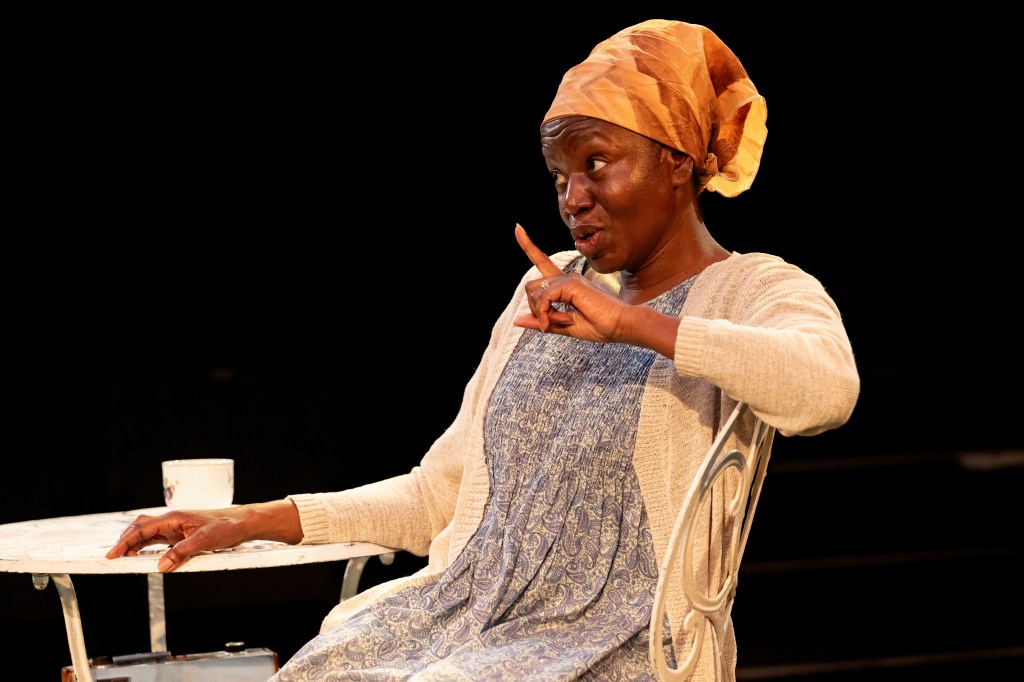
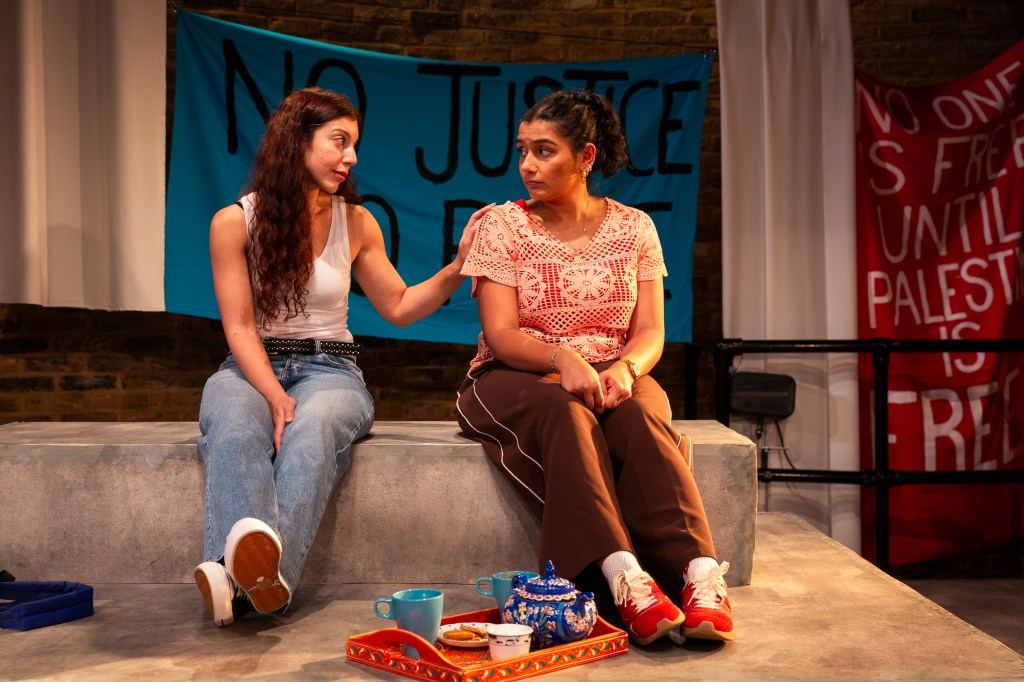
Pravesh Kumar’s ‘Frankie Goes to Bollywood’ is currently playing at the Southbank Centre and has just celebrated it’s one hundredth show. The billion-colour musical is true to its name and follows eponymous heroine Frankie on her journey to Bollywood stardom. It is a classic, fish out of water story, and one of self-discovery, set in the Bollywood bubble. What stood out to me most firstly was Laila Zaidi’s powerhouse performance as Frankie, and secondly the multi-faceted nature of the show. The show is British, and Indian, it is Bollywood, and not, it praises Bollywood and critiques it, promotes the sisterhood but airs its pitfalls, chastises men but sympathises with them and showcases corruption and pits it against compassion. It does not just provide commentary about Bollywood, but about life – Bollywood provides the microscope that all the characters are placed under, and crushed, under.

At the heart of the show is Frankie, who not only is navigating Bollywood but also navigating herself. She is that classic dichotomy of being British and Indian, and trying to find out where she fits. While being in Britain, she longs for the life of the Bollywood heroine, and when she gets it, and realises that it is not all that it cracked up to be, she wishes to go back and does not feel that she fits. The musical follows the bildungsroman formula, as in true coming of age style, Frankie’s naivete is shattered when she finally achieves her dreams and realises the reality of them. The Bollywood illusion falls and despite the stardom, it is authentic friendship and companionship that she misses, as personified by her cousin sister Goldy.

Kate Stasi’s Goldy is unflinchingly comedic and authentic – this authenticity is what Bollywood appears to lack. Frankie loses her authenticity as her naivete dwindles, as she gets swept in the Bollywood glamour and as a result, turns her back on Goldy and the sisterhood. The lack of authenticity in Bollywood is also signalled by Bollywood star Mallika, played by Helen K Wint, who in song and speech, tells Frankie that the Bollywood world is a stage, she is not just performing in the films but performing constantly in public as well. Mallika knows that to survive, especially as a woman, you must be brutal and willing to destroy other women. Bollywood appears to be the enemy of the sisterhood. Frankie complies, and steals Mallika’s husband, Bollywood icon Raju King (Geet Sagar). Frankie usurps Mallika’s husband, as Bollywood usurps Frankie’s morals and authenticity. She knows it’s morally wrong to treat Mallika this way, but she continues to do so in her quest for Bollywood stardom. Bollywood is corrupting her from the inside, and this breaking of the sisterhood with Mallika is repeated with Goldy, as Frankie becomes ever distant from her.

Early on Frankie realises that her value is based on her looks, her beauty is currency. Gigi Zahir’s Shona, despite claiming to be Frankie’s friend, informs her that all the audience want to see is boobs, ass, moves and sass. Although this is one of the shows best dance numbers, this message is certainly not. The more fame she attracts, the more Frankie realises that she is treated like a piece of ‘flesh,’ and becomes increasingly distressed by peoples’ comments on her body. Mallika is also tragic in this way, she has fallen out of favour because of her age, something that she has no control over. The same fate will befall Frankie, and initially she decides to ride that wave until it does. The men do not have this issue though. This commentary is probably one that is most prominent in Bollywood, as although we all love Shah Rukh Khan, him playing a college student in ‘Om Shanti Om’ was not that believable. The sexism of Bollywood and double standards upheld is explicitly highlighted throughout the show and forms its biggest critique of Bollywood.

Frankie’s realisation and ending, although predictable, is incredibly satisfying – she realises she can be a bit of everything. It is this realisation that restores her authenticity, she gets her soul back and with it works to repair her sisterhood with Goldy and Mallika. Throughout the first half of the production, we question how far Frankie is willing to go to achieve her dreams, and how much she is corrupted by it, and by the end, she realises that she does not have to compromise her integrity for Bollywood. She can form her own version of Bollywood and take those who are deserving with her. Those that are deserving are so because of their talent, not because of nepotism or looks, something well addressed and critiqued throughout.

Frankie forms a production company that is going to make stories by women, about women. Frankie does not only take what she has learnt from her Bollywood experience and apply it to her own life, she is going to share it with other young women to help them. This is truly admirable; she is not just a ‘warrior’ in her own story but is willing to be the warrior and heroine that fights for other people too. She does get her own Bollywood feminist happy ending – and note, she does not need a man to achieve it. A subversion of the classic Bollywood romantic ending. Frankie does not need a man, she has her (cousin) sisters.

But what of the men? Is there space for them in Frankie’s new world? While men are heavily criticised, mainly for the complicity in their poor treatment of women, there is also sympathy there too. Navin Kundra’s Prem is a director, who, despite being a kind creative, and supporting Frankie throughout her first film, is creatively constrained. Prem is one of the good guys, and his goodness, like Frankie’s is being crushed by the beast that is Bollywood. Unlike Frankie, who had Goldy to lean on, Prem does not seem to have anyone to confide him. Although it is not explored that much, his plight touches on the underrepresented issue and stigmatisation of men’s mental health in Asian culture, as in his sadness and stress he drinks, which only tarnishes his reputation within the industry. He cannot seem to win – until Frankie does. Frankie sees the goodness in him, and Frankie’s fight for women and freedom finds space for him, as she asks him to direct her films in future.

From a technical perspective, the set design, while formed of simple arches and a retracting stage, is incredibly effective due to the use of lighting. This is where the ‘billion’ colours come into play, with the multiple costumes significantly upping the colour count. The play encapsulates the best bits of Bollywood that we love, the costumes and the songs, and does so in such a manner that it will not alienate those who are not familiar. It invites those in who are not familiar and holds their hand as it introduces them to the world of love, melodrama, slow mo and saris. The show also honours the Hindi language of Bollywood in several songs, but primarily songs are sung in English but with Bollywood-esque instrumental, to ensure that people, and their varying knowledge of Hindi, like Frankie herself, are included. The use of English is cleverly explained to Frankie as the ‘side effect of colonialism’ – a standout line for me.

Something that I pondered on the way home, are we all complicit in the systemic sexism and corruption of Bollywood? By loving the films, and worshipping the heroes, are we doing a disservice to those that work in the industry? Female lead films in Bollywood are on the rise, as championed by Alia Bhatt in ‘Gangubhai,’ and Kareena Kapoor’s recent romp ‘Crew.’ But again, perhaps we can never know as we are not in the industry, we just sit watching on the outside, as Frankie did when she was young. It is only through Frankie’s adventuring that she discovered the truth by rediscovering her own, and managed to find her own Bollywood happy ending with that feminist spin that the industry needs right now.

‘Frankie Goes to Bollywood’ is playing at the Southbank Centre until tomorrow, Sunday 18th August.

Don’t miss it!

Thanks for reading!

‘Little English’ 2022: An Analysis

Pravesh Kumar’s British Indian romantic comedy follows newlywed Simmy (Rameet Rauli) in her attempts to navigate her new family, Britain and being deserted by her new husband Raj (Simon Rivers). Simmy has travelled to the UK from India for this marriage, and as a result only knows a ‘Little English,’ as referenced by the film’s title. While the film features the classic rom com tropes, as Simmy falls for her husband’s younger brother Harry (Viraj Juneja), what stuck out to me more was the macro divide between Britain and India, as characterised by the micro divide between the India-born Simmy and her new British Indian family. To me the film highlights the clashes and prejudices within the Indian community itself, providing an interesting cross section of what it means to be British and Indian, and fundamentally asks if we can be both.

Simmy is very much the heart of the film, and we experience the story through her eyes. In British television, it is more common to see subdued, downtrodden Indian women who are controlled abusively by those around them, Nish’s control of Suki in ‘EastEnders’ comes to mind. Like many Bollywood heroines before her, such as Simran from ‘Dilwale Dulhania Le Jayenge’, Simmy manages to embody stereotypical female roles, like the dutiful daughter, but also subverts them at the same time, and fights to stand up for what she believes in.

We see Simmy obey her new family; she serves drinks to guests, much like the servants she had in India and takes the brunt of her mother and sister in law’s anger. While she displays passivity in these incidences, this does not define her and is explained by her traditional background. While she respects her elders, she does not allow this to drown out her own voice, and although she is at times passive she also displays a great deal of activeness. Simmy is largely left to her own devices in her new home, and during this time she vows to find her husband and does so by stealing Bobby’s phone. She is also proactive enough to teach herself English, recognising, with Bobby’s help, that this will be the key to her freedom. Simmy manages to be respectful to others, and respectful to herself by still retaining her own agency and not compromising her own feelings and wants.

Simmy’s predicament highlights the naivete exhibited by Indians who live in Britain and Indians who still live in India. Simmy was sent here by her father for a better life, for her marriage which was presumably arranged to improve her prospects. Despite this, she is unhappy and notes that she ‘pines for home.’ Indians in India seem to think that life is better here, and Simmy was probably sold that dream. However, the reality that she finds herself in is somewhat different.

I experienced this when I went to India for the first time in March. I lived in a Gurdwara for a week, and everyone that I encountered seemed quite happy go lucky, away from the rat race of London life. This jovial attitude however did conceal poverty and money troubles, and conversely, those in the Gurdwara were jealous of my life, in the big, exciting city of London. There’s naivete on both sides, and everybody’s expectations probably do not meet reality. The reality of Simmy’s situation probably kills her idealism slightly and increases her isolation. However, her isolation only encourages her to improve her position. She also draws strength from her faith.

Simmy proclaims that she is ‘the daughter of a Sikh. I won’t cry.’ Simmy draws her strength from her faith, which ironically, is something that she and her newfound family share. The similarities between Simmy and her new family are rarely touched upon, instead, their differences take greater precedence, specifically the fact that Simmy has come to Britain from India… but more on that later.

Simmy’s character cannot be discussed without paying attention to her clothing. Simmy’s hair and clothes reflect her journey from isolation to freedom. Initially, she appears in an Indian suit, and wears jewellery. The colours Simmy wears contrast the muted tones of her mother-in-law, and during their first argument, Simmy dons a bright yellow, emphasising her passion. Simmy wears bold, block colours, setting her aside from the muted tones of her mother-in-law and western dress of Mindy, her sister-in-law. The closer Simmy gets to Harry, the closer her colours move to red, a colour traditionally worn by Panjabi brides. Her moving upon the colour scale from yellow to cerise highlights her growing love and passion for Harry, as well as her increasing inner strength. Outside of the house, Simmy adopts western dress as she gradually begins to learn and feel more comfortable in Britain.

She is at her most free with Harry, running around in the fields. The image of two lovers running through the fields is an iconic hark to the Bollywood romance, as referenced in Simmy’s clothes. Simmy wears a white suit, highlighting her innocence, with a red chuhni. It directly references one of Anjali’s signature outfits from ‘Kuch Kuch Hota Hai’… but without the heartbreaking sadness. The whiteness of Simmy’s suit is representative of her feelings for Harry and her freedom. With him she can have a fresh start, a blank canvas. In this scene, her hair is open, again, emphasising her freedom and happiness. This was not always the case though, as whilst in the house, especially in the presence of her mother-in-law, her hair is harshly tied in a bun, or in a plait. It loosens as her attraction to Harry grows. She is at her most free in nature, and with Harry.

Simmy’s mother-in-law, Gurbaksh (Seema Bowri) is not just your stereotypical mother-in-law from hell. Well… she is in part, but not without good reason. It is due to the racism that she experienced when first moving to Britain. Gurbaksh’s character speaks to the idea of intergenerational trauma, as she encourages the same bitterness in Simmy. This, coupled with Simmy’s naivete about Britain means Simmy is at risk of carrying this trauma on.

It is conceivable to think that Gurbaksh did not have much freedom as a young wife, as she does not encourage Simmy’s freedom. Simmy is scapegoated for pretty much everything, being told ‘since the day you set foot in this house, everything has gone wrong.’ They seem to forget that it is not Simmy’s fault that her husband ran away. Simmy’s treatment does not only enforce patriarchal views, but also highlights the sexist attitudes women exhibit towards each other because of it. Gurbaksh’s attitude towards Simmy does not encourage cultural change and cohesion and highlights the divide between Britain and India. Mindy isn’t subjected to the same criticism that Simmy is by Gurbaksh, and in fact joins Gurbaksh in chastising Simmy. Gurbaksh also displays harshness towards Harry and ends up alienating herself from several members of the family. On the surface, Gurbaksh appears as the traditional, Indian, matriarchal figure, an idea she is forced to confront when the question is later asked ‘is anyone happy?’ With the above comment, Gurbaksh is forced to question her lifestyle, and realise that the culture she is upholding is not making everyone else happy. It is her revaluating of this, that allows Raj, Simmy, Harry and Ruth their happy ending.

While Simmy must contend with these traditional values, she must contend with Mindy’s (Goldy Notay) prejudices. This relationship stuck out to me as highlighting the divide between Britain and India, as majority of Mindy’s distrust and insults towards Simmy stem from the fact that Simmy was not born in Britain. This is referenced to by their different clothing, Simmy’s wears Indian dress, Mindy wears western. Mindy refers to Simmy as a ‘village virgin,’ coming from ‘freshie land’ and opines that once Simmy gets her visa, she will be ‘off with (my) husband.’

Mindy forgets that in some way or another, we can all be traced back to ‘freshie land’ and commits the cardinal sin that many Indians do – being prejudiced to their fellow Indians. We see this all the time; a classic example being judging other Indians based on their outdated caste. All of Mindy’s negative views about Simmy stem from the fact that she was not born and bred in Britain. Her attitude is almost colonial, and her distrust of Simmy mirrors Britain’s xenophobia. This is massively ironic considering Mindy’s husband is from India. This however, in her eyes, is ok, as he has become naturalized in Britain, highlighted by his strong command of English in contrast to Simmy’s. Mindy notes that husband Bobby (Ameet Chana) should be grateful though, as without her he would ‘still be dancing in the fields.’ I see nothing wrong with this personally, it seems more jovial than joining the rat race, and dancing in the fields is where we see Simmy at her most happy. Maybe Mindy should try it. Mindy does not care for it, and her delivery of this line shows that she does not respect it. Despite not being white, Mindy’s comment is reminiscent of the white saviour narrative, and the paternalistic view that she has saved Bobby from what she perceives to be mindless nonsense. Mindy is the foil to Simmy, as it seems, Britain is the foil to India.

Mindy only begins to be more sympathetic to Simmy when she realises that they have family difficulties in common. Simmy struggles with her abandonment, and Mindy struggles to conceive. Simmy’s attitude towards Mindy during this time highlights her kindness and family orientated nature and encourages Mindy to realise that you cannot judge someone based on where they are from, you must judge them on their character. It may not quite fit with the conventional definition of racism, but Mindy is unquestionably prejudiced. I found this relationship to be the most fascinating in the film.

Another character that rebels against Gurbaksh is Harry, Simmy’s love interest. He combats the traditional ‘respect your elder’s trope,’ by quipping that ‘respect has to be earned.’ This belief mirrors that of younger generations and is something that Simmy lives by. Simmy tries to earn her family’s respect by teaching herself English. It is unfortunate that no one in the family actively decides to help her. It is particularly unfortunate that no woman in the family tries to help her, but as discussed, they are hampered by their own prejudices.

Harry and Simmy’s initial relationship is somewhat rocky. Despite flying the flag for the younger generations, Harry falls into the Mindy trap of looking down on Simmy because she has moved here from India. Telling her to ‘go back where’ she came from, like Mindy, Harry demonstrates a flippant xenophobic attitude. Harry is the first character to taste Simmy’s fury, and she rightly makes him aware that her poor command of the English language does not equal stupidity. She is also no ‘imported slave.’ She can be a good daughter in law, but she can have her own voice, and fight for what she thinks is right, just as Harry tries to do in his everyday life. Simmy bridges the gap between Britain and India, and the older and younger generations by honouring and trying to improve both. This is no easy feat, and for majority of the film she seems to be fighting a losing battle.

It is interesting that Simmy picks her first fight with Harry. Perhaps it is because he is younger and has a lower standing in the family. Whilst highlighting the difference between the two, the scene also notes that Simmy and Harry are not that different. In this scene Simmy is living by Harry’s rule that age does not command respect. She puts a personal spin on it though, stating that her ability or inability to speak English, or the country that she hails from, should not mean that she is respected any more or any less. Harry does not like being at the receiving end of a variation of his own rule.

As highlighted by the title of the film, language is a prominent theme in the film. It is a common Bollywood trope that speaking English equates wealth, this was touched upon in last year’s ‘Rocky Aur Rani Ki Prem Kahani.’ Early on, Bobby recognises the importance of learning English, telling Simmy that this will grant her freedom. In her spat with Harry, we hear her throw out some popular culture phrases, such as ‘may the force be with you.’ It is evident that she is learning English through the television. When I went to India, I drew attention for speaking English, and although I was slightly chastised for not knowing Panjabi, my intelligence was not called into question. Simmy deals with the opposite sentiments in this film and is looked down upon for her lack of English. It is interesting that, despite their distain towards her lack of knowledge, no one in the family actively tries to help her.

Despite this divide, Harry and Simmy use language to express their feelings to one another. They use a little English, and a little Indian. By using both they literally form their own love language, and their intimacy comes from their sharing of identities with each other in this form. We see this visually when they paint their names on the wall, in each other’s languages. They both adopt a little bit of each other, championing a cultural cohesion and understanding that, up until this point, we have not really seen in the film. This is also a win for Simmy in her quest to bridge the multitude of divides that she is trying to manage, which is reminiscent of British Indians today. Ultimately, the film teaches us that if we talk and listen to each other, this is possible.

A little side note on names. I wonder if the names Harry and Simmy are a play on ‘When Harry met Sejal,’ which itself is a play on ‘When Harry met Sally.’ If so, nice touch.

‘Little English’ is available on ITVX now!

Thanks for reading!

‘Kaur’ 2022: An Analysis

Short film ‘Kaur’ manages to start a complex discussion by zoning into an intimate conversation between father and daughter. Not only does it shine the spotlight on young British Sikhs today, grappling with traditional and cultural ideas, but it also puts a feminist spin on the debate by centring around a young woman, Avani, and her desire to wear a turban against her father’s wishes.

In the past year, I have been trying to delve into Sikhi more myself but have struggled to reconcile my perceived modern British upbringing and the traditional Sikhi practised and preached in Panjab. This was presented to me directly when I went to Panjab for the first time in March. However, what I discovered was summed up at the beginning of ‘Kaur,’ and maintained throughout.

‘He who regards all men as equal is religious’

Guru Nanak Dev Ji

Upon my research prior to flying out, it struck me that this was the core teaching of Sikhi, and that if one lives with this assertion, one is a true Sikh.

Avani argues that it is her connection to her faith that encourages her to wear a turban. Can she be a dedicated Sikh, and not have a turban? Her mother seems to think so. ‘Cutting your hair doesn’t mean that your faith is any less worthy than anyone else’s’ opines Avani’s mum. The relationship between Avani and her mother highlights the value and worth of female solidarity, and although Panjabi culture appears predominantly patriarchal, it still harbours a strong matriarchal presence.

Avani’s mothers’ statement concerning her daughter’s hair felt particularly validating, as part of the reason there is divide between the old and the young is because of judgment. While it is taught in schools that Sikh = turban, quite literally, the nuance of our religion is forgotten. Being a member of the Khalsa dictates that you should not cut your hair, as set up by Guru Gobind Singh Ji. Guru Nanak Dev Ji’s Sikhism did not include this detail. Both are equally valid.

I would argue that some of the older generations do not subscribe to Avani’s mum’s sentiments. I tell myself this when I get criticised for not having a turban, and this poignant quote is also affirmed by Guru Nanak’s teaching detailed at the start of the film. From my perspective, sometimes it feels like the older generations forget the core teachings and scripture of Sikhi, and this is echoed at the start of the film. Guru Nanak Dev Ji preached charity, equality, on all accounts, and earning an honest living to provide for family.  The way that we treat those around us surely is evidence of our faith, it should not be measured solely by the length of our hair.

It is important to remember that Avani’s fathers’ concerns come from a place of love, and this is key to the story. It is not judgement, or sexism, he is purely concerned for her welfare. He argues against her decision because of the racial abuse and violence he suffered when coming to this country, which climaxed in school bullies cutting off his hair. My own family when they moved here suffered racial abuse, and the effect of it is still felt by some of them today. I have detailed in other posts that, perhaps in different forms, racism does still exist in society, so it is understandable that Avani’s father shows apprehension.

It is Avani’s generation that is pushing into the unknown more than ever. I am sure that we all have examples of times when our grandparents did not, or could not, understand our chosen path. It may not mean that they loved us any less, but it took them extra understanding and adapting to something that to us, felt normal growing up today.

‘Kaur’ also demonstrates that generational trauma is ever-present. Avani tries to convince her father to see his point of view, but he maintains that he cannot support her decision. Perhaps Avani’s father will only come round once he sees Avani thrive in her new life, free from harm and discrimination. Perhaps the only way to heal generational trauma is to let the next generation fly, and hope that history does not repeat itself. It is a lot to ask the older generation who experienced this kind of abuse to let it go, and it will take work and understanding for them to work through this fear.

In a patriarchal Panjabi culture, the film does well to put women at the centre of the piece, especially considering it is tackling the issue of a turban, something that is largely associated with men. The fact that the short is named ‘Kaur,’ meaning ‘princess,’ tells us from the start that this will be a female-centric story. Although there has been progression, old fashioned views on female roles, especially within Panjab, do persist, and seeing a woman wearing a turban on platforms like ITVX and Netflix does shed light on a marginalised, minority group. The story reminded me of media personality and life coach Harnaam Kaur. Kaur is a Sikh woman who wears a turban and has a beard. Kaur has a beard due to polycystic ovary syndrome, which encourages excessive hair growth, and because of her faith she stopped cutting it off. She received online bullying and abuse for her appearance, and I remember reading about her story as early as 2014/2015. I could see nothing wrong with her appearance, and hopefully Kaur will help to normalise women with turbans and facial hair.

Avani’s father makes the universal comment that there is a ‘price to pay for being different.’ While Avani’s father specifically talks about wearing a turban, this can be applied to anyone, of any faith, colour, class, creed, or sexuality. Being different isn’t easy, but I always felt that Sikhi and its teachings on equality worked to eliminate that. Equality is a core part of Sikhi, and despite all the characteristics listed above, Guru Nanak Dev Ji preached that we are all born equal.

Thanks for reading!
‘Heeramandi: The Diamond Bazaar’ – Fact and Fiction

Sanjay Leela Bhansali’s long awaited Netflix series ‘Heeramandi: The Diamond Bazaar’ is set during the fight for Indian independence, and follows the lives of several tawaifs, in the title district in Lahore. While the series looks incredible and replicates the period detail of Bhansali’s other critically acclaimed works, I would argue that the real life story of Heeramandi is far more interesting than Bhansali’s fictionalised version.

What the series does do well however, is shed light on a marginalised group in history. The complexities of tawaif’s, and their role in shaping the culture of India is often marred by British involvement, leading to the idea that they were mere prostitutes. This simplistic view lacks nuance, and although, I would argue that several of Bhansali’s plots are thin in this series, his establishment of the world of Heeramandi, and the impact its inhabitants had, is its strongest asset. Before we get into some of the dialogue, lets break down some of the terms that are used in the show.

Tawaif
A successful female courtesan who exclusively entertained the nobility, sometimes through dance, singing and theatre. They were regarded as cultured, and superior authorities and teachers in etiquette. Many considered them to be the ideal of womanhood. Their influence lasted until the 1980s.

Courtesan
Performing women, known for singing and dancing.

Nautch Girl
A term coined by the British, based on the Hindi word ‘nachna’ (to dance). Unlike tawaifs, nautch girls entertained men, women and children of all classes and castes on various occasions. Under the British Raj, they were branded as lewd and improper by the Victorian British elite and were forced into prostitution after losing their patrons.

Bhansali’s series really works to cement the importance and influence of the tawaif’s very early on in the series. In a pivotal scene in the first episode, chief tawaif Mallikajaan is offered a gramophone by a salesman, who explains that with this device, the music of the tawaifs can be transported and heard all over far and wide. Mallikajaan rejects him stating that the tawaifs at Heeramandi are ‘like the Moon, which can be seen through the windows, but it never enters.’

This simile implies the untouchability of the tawaifs, in beauty, mystery and status. They are visible to the naked eye, but their true complexity is unreachable, making them beautiful and mystical to the viewer. The physical position of the Moon, above our heads, cements the tawaifs status as above the common people and entertainers of Heeramandi, they are of a different class. The moon is not always visible, or available to us, and nor are they. Not everybody can afford the company of the tawaifs due to their high status and exclusivity. Their beauty can never be fully understood or obtained.

Their ‘performances are for connoisseurs of music, not merchants of music.’ Mallikajaan refuses to downplay and cheapen the tawaifs work, and emphasises the exclusivity and value of their craft. Mallikajaan describes the women at Heeramandi as the ‘queens’ of Lahore. That speaks for itself.

As well as this, their entrapment, and status as women in a gilded cage is also explored. Alamzeb, Mallikajaan’s youngest daughter, dreams of being a poet, not a tawaif. Her innocence and naivete throughout the series is slowly slaughtered, in part by those using her as a pawn in their power play, including her mother. To Mallikajaan, books are just hobbies, ‘anklets are the only way of life.’ Despite commanding the respect of the elite in Heeramandi, to others, the daughter of a tawaif is nothing more than that. Mallikajaan does not believe Alamzeb could be anything outside of Heermandi, her parentage will hold her back in an ignorant world. Mallikajaan claims that ‘here our destinies are written on our feet, not on our hands.’ Despite the control the tawaifs wield, it is still hampered by their position.

In the show, their freedom runs in parallel to Indian independence, and it is Bibbojaan, Mallikajaan’s daughter, that gets caught in the crossfire. After assassinating a British general at the end of the series, she is executed. When Mallikajaan’s adopted daughter, Lajjo, dies earlier in the season, Mallikajaan congratulates her on her freedom. At this time everyone in India is bound by something, their status as tawaifs, or their oppression by the British. It is only in death that any of them can find true freedom and escape these shackles. This might mean that in the series, everyone’s efforts for freedom are futile. Even after independence was won, historically we know that Partition caused serious bloodshed.

Tawaifs performing at Hyderabad

Historically, the status of the tawaifs was marred by British colonisers, who were both intrigued and repulsed by them. Realising the high influence that they had, the British set out to reduce their cultural and social status, which is accurately portrayed in the show. Eventually the tawaifs and nautch girls were deemed ‘unchristian’ by the British, which further reduced their status. In the British mindset, a tawaif was merely a prostitute with a different name. Tawaifs, like other Indians, also resisted British control and vied for their own autonomy. However, the British were successful in isolating tawaifs, forcing them to move into ‘black towns.’ These areas were disparaged by the British who resided in the opulent ‘white towns.’

The tawaifs also got caught in India and Pakistan’s cross cultural religious conflict. With the rising influence of Indian television in the 1990’s, Pakistan decided that female entertainers were more closely associated with India and Hinduism. Not only were tawaifs being shunned by the British, they were being shunned by the country in which they originated from. This led to a formal ban on female performers in 1998, imposed by Pakistani Prime Minister Nawaz Sharif. And with that, tawaifs being to fade away from history and media. In 2022, Bhansali shed light in prostitution in India, in his 2022 film ‘Gangubai Kathiawadi.’ The film features a star term from Alia Bhatt, and would say that those enjoyed Heeramandi would enjoy this feature equally if not more. It appears that Bhansali seeks to give a voice to these forgotten women, who were imperative in shaping the culture of India.

Thanks for reading!
‘EastEnders:’ Tackling Racism on Screen

Since January, EastEnders have been building a story about racism surrounding George Knight and his adoptive parents Eddie and Gloria Knight. At the beginning Eddie’s racial biases were hinted at, while his and Gloria’s motivations were unclear. It is only recently that George has learnt that his adoptive father Eddie is on trial for the murder of a black man, Henry Kofi Asare. He returns to his adopted son George, to win him round, to secure him as a character witness that would dispel any myths that the murder was racially motivated.

The episode revolves around three sets of characters, George and Eddie, Gloria and Elaine and Gina and Anna. This allows us to look at perspectives of the younger generation on the same overarching theme.

Before this poignant episode, Eddie’s racist attitudes had been alluded to, through the banter of his friends, and his comments towards Gina. Suggesting that she needed taming and offering her a comb for her afro hair fall into the category of microaggressions, and invasively highlight her different appearance in a negative way. The word ‘tame’ itself is frequently attached to animals. These criticisms imply that Gina is animalistic, wild, and uncontrollable, something Eddie decides based on her appearance. This links to the paternalistic views that were thrown around during colonial times, that people of colour needed looking after, educating, and taming by the west because they could not look after themselves. Their barbarism needed to be reined in.

George reveals to Eddie that he was present for the murder of Henry Kofi Asare, and recognises that he knew what the sound was, knew what the hounding footsteps meant. Asare’s fear mirror that of George’s as a child. They also mirror Gina’s uncomfortableness at Eddie’s party, being the only black face there.

George reveals that while having suspicions, he could never believe that Eddie was racist, as he was his son. This fits into the ‘I can’t be racist because I have black friends’ idea. Prejudice and racism can still be present, but just under the surface. Phrases such as this feel like a cop out and feel performative. Eddie maintains that he protected George, and defended George, but this does not seem that prejudices persist.

George recalls that Eddie’s friends would comment on his hair or ask when he would go back home, to his ‘own country.’ All these things made George feel even more different than he already was, made him stick out more, made him feel even more out of place. This is not inclusion; this is not acceptance. George was not included in these jokes; he was the object of them.

‘It is not self-pity to be angry about the way you have been treated. To be confused, or lost,’ George says. Growing up, that’s what George was. And as a young person of colour, we can be scared to speak out, for fear of being accused of being woke, or for fear of being accused of playing the race card.

Gloria appeals to Elaine on an emotional level throughout the episode, but Elaine is quick to question. Gloria reveals that, when adopting George, she did not see his skin colour. She notes that, while pushing George’s pram, she would walk slowly, to endure the racial slurs, which does emphasise Gloria’s strength, and devotion to George. Gloria even tries to learn about George’s culture by taking a book out of the library, which Eddie throws in the bin, claiming that George needs to ‘fit in.’ What he means by this, is that George needs to be to conform, to suppress aspects of his culture and personality to appease the masses. This is not inclusion, or integration, as the only way George can integrate is by dispensing with a core part of his being.

Gloria praises Eddie for protecting them. However, it is revealed throughout the episode that this was out of love for Gloria and bred by Eddie’s conception of what a ‘man’ should be, and how they should behave – not out of his love for George.

I would like to take a second to praise Elaine, her staunch, and fierce, loyalty to George and his daughters is incredibly heart-warming – the ally that we all need.

For me, as a young person of colour, the conversations between Gina and Anna are the most interesting. Anna has always had a more childish naivete than Gina, and it is in part punctured in this episode. What plays out is Anna’s realisation that not everybody is equal, as Gina attempts to make her see Eddie’s true colours.

Gina criticises Anna for calling Eddie’s views ‘old fashioned,’ saying that she is ‘too scared to call it what it is.’ I would not want to believe that someone is being racist to me. We are told today that it is better, and racism is taught in much more explicit forms. Racial ignorance and microaggressions go unchecked. Racism is not just using explicit slurs, but spreads in subtler forms. Gina believes that Anna is in denial and is blind to it. Sometimes it will only occur to us later, when we think back to it, and we will wonder, should we have said something, do we have a RIGHT to say anything… we question ourselves and go round in circles. What is the risk if we do say anything? Gina is trying to end that cycle for Anna here.  

Gina tells Anna that her hair, clothes, and demeanour mean that Eddie treat her differently, and more favourably. Gina notes that ‘butter wouldn’t melt,’ implying that the perceived obedience and cordiality that Anna gives off is what makes Eddie approve of her. Gina goes further to say that Anna can ‘pass’ as white. While genetically, both Anna and Gina are mixed race, Gina points out that the world cannot see this, they can only see what is on the surface.

Gina does recognise the nuance also and argues that she is treated differently to women with darker skin. Although I am not black myself, this does translate to South Asians too. Fairer skin is favoured, in part due to the caste system that exists in India, and in part to colonialism. Those of lower castes would work outside all day, and therefore be more tanned –  this was a visual signifier to their low social standing. During colonial times, people of colour were looked down upon in all respects. Whiteness was seen as the ideal, the pinnacle of beauty and social status.

Gina brings up the fact that people ask to touch her hair – which may not seem an issue to some people. However, I doubt the reverse exists. This invasiveness only others Gina even more and points out her difference. People believing that they can touch her links to her overall view that people feel ‘entitled’ to her body. Boys saying that they have never dated a black girl before, and that she must be ‘wild’ in bed is something that persists for people of colour. Assumptions are being made based on race, which is not appropriate. The reverse would certainly not be acceptable. These kinds of comments and assertions do not put everyone on equal footing.

Racial and cultural ignorance is also a hard thing to contend with. Personally, I am happy for people to ask questions, but assumptions are less welcome, quite simply for the fact that they are not polite. When I think of comments that I have heard or received, and I imagine flipping it to the other way around, I do not think that they would be taken well, and I personally could not imagine throwing blind assumptions around about people. So, what is the difference? Kindness and empathy are universal, that should not just vanish when speaking to a person of colour. Especially when outnumbered, conversations can become tricker when we must educate the masses. It does increase the pressure on us, in part not to get it wrong, but the responsibility itself is pressure. And if other people say that we should not feel responsible to correct and check others, we ask ourselves, well, who else is going to look into this for us? Who else is going to be fighting our corner and protecting our interests? Who else understands our experiences?

While Anna points out that Gina is tough enough to contend with this racism, Gina makes her realise that she has HAD to be, because of the racism that she has faced. It is not a natural character trait that she possesses, but something that she has been forced to develop in the face of prejudice. Finally, Gina’s feistiness and spikiness is explained.         

The lines between the two sisters are harshly marked when Gina notes that Anna’s bullying stopped at school because she ‘dyed her hair, then straightened it.’ Anna protests that this was not deliberate, she just prefers it – but Gina struggles to see this as genuine because their mother, Cindy, is white, and she believes Anna changed herself to be like her. Perhaps Anna did do that, not to become more white to avoid racial abuse, but purely to perhaps look like her mother and feel closer to her.

This conversation in my opinion is toxic both ways, and the sisters’ lack of communication on the subject makes for an interesting dynamic to their relationship. It is harsh for Gina to carry this idea that Anna has purposefully made herself whiter to fit in, and she harbours resentment towards Anna because of it. Both girls are mixed race, despite both presenting differently. Gina’s chastising of Anna could be seen as her telling Anna that she is less black than she is, which does diminish her cultural identity.

Anna points this out, accusing Gina of making her feel like she ‘doesn’t belong.’ Gina wrongfully falls into her own trap when trying to calm Anna, by telling her that she is ‘overreacting.’ She dismisses Anna, and her racial concerns, as so many people of colour have been dismissed in the past.

It transpires that, while Eddie does harbour racist attitudes, his primary reason for murdering Asare was to protect Gloria. Eddie maintained throughout the episode that he was doing right by Gloria, and to save her pain, he dispensed with the man that would take their son away, Asare, George’s birth father. This complicates the story for the characters involved and is effective in a soap opera as multiple perspectives are exposed.

The ramifications of this ground-breaking episode are still being felt, so we will have to keep watching to see how it plays out.

EastEnders managed to deliver a thoughtful episode, packed with plot and character development plus a huge soap opera style cliff-hanger. An episode for the ages.

Thanks for reading!