The Corrupting Presence of Rebecca de Winter in ‘Rebecca’

Given the the title of du Maurier’s most famous work it is unsurprising that Rebecca dominates the entire plot, like some sort of Gothic spectre. Although she is dead, she manages to corrupt all characters, and the physical house of Manderley, while being corrupted herself.

Rhododendrons are mentioned throughout the text, and they grow over certain parts of the house. Being red in colour, their presence foreshadows the revelations of Rebecca’s bloody death, and also the fire that will consume Manderley. They also represent Rebecca herself, as she is creeping back into the house, creeping back into Maxim de Winter’s life from beyond the grave.

Although we are led to believe that Rebecca is perfect, it turns out that she is not, in the eyes of Maxim anyway. One of her many faults is her sexual discordancy – in life, she had many affairs, including one with her cousin. Rebecca can be likened to the archetypal femme fatale, as she has drawn Maxim into some sort of obsessive madness, while managing to beguile everyone else around her. We are also told that Rebecca cannot produce children. Traditionally speaking, marriage and the bearing of children was what society expected of women, so Rebecca’s rejection of this ideal makes her incredibly subversive… even if it was not her choice, but nature’s. Pushing on with the idea of subversiveness further, it is hinted throughout the text that Rebecca and Mrs Danvers could have been lovers. Perhaps this is stressed more on Mrs Danvers’ side than Rebecca’s, especially when Mrs Danvers shows Mrs de Winter Rebecca’s lingerie. Rebecca’s behaviour would have no doubt shocked readers, and who knows? Perhaps she might have inspired rebellion in some of du Maurier’s readers, meaning that Rebecca’s influence could extend beyond the pages of the book itself. 

The irony is of course is that the narrator desperately wants to be like Rebecca, who in the eyes of Maxim, is the devil incarnate, and morally corrupt. This means that, through their terrible communication, Maxim and Mrs de Winter never understand what their partner actually wants. Mrs de Winter wants to be something that Maxim despises. Perhaps this is why Maxim, irritatingly, always tries to control the narrator. He tells her not to eat with her mouth full, and she asks him not to treat her as if ‘I was six’ (Daphne du Maurier Rebecca (London: Virago Classics, p. 227). The two have a paternalistic relationship, which is the opposite to his relationship with Rebecca, as did not have the ability to control her. This is probably why Maxim chose the narrator, as she is young, and therefore in his eyes, pliable. Rebecca is clearly a foil to the narrator. 

Rebecca manages to corrupt the narrator from beyond the grave, though. When Maxim tells Mrs de Winter the truth, he notes that she seemed ‘so much older’ (p. 336). Her innocence is corrupted by Maxim’s revelations, and by extension the presence, and murder, of Rebecca herself. With this revelation, he narrator becomes an accessory to murder. She blindly accepts that her husband is a killer, and decides to support him, safe in the knowledge that he never loved Rebecca. Rebecca has infected the narrator to the degree that she compromise her own morals, as Rebecca did in life, to suit her own needs and desires. Maxim did not love Rebecca. That is all the narrator cares about. The narrator is so blinded by her inadequacy that she does not even consider the fact that she herself could be at risk from her husband slash wife-killer.

These ideas become more interesting, and more complicated, when we learn that Rebecca herself was dying from cancer. While Rebecca has been growing in the mind of the narrator, festering and corrupting her, Rebecca herself is being physically corrupted by her own body. Is this supposed to explain her immoral actions? Was it the cancer controlling her? Who knows. Or, is Rebecca’s cancer a result of her immoral ways… is nature punishing her?

Building on from this, Maxim opines that Rebecca manipulated him into killing her… does this mean that she was really devoid of morality? Or did she act with the sole intention of getting Maxim to hate and eventually kill her? She did smile when he shot her. It is an interesting detail to add, as, cancer or no cancer, Maxim killed Rebecca anyway. It is up to the reader to decide how big of an impact Rebecca’s own diagnosis had on her, and how much it influenced her actions. We can only wonder at what the significance of Rebecca’s cancer is. 

Rebecca does however, get the last laugh. Upon seeing Manderley in flames, the narrator likens the sky to a ‘splash of blood’ (p. 428). Again, the blood references Rebecca’s own blood, which Macim spilled, and links to the colour of the oft mentioned rhododendrons. Rebecca rises from the water and takes her revenge on her murderer with fire, giving her a supernatural quality. In some way, Rebecca is triumphant because, from beyond the grave, she succeeds in destroying Maxim’s family home. It is possible that Mrs Danvers herself set the fire, but even if she did, it is powered by her devotion to Rebecca. Rebecca acts through Mrs Danvers, and the burning of Manderley only cements the fact that Rebecca is an ever-present, corrupting, and lasting force, throughout the novel.

Thanks for reading! 

Dickens and the classic Victorian Christmas

harpalkhambay's avatarKhambay's Words, Words, Words

Dickens and the classic Victorian image of Christmas are inextricably linked, mostly because of ‘A Christmas Carol.’ Published in 1843, the book sold 6000 copies in five days, and became massively popular. First editions today sell for ten to fifteen thousand pounds. Dickens is often credited with creating Christmas, but it is more accurate to say that he revived it.

Christmas had fallen out of fashion by the 1810s, and its classic traditions were researched and revived by a group of upcoming antiquarians. The Victorians themselves loved history and enjoyed classical literature and the romance of the past. Researching the origins of Christmas would not doubt have been enjoyable. Christmas had taken a hit under Oliver Cromwell, and it was banned. It was revived under Charles I, but never to the same degree of revelry as had gone before. The antiquarians pictured the ideal Christmas in the court of Elizabeth…

View original post 540 more words

‘1984’s’ Feminist Retelling: Some Thoughts

The prospect of a feminist re-telling of ‘Nineteen Eighty Four’ is incredibly exciting. Orwell’s estate have approved the release of Sandra Newman’s book ‘Julia’ for a June 2022 release, and, as the title suggests, the book will tell the same story but from Julia’s perspective. But what could this entail? Here are some random musings. 

Before reading deeply into the news stories that were reported today, I just assumed that the novel would focus on several new female characters, which would allow several different female perspectives on the totalitarian state of Oceania. I did not think that anyone would touch Julia, considering that she is a titular character in Orwell’s most iconic book. In focusing on Julia, the novel could just repeat what the reader already knows, or even ruin the mystery and enigma of the original character. 

In the book, we first see Julia through Winston’s eyes. Winston despises her, in part because she appears so dedicated to the party, and also because he cannot have her. This leads him to have some disturbing fantasies about raping and murdering her. Winston is constantly concerned that Julia is a spy who will denounce him. So, it comes as a surprise to the reader when she decides to slip him a note, saying ‘I love you.’ What Newman’s novel could elaborate on, perhaps, is the reason as to why Julia chooses Winston. We know that Winston has varicose veins, the whole point of the character is that he is ordinary, and obviously past his prime. He is no conventional hero. It is never quite clear what Julia sees in Winston, but in her he finds a fellow rebel. 

Julia is far more rebellious than Winston, and has had affairs with party members since the age of sixteen. Her position, in the Junior Anti Sex League, acts as a cover to her numerous sexual relationships. Despite portraying the perfect Party member on the outside, Julia proudly tells Winston that she is ‘corrupt to the core.’ Perhaps Newman’s novel will explain how and why Julia became corrupt as this was always unclear. We know that her grandfather vanished when she was eight, so perhaps Newman will explore this further in her novel. It may have been this that turned Julia against the Party.

While Julia provided Winston with an outlet to physically rebel against the Party, she also represented the death of femininity within the Party. As everyone has to wear blue overalls, the idea of traditional gender norms are diminished, with a particular emphasis being placed on the destruction of femininity. In the novel, Julia wears make up to make herself more attractive to Winston. The death of femininity in the totalitarian world will hopefully be explored further in Newman’s novel, and the complex issue would certainly benefit from the presence of several female characters, to comment on several different ongoing issues.

It will also be interesting to see how Julia’s affairs, some of which she had at a young age with Party members that rank above her are treated in light of the MeToo movement. Julia’s backstory is not elaborated on that much in the novel and instead she is portrayed as an independent woman who wants to have as much sex as she can, so that she can rebel. But what triggered these feelings? Perhaps Julia’s sexual experiences as a child bolstered this rebellious feeling, especially if she suffered at the hands of other Party members. 

Julia’s illicit dealings are not discussed in much detail either. As well as smuggling make up, Julia also manages to get hold of goods such as milk and coffee. Julia says that she gets these items from higher Party members, but the relationship that she has with them is not really discussed any further. Could Julia have been having multiple relationships at once? Were these goods in exchange for sexual favours? Maybe Newman will enlighten us. 

While Julia features prominently throughout the main section of the book, her presence decreases towards the end of the novel, which focuses on Winston’s imprisonment. She resurfaces at the end of the novel, and is seen with a ‘long scar, partly hidden by the hair, across her forehead and temple.’ Orwell implies that Julia has been lobotomised. This emphasises Julia’s rebellious zeal, as parts of her brain had to be physically removed in order to subdue her. How O’Brien made Julia confess and what she endured is a total mystery, something that Newman could, and should, definitely explore.

Thanks for reading!

‘Rebecca’ Chapter One: An Analysis

‘Rebecca’ was published in 1938 and is Daphne Du Maurier’s most influential novel. Throughout the novel, the unnamed narrator describes her life with her new husband, Mr de Winter, and begins to realise that he, and her marital home, are haunted by Mr de Winter’s previous wife. 

The novel opens with the iconic line: ‘last night I dreamt I went to Manderley again’ (Daphne Du Maurier Rebecca (London: Virago Classics, p. 1). Throughout the first chapter it is unclear how the narrator is related to Manderley, but it is clear that Manderley is not quite tangible to the narrator. Manderley appears as a recurring dream, as indicated by the word ‘again.’ As the dream is recurring, we can assess that the narrator is being haunted by the memory of Manderley. In a way this is ironic, because the narrator is having a dream, not a nightmare. Does the narrator want to return to Manderley? Or is just within her subconscious?

Manderley certainly has gothic qualities. It is described as an impenetrable fortress, as it is bolted with a ‘padlock’ and ‘chain’ (p. 1). We already are aware that Manderley, to the narrator is a memory, and the idea of a padlock on these memories implies that the past, especially that of the narrators, could be dangerous and disconcerting. It is locked, to keep memories in, and perhaps to keep the narrator out. The gate has ‘rusted spokes’ and is ‘uninhabited’ (p. 1). Crumbling mansions such as this are a common staple of the gothic novel, which date back to its inception with ‘The Castle of Otranto.’ In this novel, the crumbling castle is reminiscent of the declining aristocratic family that inhabits it. At this point it is unclear what class the narrator belongs too, but perhaps the inclusion of this trope foreshadows some sort of class conflict, or degeneration, as reflected by the physical appearance of Manderley itself. 

The narrator herself ‘passed like a spirit’ through the gates to Manderley (p. 1). In this scenario, the narrator holds more power than the manifestation of Manderley. Manderley is passive to the narrators thoughts and movements within her dream. Manderley is also passive to nature, which had ‘come into her own again’ (p. 1). Nature is personified, and described as a woman, that has regained control over the man-made house of Manderley. While this shows that Manderley is being consumed, and is passive to nature, it also demonstrates that Manderley survives and endures, not only in a physical sense, but in the mind of the narrator.

Manderley is also unaffected by time. ‘Time could not wreck the perfect symmetry of those walls, nor the site itself, a jewel in the hollow of a hand’ (p. 2). So, even though Manderley is overrun by Nature, it still retains its value and beauty, as implied by the word ‘jewel.’

Nature also seems fairly ominous. It is described as having ‘menace,’ it is ‘dark and uncontrolled’ and the shrubs are described as ‘monster’ ones (p. 1). Nature is being personified to the max here, and it appears that specifically, it is being portrayed as a monstrous, menacing woman. Perhaps the author, ironically  a woman herself, is trying to warn the reader about the dangers of dominant women. Perhaps it is a dominant woman that will cause the fall of the estate. 

This allusion is carried further when Du Maurier states that the ivy ensnares Manderley. The ‘malevolent ivy, always an enemy to grace, had thrown her tendrils about the pair and made them prisoners’ (p. 3). Whether intended or not, I see strong parallels to ‘Paradise Lost’ here. After her fall from grace, as symbolised by her eating of the Forbidden Fruit, Eve’s hair is described as tendrils that ensnare Adam into having sinful sex. The ivy is again personified and described as feminine, so perhaps Du Maurier, by providing this literary link to ‘Paradise Lost,’ is trying to imply that some sort of fall from grace, or corruption, engineered by a woman, is what led to Manderley’s abandonment. 

Although Manderley is still standing, it is not without struggle. The nettles ‘choked the terrace,’ and are described as ‘vulgar and lanky’ (p. 3). The violence and aggression of nature also emphasises Manderley’s physical strength, and enduring presence. 

These ideas are all tied together as the house is described as a ‘sepulchre,’ one with ‘fear and suffering [lay] buried in the ruins. There would be no resurrection’ (p. 4). A sepulchre is a tomb, and its inclusion gives Manderley much greater significance. Not only is it a memory of the author, but it also holds other memories and secrets, linking back to the image of the padlock and gate. The narrator can enter in her dreams, but not in real life, and nothing can escape. These old memories, and old life, cannot return as implied by the idea that there can be no ‘resurrection.’ This leads the reader to ask why – what does Manderley hold that is so dangerous?

The chapter concludes with the note that ‘Manderley was ours no longer. Manderley was no more’ (p. 4). If we are to take this literally, it must mean that Manderley does not physically exist… yet we have been told that it does. The lines between memory and the physical world are very blurred throughout the chapter, but what is definitely clear, is that the narrator’s memory of Manderley is impenetrable. 

Thanks for reading!

Was the influence of Thomas Cromwell the main reason for reforms to the English Church from 1529-1540?

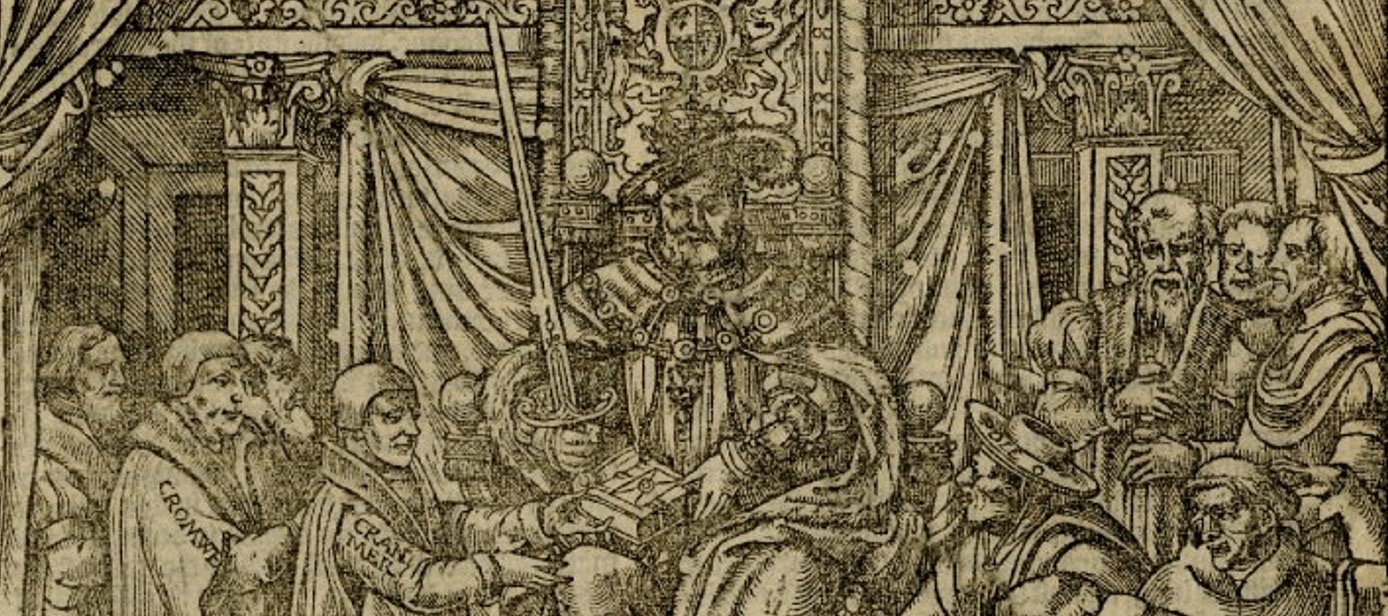
The Henrician reformation of the early fifteen hundreds was brought about by a culmination of people and factors. Before this period, Henry VIII struggled to produce an heir and the religious dominance of Rome was greatly felt by England. Factors such as these can be considered as reasons for the reformation, but they appear to be part of a much broader spectrum of issues. It is important to note from which people these issues sprang, and in order to understand the main reason for the reformation, one must consider who Henry VIII listened to when these issues were voiced. Cromwell did a great deal to steer the reformation into the direction in which he intended, but when considering the main reason for reforms to the English church from 1529 to 1540 one must look at all of those who surrounded Henry VIII, and Henry VIII himself. When examining the evidence it can be seen that Henry VIII was indeed the main reason for the church reforms, as without his initial anguish over his current situation, he would not have used Cromwell to reform Parliament.  

Due to individual influence of Cromwell, and his deployment of Parliament, one can see that his influence was a significant reason for reforms to the English church in the period of 1529 to 1540, but not the main reason. Cromwell should be credited and treated with significance in this way, as it was he who realised that Parliament was able to grant the annulment. Cromwell developed this idea further, and used Parliament as it was the official law-making body, it could be used to pass a series of Acts, such as the ‘Statute in Restraint of Appeals Act,’ in 1534 which recognised Henry as the final legal authority in matters concerning England. This use of Parliament would grant Henry the power he desired, by breaking with the Roman Catholic Church. Without this development, the reforms may not have occurred, as there would not have been many other ways to procure the break with Rome. Although this act alone proves that Cromwell was a significant reason for the reforms, one must note that without Henry’s initial desire for change, Cromwell would not have not have considered using Parliament for any such matter. When tasked with obtaining the annulment, Wolsey appealed directly to the Pope, and this action failed. Without Cromwell’s involvement, and his desire to use Parliament, one wonders whether the reformation itself would have occurred, making him a significant reason for the reforms to the English church. In 1532, it was Cromwell that used the people within Parliament to further Henry’s cause, by exploiting the anti-clerical feeling among them. By doing this, Cromwell ensured that those within Parliament would support new Acts and bills that he placed in front of them, as these acts would address their issues. This meant that acts, such as the ‘First Act of Annates,’ in 1532, would be passed quickly and more efficiently, thus speeding up the break with Rome. Cromwell can be seen to be a significant influence and reason for reforms to the English church due to his drafting of the ‘Act of Restraint of Appeals’ in 1534. This act barred Catherine from appealing to the Pope for help during ‘The King’s Great Matter,’ and the preamble of the draft outlined what was later identified as Royal Supremacy. This allowed Henry’s desire for caesaropapism to be written as a formal idea, which then became the aim of the reformation. Without Cromwell’s input, Henry’s wishes might not have been formed in a proper fashion that could be understood. This makes Cromwell significant in the matters and progressions of the reformation, as he put Henry’s ideas on paper, and sold the idea in Parliament by exploiting the anti-clericalism within it. 

To those in Parliament, Henry’s desire for absolute power would have combated some of the known clerical abuses, such as the use of clerical courts. Henry planned to remove benefits of the clergy, to ensure his absolute rule. In this respect, Cromwell’s exploitation of Parliament ensured that the idea of Royal Supremacy, that Cromwell helped shape, would gain more support. In the years that followed, Cromwell was made Vicegerent of Spirituals, which increased his influence over the King, which was already cemented by his previous successes in Parliament, and the Valor Ecclesiasticus. Throughout this time, Cromwell used propaganda to spread reformist ideas around churches, in order to make them cooperate and obey Henry’s wishes, such as accepting the divorce. Cromwell later spent four hundred pounds of his own money to get three thousand copies of Coverdale’s Bible printed in Paris, in 1539. While Henry instructed Cromwell and told him of his wishes, it was Cromwell who enforced them and made them happen, presenting Cromwell as a significant figure within the Henrician reformation. Cromwell also finalised the break with Rome by producing the act of the Dissolution of the Monasteries in 1536. Henry had reformist ideas that he passed on to Cromwell, in a passive manner. It was Cromwell who then actively reformed England with the ‘Dissolution of the Monasteries Act,’ which destroyed smaller monasteries that were once loyal to the Pope, and gave their land to the crown. This physical action of destroying the monasteries displays the significance of Cromwell during the reformation of 1529 to 1540, as he had an active hand in enforcing Henry’s wishes and new reformist beliefs, whilst ensuring that Parliament were also swayable to new ideas. Despite Cromwell’s significant role, one cannot class him as the main reason for the reformation, as without the initial thoughts and ideas of Henry VIII, no religious change in England would have occurred.

Henry VIII can be seen as the main reason and influence for reforms to the English church in 1529 to 1540, as without his initial feelings, less religious change would’ve occurred in England. When looking at Henry’s situation in the late 1520’s, it can be seen that a culmination of factors and influences led him to push for religious change, as this allowed him the divorce and absolute power. Henry began to steer toward religious reform originally as Catherine could not produce a male heir. Although they had a son in 1511, he died several weeks later and only their daughter Mary survived. Henry believed that his lack of an heir, and therefore primogeniture, meant that God was judging his marriage unfavourably. Upon meeting and becoming enamoured with Anne Boleyn in 1529, Henry began to feel that if he were to divorce Catherine, and marry Anne, she would bear him sons. Without this initial desire for an heir, Henry would not have considered a divorce, and by extension the religious reforms in England, making him the main reason for the reforms that occurred. If Henry had no desire to marry Anne, or to have a son, the idea of divorce would not have crossed his mind, and there would have been no reform of the English church as there would have been no need for it, as a divorce would not be needed. Cromwell would have taken no action, as Henry would not have wanted to divorce Catherine, making Henry the greatest influence and the main reason for the reforms to the English church from 1529 to 1540. Although one could argue that without Anne, Henry would not have become interested in divorce, Henry should still be seen as the greatest influence of the reforms as he actively carried them on through the 1530’s, which led to his Royal Supremacy. It was not until 1530, after Pope Clement VII refused to grant him the divorce, that Henry became interested in new ways of religious thinking, which led to his reformist views. Although Henry did not agree with Luther, and wrote notable works against him such as the “Defence of the Seven Sacraments,” he was still influenced and interested by his reformist views, such as his emphasis on ‘sola scriptura.’ The court faction of reformers, such as the Boleyns, aided his ideas about imperial kingship, and Humanists within England also reached out to the court. John Colet in 1512 called on the church to reform from within, as did Thomas More’s ‘Utopia,’ written in 1516. Christopher St German also concurred that Henry should govern the church. These new ideas presented Henry with ways in which he could get his divorce, by manipulating and exploiting feelings of anti-clericalism and reform within England. Henry saw that by listening to reformers and using their ideas, he could become supreme head of his own church, which would satisfy all his needs, as he could then grant himself the divorce. Without the aim of divorce, Henry may not have listened to such ideas and they would have been quashed, as Henry was a Catholic, leading one to believe that Henry was the main reason for the reforms in England, as without his lack of an heir, he would not have considered divorce, and would then not have listened to reformers such as More and Colet. Upon launching a pamphlet campaign in order to question the Pope’s authority, which spread quickly due to the Printing Press, one can see that one event easily led to another. After Catherine’s failure to provide a son, and the arrival of Anne Boleyn, Henry became interested in divorce, and after his and Wolsey’s failure to obtain one; he looked to ideas of reform to reach his goal. These reformers, such as St German, then caused Henry to look into the idea of caesaropapism, which in Henry’s mind was Royal Supremacy, which if granted, would allow him to obtain his divorce. Henry realised that by achieving Royal Supremacy, with help from Cromwell and reformers, he could satisfy all his needs, and profit from the land and money of the church. In this manner, one can see that the feelings and needs of Henry were the main reason and driving force for the religious reforms in England throughout 1529 to 1540.

As previously noted, another significant reason for the reforms to the English church from 1529 to 1540 was the presence and influence of Anne Boleyn. Although Henry was frustrated with his wife Catherine, perhaps if Anne had not appeared at court, he would not have become interested in divorce so quickly. It was her presence and his immediate love for her that pushed the King to enquire about a divorce, and after his lack of success, onto ideas about religious reform. One could argue that her arrival at court in 1529 caused the reformation to begin with great speed, mainly because Anne refused to become his mistress, leading Henry to enquire about obtaining a divorce. As Anne refused Henry several times, she managed to prolong his interest for many years, whilst ensuring she was close enough to influence him. It was Anne’s refusal of him, and her demand that she should be his queen, that pushed Henry to ask Wolsey to get him a divorce, thus beginning the events of the reformation. This makes Anne a significant reason for the church reforms during the 1530’s, as if she had become Henry’s mistress, he may not have become interested in marrying her. Although any children between the two would’ve been illegitimate, it is logical to think that Henry would have tried to enter the child into the line of succession, as he planned to with Henry Fitzroy, around the time of his death in 1536. Anne was also a reformer, and along with her family, she pushed Henry to take control of the church in England. This secured her position, as if Henry got the power he craved, she would become queen, and her whole family would benefit. It was Anne that persuaded Henry to read Tyndale’s “The Obedience of a Christian Man,” and also sponsored his New Testament. Her influence can also be seen in the appointment of evangelical bishops such as Latimer, Shaxton and Cranmer, who on the 25th of January 1533, married Henry and Anne. As Henry was in love with Anne, and as she managed to prolong his interest, she was at his side for a great amount of time making him easier to influence as her importance to the King was greater than that of other people. As he was in love with her, Henry protected her from her enemies, and emboldened her. In this position, by henry’s side, Anne was able to persuade him into looking at new ideas of reform, which would satisfy his desire as well as hers, to become queen. A combination of Henry wanting to have sex with Anne and her refusal forced Henry to look into the idea of divorce, in order to marry Anne as she requested, which opened him up to ideas of reform, which included caesaropapism, an idea that Anne Boleyn supported. This makes Anne a significant reason for the reforms of the English church, as her presence led to Henry discovering ideas of reform, all because he wanted to obtain a divorce in order to marry her. Although one could argue that Anne herself started the process, it was still Henry who chose to look into divorcing Catherine, and therefore into reforming the church, which he continued to do even after Anne’s execution on the 19th of May 1536. Throughout her life Anne had a great influence over Henry, up until her death. From this point onward, it Henry alone that continued to reform the church based on his own intuition and believe in change, making him the most important reason for reforms to the church in England. It was Henry who instructed those below him, such as Cromwell to carry out said reforms, making Henry the main reason for them, although Anne is still highly significant.  

When looking at all the factors surrounding the Henrician reformation of England, it can be seen that the main reason for the reforms is because of King Henry’s influence. If he had no initial desire for divorce, there would be no need to look into ideas of reform, and therefore the reformation would not have occurred. Although this desire was offset by the arrival of Anne Boleyn at court, Henry still maintained power over all the reforms that went on in his kingdom, and ensured that they benefited him and the woman who he wanted to marry. Cromwell also played a highly significant role, as he actively reformed the church by destroying the monasteries in 1536, and later in 1538. Despite this direct action, it was still Henry who passively instructed Cromwell, and used him to achieve his own wishes and aims, making him the greatest influence and the most important reason for reforms of the church in England from 1529 to 1540.

Thanks for reading!

‘Wholeness’ in ‘Lady Chatterley’s Lover’

‘Lady Chatterley’s Lover’ is mostly remembered for its vivid depictions of sex. It was these that caused quite the stir when it was first published in 1928, and led to Penguin Books being put on trial for violating the Obscene Publications Act of 1959. Since then, the novel has been recognised as D. H. Lawrence’s masterpiece, and as well as sex, is known for tackling themes such as the conflict between the mind and body, and social class. While some people may just read the novel for the explicitly sexual passages, Lawrence uses the novel to convey his idea that people need sexual fulfilment as well as intellectual fulfilment, to become a fully ‘whole’ and enriched person.

Lawrence explains that Connie was attracted to Clifford because of his mind. It is explained that Clifford and Connie’s connection is not just about physical attraction, but is ‘deeper, much more personal than that’ D. H. Lawrence Lady Chatterley’s Lover (London: Penguin Clothbound Classics, 2009, p. 12). Their ‘passion’ comes from ‘mental attraction.’ This connection ensures that Clifford and Connie remain happy, until he returns from the war. He returns paralysed, and is described to be ‘in bits’ (p. 5). From this point on Clifford is not imagined as an actual person, but more as the remnants of one. Due to Clifford’s physical maiming, he and Connie do not have any sort of physically intimate relationship. It becomes all about their mind. The lack of sexual intimacy, coupled with Connie’s growing desire for a child, means that the two become more and more distant. 

Clifford goes far enough to say that marriage is not about sex at all, but ‘companionship,’ and the idea of two people falling into ‘unison’ with each other (p. 8).  Now, while what Clifford is saying is in part true, you do need an intellectual connection to have a partnership, this is not what love is totally about. In this conversation, Clifford also gives Connie permission to have an affair, with a man of high social standing, and should she fall pregnant, style the child as the heir to the Chatterleys’ estate. Not only is Clifford shutting down Connie’s hopes of any sexual contact, but also encouraging her to sleep with other men. ‘If the lack of sex is going to disintegrate you, then go out and have a love affair’ (p. 5). While Clifford, in his mind, is trying to tell Connie to be free and live as she chooses, for Connie it is not the nicest thing to hear, and she feels fairly rejected. Quite simply, Connie enters into an affair with Mellors because he wants her, and she wants to be wanted. Mellors sees her not as Connie, but as a woman, who has an untapped sexual desire. It is this that revives her, and essentially brings her back to life. 

Connie’s attraction to Mellors is explained in her exclamation of ‘a body!’ (p. 66). When she first sees Mellors, she describes each aspect of his body, his arms, his torso, his loins. She is taken aback by his physique, and is also stunned because she has not seen he nakedness of a man in so long. Unlike Clifford, Mellors is a complete body, which is able to have sex with her. Mellors is able to give Connie everything that she wants at the moment, which is physical fulfilment. 

Connie’s desire to be a mother also unconsciously propels her to have an affair with Mellors. While it is not in the forefront of her thinking, she is aware that her body feels ‘meaningless’ (p. 70) because she cannot bear Clifford’s child. While having sex with Mellors, Connie is aware that she ‘opened her womb to him’ (p. 121). So, not only does Mellors offer Connie physical fulfilment, but he also offers her the chance of having a child. This is hinted at when Mellors and Connie bond over Mellors’ chicks. The chicks resemble Connie’s own captivity, as she is trapped in her home with Clifford, as they are trapped in their pen. Mellors’ gentle control over the chicks hint at the tenderness of the relationship between Connie and Mellors. 

While their affair is first based upon physical attraction, from this grows tenderness and a meeting of the minds. In each other, both Mellors and Connie find what they want in a sexual partner. Connie begins to feel whole when she is with Mellors, to the point at which she fears being apart from him. Connie fears the ‘terrible moment when he would slip out of her,’ and ‘clung to him’ (p. 133). Mellors and Clifford represent two opposing ends of the spectrum, and Connie throughout the novel toys and is thrown between the two. Mellors and Connie become so intimate that his sweat upon her becomes ‘holy’ (p. 137). Mellors becomes something that Connie covets, and desires. Me becomes essential to her being, she feels incomplete without him. 

As Mellors ejaculates inside her, his ‘soul sprang towards her too’ (p. 239). Like Clifford describes, Mellors and Connie begin to fall into unison. However this unison is different to Clifford’s understanding of it, as Mellors and Connie fall into unison sexually, and intellectually. Lawrence’s use of the world ‘soul’ implies that Mellors’ and Connie’s connection goes beyond the physical world, and that the very essence of their beings have become intertwined. It is at this point, which occurs towards the end of the novel, that the reader is aware that Connie is supposed to be with Mellors, and not with Clifford. Being with Mellors is like being reborn for Connie, she is revitalised and renewed. 

However, the two are separated at the end of the novel, as Clifford refuses to divorce Connie. Who should we feel sympathy for? It is difficult to say, considering that Clifford’s injury is not his fault, but his attitude and lack of understanding towards Connie is. Cheating should also not be condoned. Lawrence does not debate this at all really, and instead works to hammer home the point that the union of bodies and minds it what allows a person to feel whole and complete. 

Thanks for reading!

‘Spencer’ 2021: An Analysis

This post contains spoilers for the 2021 film ‘Spencer.’

Pablo Larraín’s latest biopic, which focuses on the late Princess of Wales, has been lauded by critics and caused quite a stir. Those who would be expecting  something similar to ‘The Crown’ will be in for a surprise. The film does not just follow the Princess, over Christmas Eve, day and Boxing Say 1991, but delves deep into her psyche, allowing the audience to simultaneously watch Diana but also inhabit the world that Larraín has created for her. Let’s take a closer look.

The film opens with the subtitle ‘a fable from a true tragedy.’ A ‘fable’ and the idea of truth directly contradict one another, already complicating the age old question of ‘is this based on fact?’ With this statement Larraín is trying to tell us that his story is both true and not true. Although it may not be true that Diana said this, or wore that at that exact time, I think it is conceivable to think that her trauma and upset was very real, even if it did not play out in that specific way, at that specific time. It is asserted that Diana’s life descended into tragedy, which is true, due to her untimely death. In summation, this statement I believe is trying to say that the film has a factual, emotional and psychological basis. 

We are then taken inside Sandringham to see the Christmas preparations. Instead of seeing maids and chefs going about their business, first we see the army entering, searching the place and carrying several large boxes with them. It is revealed that food is inside the boxes, giving Christmas dinner a strange, militaristic feel. The chefs then enter, and are told by head chef Darren to get started. ‘Once more unto to the breach’ he says, a line uttered by Henry V in Shakespeare’s eponymous play, on the eve of battle with the French. The royal family appear to be spending their Christmas in some sort of battlefield. The two images of Christmas dinner and a battlefield directly oppose the other, and also style the royal family as cold and calculating – as this type of preparation is the norm for them. They are all on time, all present to carry their particular traditions on, bar one, who is late. It is she who breaks tradition: Diana. 

Diana’s opening line of ‘where the fuck am I?’ Is punchy and daring, as I doubt anyone has ever heard the Princess swear before, apart from perhaps her nearest and dearest. It is also something that not not many people would bother imagining. At this point in the film Diana is driving to Sandringham and is lost. In the first few minutes of the film, Larraín is immediately trying to strip away the ‘Peoples Princess,’ image and is trying to tell the audience that Diana is just Diana, a normal woman who has got lost on the way to her family Christmas. The idea that Diana is lost, and at literal crossroads echoes her current mental state. She is trying to find happiness, and the synopsis of the film states that she is debating whether or not to divorce Prince Charles. She is physically and mentally at a crossroads. 

Linking back to the idea of the royal family being cold, Diana remarks frequently, as do William and Harry, that they are cold. Diana notes that the family refuse to turn the heating on. The fact that only her, William and Harry point this out mark them as outsiders. It does make you wonder – how do the royals cope with being cold? Does this link to the idea that they could be cold hearted? Unlike Diana as the film suggests? Later on in the film Diana questions the boys about what their perfect Christmas would be, and what they describe dispenses with all royal protocol. The film shows that Diana and her children form their own independent trio, quietly rejecting and rebelling against the royal traditions that they are subjected too. 

Diana is quickly given a pearl necklace by Charles. She immediately dislikes them, as she recognises that he bought the same set for Camilla. Diana thinks that the pearls imply that things are ‘all set,’ and that everything has already happened. While traditionally, pearls are symbolic  of ideals such as purity, wisdom and serenity, in the film they symbolise the opposite. They remind  Diana her that her husband is having an affair. Diana wears the pearls throughout the film, and she constantly tugs at them, as if they are physically uncomfortable. The pearls are symbolic of a chain or yoke, they represent Diana’s constant feeling of suffocation and claustrophobia. One particular scene sees her imagining tearing the pearls off at dinner, and then eating them. What causes this is the searing gaze of Charles and the Queen, a stare which tells Diana to eat. The destruction of the necklace hints at her desire to break free of the shackles, ie, the royal family, that contain her. While this image is striking it is also confusing, as I am unsure what her eating of the pearls it trying to convey. Perhaps it is her suicidal thoughts, and her attempts at self harm. As this is just her imagination, her pearls are very much still around her neck – she cannot break free yet. It is also worth noting that during the dinner scene, the non-diegetic music gets louder and intensifies, as does Diana’s discomfort and distress. This happens frequently throughout the film.

The pearls also link to another plot thread that runs throughout the film, the inclusion of Anne Boleyn. Diana spends majority of the film delving into her family history, and recalls that she is related to the Boleyns. The obvious parallel is that both royal wives are discarded for another, and believed to have had affairs themselves. Diana did have an affair, and although most historians agree that Anne Boleyn did not, the parallels are still obvious, as is the image of Boleyn’s iconic ‘B’ pearl necklace which she wears throughout the film. During the film we see Diana in the guise of Anne, and we also watch the two converse. Diana is actively interrogating, conversing and learning from her own history, in an attempt to reclaim it. She is not related to the Boleyn’s through marriage to the Windsors, but through her own Spencer blood. In the room where the royals eat dinner, three portraits hang, that of Henry VIII, Anne Boleyn and Jane Seymour. Diana’s family history is ever present, and overbearing. Her ancestors are constantly watching her, as are the royals. 

It is Anne who finally encourages, and gives Diana the strength to tear off her pearls. Whilst going through her old childhood home, Anne tells her about when Henry gifted Jane Seymour a miniature of himself, which she wore around her neck. Anne possessed the same miniature, and tore it off of Jane with such force that her fingers bled. From this, Diana finds the strength from Anne to tear off her pearls, which cascade down the stairs. This happens in the latter half of the film, signalling Diana’s growing strength and increasing understanding of who she is. At one point William asks what has made Diana so sad, and the boys disagree over whether it is the past, present or future. The past could refer to Anne Boleyn, the present an obvious reference to her marriage. Diana says that ‘in this house, the past and the present are the same thing.’ Does this mean that Anne and Diana are the same? Their stories certainly have similarities, and at one point we do see Diana in full Tudor dress. If one did not know about Diana’s impending death, and they heard this statement, perhaps it would be enough for them to understand Diana’s fate. Diana’s statement may imply that she is not only learning about her past, specifically Anne, but actually living it. 

On Christmas Day, the family attend church. All wear dull colours, apart from Diana. She wears a black hat, and a bright red coat. Red is associated with passion and anger, and oddly it reminded me of Mary Queen of Scots’ decision to wear red at her execution – so her blood would not show. Many saw Mary Queen of Scots as a Catholic martyr, and the colour itself is associated with martyrdom. Specifically the type of martyrdom that involved torture and violence. Red martyrs, as they are known, faced persecution of a religious nature. Although Diana does not die for religious reasons, the emotional outpour at her death has immortalised her in our history and culture, much like a real life martyr. Is this decision, for her to wear red, hinting at this?

During a conversation between Diana and Charles, across a pool table, Charles informs Diana that there ‘must be two of you,’ the private Diana and the one that ‘they take pictures of.’ He also says that Diana must make her ‘body do things’ that she hates. Is this a loaded reference to her bulimia? She feels that she has to make herself sick. If so, Charles is cold and unfeeling, and their physical distance, across the table, is representative of their difference in thinking and distance within marriage. He accuses Diana of having an affair, and at this time, 1991, Diana is not having an affair, but Charles is. As they talk, the sound of gunfire can be heard outside, as William and Harry are clay pigeon shooting. The sounds synchronise with Charles’ words, suggesting that his words wound Diana, as real bullets would. The only physical contact that Charles and Diana have is via a pool ball which Charles rolls to Diana, as if handing her some sort of challenge. After picking up the ball, she drops it, as if she is picking up the gauntlet, but then throwing it back down in protest. She is refusing to conform to Charles’ ideas and ideals. 

Pheasants are also present throughout the film. Darren remarks that they are ‘bred to be shot.’ Those that are not, he explains wander into the road, and get hit by cars, as they are not very bright. Diana notes that a Vogue article once noted that she was ‘beautiful but not very bright.’ Diana seems to relate to the pheasants throughout the film, and this implies that she feels that she was chosen by the royal family just because she was pretty. She also think that this is why she is liked, and she recognises that when she wears something, other women imitate it. She feels like a pheasant with pretty feathers, who is admired by onlookers. Of course, the idea that she may be being bred to be shot may refer to the emotional abuse she suffered in her marriage. She was discarded once she gave birth to Harry, a moment which Diana herself compared to ‘shutters’ coming down. Diana was chosen, trained and bred to bear royal sons, after that, Charles distanced himself from her. 

When she returns to her room, she is told by her maid that her curtains have been sewn shut. This is because Diana had left the curtains open, and the family were worried about reporters seeing her. Diana is also aware that everything she says is reported to others at Sandringham. So she plays the game, telling her maid that she needs be left alone to ‘masturbate,’ and adding that the maid can spread that information. While away, Diana uses wire cutters to tear her curtains back open, with such force that she hyperventilates and pants. She manages to break free from Sandringham for a moment, as throughout the film, it has seemed that she is slowly being trapped against her will. When the curtains are open, she nips her own arm with the wire cutters, drawing blood. This acts as some sort of release for her, as masturbation would allow for some sort of release too. It is likely that these two types of releases are different, but it is interesting that the two ideas appear in such close proximity. 

It is at this point in the film that Diana returns to her ancestral home, which holds many Gothic qualities. The Spencer house is crumbling, and dark and dingy. It is the seat of an old, aristocratic family, traits that are shared with the early Gothic novels such as ‘The Castle of Otranto.’ Diana also stumbles up the stairs, as the foundations are failing. Her wavering grip on the banister is reminiscent on her loosening grip on herself and her family history. It is this that she is trying to reclaim. She does this also by taking her fathers old coat off of a scarecrow. She repairs it, and wears it throughout he film. It is here that Diana tears off her pearls, when she is most steeped and surrounded by Spencer history. It is interesting that this all takes place around Christmas time, a time that celebrates the birth of Jesus. Diana in a sense is being reborn, as she is rediscovering and reclaiming her Spencer heritage. 

All of this comes together in the last few minutes of the film, as Diana is told by dresser Maggie that all she needs is love. Diana takes her ‘place amongst the pheasants’ and walks towards the family as they are shooting. Charles allows William and Harry to leave with her, and the three drive off and away from Sandringham, blasting the radio. As the camera turns to Charles, the lyric ‘never know what you got til it’s gone plays.’ How fitting. 

When ordering a KFC with the boys, Diana notes that the order is for ‘Spencer.’ This is clearly where Diana is most happiest, eating a KFC with her children. It is also important that this is the last word of the film, and it implies that after much soul searching and attempts to reclaim her heritage, her heritage is now fully reclaimed. Diana was lost at the beginning of the film, now she is far from it. This is confirmed by her vocalisation of her name, ‘Spencer.’

Thanks for reading!

Diwali: A Brief History

Diwali is the ‘festival of lights,’ and is celebrated by Sikhs, Hindus and Jains. Although the date of the festival changes every year, it usually falls in October or November and lasts for five days. Many celebrate the festival in honour of the goddess Lakshmi, the wife of Vishnu and the goddess of wealth. It is common for families to open windows and doors in their home on Diwali to allow Lakshmi to enter their house and bless them with wealth and riches. The word ‘Diwali’ itself originates from the Sanskrit word ‘deepavali,’ meaning ‘rows of lighted lamps.’ The image of lamps links to the idea of good triumphing over evil, a prevalent theme in the stories that surround the festival. It is the light of the candle, good, that keeps away the darkness, evil. On the night of Diwali, families light tea lights and lamps and place them around their home to replicate this idea. Fireworks are also set off to celebrate the festival.  

For Hindus, Diwali celebrates the day that Lord Rama returned home with his wife Sita, following her kidnapping by the ten headed demon, Ravana. At this point Rama and Sita were living in exile, and upon discovering that Sita had been kidnapped, Rama despaired that he and his younger brother Lakshmana did not have the resources to to save her. However, this did not deter them from trying. While captured, Sita constantly resisted Ravana’s advances and refused to become his queen. After travelling to find help, they gained the support of an army of monkeys who were commanded by Hanuman. After a confrontation, Rama killed Ravana and took his wife Sita back home to Ayodhya. This story supports Diwali’s central theme: the triumph of good over evil. 

Rama and Sita - Vishnu's Bedtime Stories
Rama and Sita

While this version is regularly taught in schools, the ending of the story is usually omitted. Rama is crowned king upon his return to Ayodhya, but rumours begin to spread that Sita may have willingly eloped with Ravana. When Sita’s moral purity is called into question, Rama’s faith in her wavers. In one version of the story, Rama asks Sita to prove her innocence by undergoing a test before ‘Agni,’ fire. She passes the test, lives happily with Rama thereafter and gives birth to twins, Luv and Kush. In another version of the story, Rama’s mistrust of Sita leads to her banishment, and she gives birth to her sons in the woods. In their adolescence, Luv and Kush persuade their father that he was wrong to banish her. When Rama asks for forgiveness however, Sita rejects him, and effectively commits suicide by allowing her mother, the Earth, to swallow her up. Another slightly different version sees Sita dying of sorrow, thus solidifying her as a tragic, and moral heroine who was spurned by an intolerant society. In other versions of the story, Sita’s death leads Rama to drown himself, and they reunite happily in the afterlife. Despite Sita’s suicide in several versions of the story, she is revered in Hindu tradition, and is seen as the ideal of womanly virtue. The story of Rama and Sita is told in the Hindu epic the ‘Ramayana,’ of which Rama is the central character.  

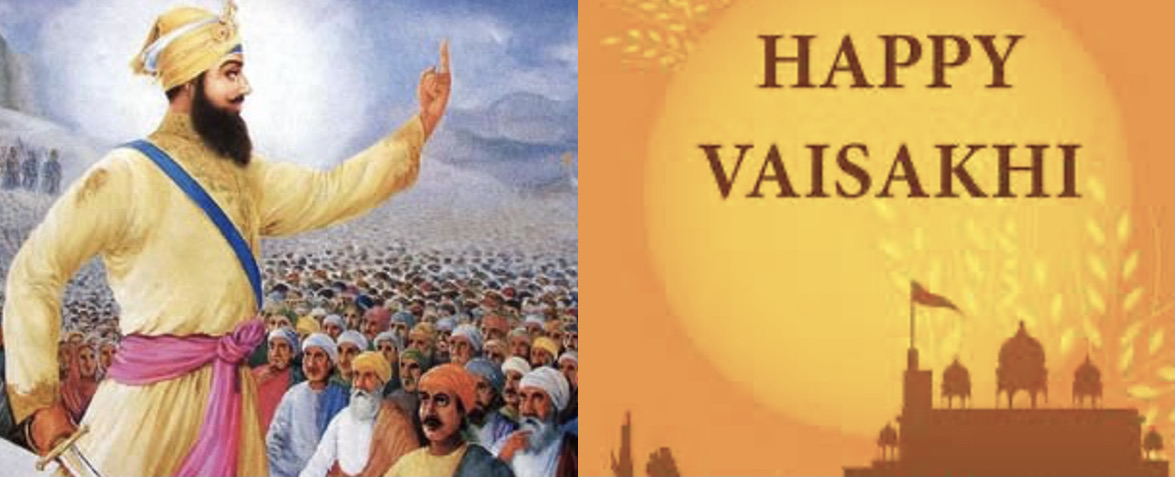
For Sikhs, Diwali makes the escape of their sixth Guru’s, Guru Hargobind’s escape from jail in 1619. Guru Hargobind took 52 other princes with him when he escaped. When originally asking if this was possible, the prison guard said that Guru Hargobind could only take those who could hold onto his cloak. This cloak was made with 52 pieces of string, allowing Guru Hargobind to lead the 52 princes to safety. This particular event is known to Siikhs as Bandi Chhor Divas, or the ‘Day of Liberation.’ To celebrate Guru Hargobind’s safe return, the Golden Temple was illuminated with candles, a tradition that still occurs today. The foundations of the temple itself were also laid on Diwali in 1577. 

Guru Hargobind Singh escaping from jail with the 52 princes

Diwali is also important to Jains. The founder of Jainism is Lord Mahavira, and it was during the festival of Diwali that he reached Moksha, meaning eternal peace. 

Mahavira - Wikipedia
Lord Mahavira

Happy Diwali!

Thanks for reading!

Halloween: A Brief History

Everybody knows that Halloween falls on the 31st of October every year… but not everyone knows how the modern traditions surrounding the spooky day came about. Historians believe that Halloween’s prequel came in the form of the Celtic festival Samhain. 

During this festival, Celts would light bonfires and wear frightening costumes to ward off spirits. The festival marked the end of the Harvest season and led to the beginning of winter. Nowadays it is held on November 1, but festivities begin on the 31st of October. Sometimes people would light torches and from the bonfire and carry it into their homes. Although not all divination involved fire, the bonfire was used to try and read the future, as were several games played on the day of the festival. 

Apples and hazelnuts were used by the Celts to divine the future, and so were frequently used in the games. A common game played was apple bobbing, a tradition that has lasted until today. Another game involved hanging a wooden rod from the ceiling, with an apple hanging from one end and a lit candle on the other. The rod was spun round, and everyone took it in turns to catch the apple with their teeth. When the apple was peeled, it was done so in one long strip, and the peel was then tossed over the persons shoulder. It was believed that the apple peel would fall into the shape of the first letter of the persons’ future spouses name. 

Samhain was seen as an important time of year – it marked the point at which the boundary between this world and the ‘Otherworld’ was significant weakened. This meant that ghosts could more easily cross into our world, hence the bonfires and the dressing up. 

Mumming and Guising was also an integral part of Samhain from the sixteenth century onwards, and describes people going from house to house in costume, and reciting songs in exchange for food. The practice can now be seen as a version of trick or treating. Some believe that the tradition stemmed from people impersonating the souls of the dead, and asking for offerings on their behalf. By impersonating a spirit, one believed that they also were protected from them. Trick or treating also may have come from the tradition of going to peoples house to collect food for Samhain feasts, or fuel for bonfires. 

Whereas nowadays pumpkins are more popular, for the Celts, turnips were the chosen vegetable that was hollowed out and used to ward off evil spirits. Jack-o’-lanterns were popular in Ireland and Scotland before they spread throughout England. 

Let’s jump back a bit further. The Romans conquered the Celts in 43 AD, and it appears that some Roman traditions may have become combined with the celebration of Samhain. One was Feralia, a day in late October in which the Romas commemorated the dead. The second festival honoured Pomona, the Roman goddess of fruit and trees. Pomona’s symbol is the apple, which made frequent appearances at Samhain in the form of apple bobbing. 

The plot thickens. In the eighth century, Pope Gregory III stated that All Saints Day should be held on November 1st. This day commemorated saints and martyrs throughout Christian history. This day falls on the day after Samhain, but overtime the two festivals became incorporated. All Souls’ Day follows, on November 2nd. This day remembers the dead, especially those that lounge in purgatory. All Souls’ Day was also celebrated in a similar fashion to Samhain. All Souls’ Day is also known as All Hallows Eve, which later became Halloween. Together, these days form the observance of Allhallowtide, a collection of days that remembers the departed. The three days blur together into this period of observance, with Halloween falling on All Saints’ Eve.

Allhallowtide is a Christian idea, not a Celtic one, however. So how did this work, I hear you ask. Well, It is believed that the Christians Christianised the Celtic observance of Samhain in order to reform them, and encourage their conversion. However, this is subject to some debate. So to make things clear, the time of Allhallowtide encompassed the three days of All Saints Eve (Halloween), All Saints’ Day, and All Souls’ Day. 

Halloween is known for being popular in America, and although in New England the practice was condemned by Puritans, its popularity picked up after with the influx of various ethnic groups brought new ideas about the festival to America. Celebrations included parties, and events to celebrate the harvest, and neighbours would come together to hold street parties. New immigrants that came to America in the second half of the 19th century also helped to bolster Halloween’s popularity. Now, Halloween is America’s largest commercial holiday after Christmas. 

Thanks for reading!

‘In what ways is the world of ‘1984’ a totalitarian state? How does Big Brother organise society?’

A totalitarian state is one that has a centralised government. The dictator leading the state requires all those within it to be subservient to the state. This dictator can also be seen to be an autocratic figure, as they are a ruler who has absolute power. An example in our history of a totalitarian state can be seen in Stalin’s Russia, which collapsed in the early nineties. This form of harsh dictatorship can be seen in the world of ‘1984,’ as the Party demands total commitment from all those living within the state, of which “Big Brother” is the “guardian” and unanimous “leader.” Big Brother’s thick “moustache” is also reminiscent of that of Stalin’s, as is the policies and rules of Oceania. Big Brother maintains control over society, and organises it by effectively using propaganda to unite the population. Their ability to create and “vaporise” people also helps Big Brother organise society, with help from O’Brien. The Party’s response to emotion and feelings coupled with Newspeak also helps Big Brother organise society, as rebellion seems to appear even more impossible. 

Big Brother uses the tactic of propaganda, much like in World War one and two, to organise society and unite those within the totalitarian state of Oceania. Orwell himself understood the affects of propaganda as during the Second World War he worked on propaganda for the BBC. It is already established, with the opening of the “diary,” that Winston is not like all the other people in Oceania, and that he is a sentient being. He can see through the regime enough to rebel against the Party, making him appear daring and heroic. However, Big Brother’s deployment of propaganda during the “Two Minute Hate” proves to ensnare everyone, even Winston, which makes him appear fickle, even though the audience knows that he is not. The fact that Winston finds it “impossible” not to get up in the hate demonstrates how effective this simple use of propaganda is, as it allows Big Brother to organise society by uniting it against a common enemy, “Emmanuel Goldstein.” The power of propaganda is demonstrated here, as everyone and anyone, even those like Winston who are sentient, are caught up in the surge of “hatred.” Like Offred in ‘The Handmaid’s Tale,’ in this instance Winston appears numbed by the common regime, and appears to be just another member of the mob. Big Brother effectively organises society by uniting the people of Oceania against one common enemy, which helps to bolster camaraderie, and a sense of general understanding among the people. While directing their hate at Goldstein, their “adoration” is absorbed by Big Brother, thus ensuring that the despotic figure on the posters is still regarded as the saviour of the nation.  The war with Eurasia is also the stimulus for much propaganda in Oceania, as demonstrated by Winston’s own job, and his creation of “Comrade Ogilvy.” Winston creates the perfect Party member, who served on the front line and has a “devotion to duty.” This is another effective use of propaganda, as Big Brother uses Winston to create the perfect Party member, and someone who all other people can aspire to, even though he had just been brought “into existence” by Winston. Given that the propaganda, the Hate and Ogilvy, aims to unite the people and provide them with figures to detest and aspire to, proves that the despotic Big Brother needs all people within the state to be subservient to him, leading one to believe that Oceania is governed in a totalitarian fashion, by which Big Brother maintains control. 

Big Brother also maintains control by creating and destroying different figures to affect the population. By controlling individual people, Big Brother can control the subsequent affects their actions will have on the rest of the state, and ensure that he benefits from it. O’Brien notes that who “controls the past controls the future,” and this can be seen in the example of “Aaronson, Rutherford and Jones.” Winston himself deduces that their “confessions were lies,” for the benefit of the Party. By making an example of these people, those within the state were clearly told that if they dared to rebel, they would be found out and tortured, then made an example of. By constantly making an example of others, the state ensures that this acts as a deterrent for others with “vague plotting’s against the Party,” such as Julia and Winston. To Big Brother, and the Party’s advantage, the past remains “alterable,” and by changing the past, the Party ensures that people know how to behave for the future, and can learn from the mistakes made by others, be them real or not. “The Chestnut Tree Café” also adds to this idea, as those who go there are labeled by other Party members as traitors. This places all traitors in one specific area, giving efficient Party members a place to avoid, and they understand why. By changing the past, and creating and destroying people, Big Brother ensures that people know how to behave, and also ensures that they understand the consequences if they defy “Party doctrine.”

O’Brien, along with the “Thoughtpolice” ensure that Oceania is well organised on behalf of Big Brother as they actively seek out those who intend to “rebel.” The group in the novel appear to allude to the Gestapo, the Nazi secret police, or Stalin’s’ NKVD, who arrested and tortured those who spoke out against the authority in secret. In the novel, O’Brien causes Winston to incriminate himself, by fooling him into believing that he is a fellow rebel. Winston was convinced that O’Brien always thought the “same thing as himself.” In his trusting nature, Winston fell for O’Brien’s tricks, which is ironic, as Winston seemed to forget his own firm belief that the Thought police will “always get you in the end.” By using a secret group to infiltrate those rebelling against the Party, Big Brother ensures that rebellion is not common knowledge, thus restricting it as well as mass panic. As the group is a “secret organisation,” Big Brother ensures that all those within the state are solely focused on the Party and himself, and are not distracted by rebellious action, which allows him to maintain order.

Party members within the state must be focused on the Party in all that they do. For example, the state sees that the only purpose of sex is to “beget” children. To ensure all thought is related to the state, the Party aim to eradicate emotions and feelings. In relation to sex, the Party means to remove the orgasm, to ensure that lust and desire do not cloud the judgement of Party members, and distract them from Big Brother. It is this action that Winston and Julia indulge in and use to satisfy their desire for love and “political” rebellion, which will inevitably lead to their downfall. Winston and Julia are both intelligent, and understand the Party enough to realise what the Party wish to deprive them of, making them a significant threat. They are able to think and to feel, and accept that they are “the dead” upon their promise that “only feelings matter.” They both realise that being caught is inevitable, but also appreciate that while they feel for each other and “love” each other, the Party has no control over them, and in this respect, they will always triumph over Big Brother. It is this attitude that worries the Party and O’Brien, leading them to try and “stamp” their emotion out. By ensuring that these feelings are eradicated, Big Brother ensures everyone’s focus remains on the Party, and nothing else. When torturing Winston with “rats” in “Room 101,” O’Brien has the soul objective of removing Winston’s love for Julia, and replacing it with love for Big Brother. O’Brien is successful, with Winston’s outcry of “Do It to Julia!” which is seen as the ultimate act of betrayal, by the reader and Winston and Julia themselves. In the play at the London Playhouse Theatre, excessive strobe lighting and loud noises, mark the moment in which Winston betrays Julia. It is perhaps the most distressing and disorientating moment of the play to emphasise the epic betrayal that has just occurred. It marks the end of Winston’s heroic arc, and leaves him with nothing by the end of the novel, and only the thought that he “loved Big Brother.” Winston has essentially been pacified, as his love for Julia, and therefore rebellious feelings, have been suppressed into nothing. This emphasises how threatening the idea of love and emotion is for the Party, as Winston and Julia are sentient beings, which do not think of the Party as the most important thing in their lives. 

Another focus for O’Brien, while torturing Winston is his memory, as he seeks to change it. Before Winston is tortured, he is seen in the novel, with O’Brien, to be drinking to “the past.” Winston was born in a time before the “revolution,” and can “remember” the past, much like Offred in ‘The Handmaid’s Tale.’ It is this quality that makes the protagonists in each novel unique, as they have a cause to rebel against their respective regimes, as they wish to return to the days in which “they used to live,” as this time was associated with freedom. Winston becomes closer to gaining this freedom throughout the novel, as he actively rebels with Julia. O’Brien claims that, by manipulating the memory of Winston, he will become “perfect,” as he will cease to question Big Brother. By weakening his memory, O’Brien makes him pliable, and Winston becomes an empty Party member who will believe anything that he is told by the Party. If Winston is not sure of anything, he is unable to question the Party, as he will not know what truth truly is. This is clearly demonstrated in Winston’s turmoil over the answer of the simple mathematical sum, “2+2=4.” Mathematics is a fixed concept, and there is only one correct answer to the question. However, O’Brien tortures Winston so much that he becomes devoid of sense, and confesses that he doesn’t “know” the answer to this simple question. This proves to Winston that nothing is fixed, and that everything is “alterable,” as has been discovered throughout the novel. The destruction of Winston’s memory and emotions are described by O’Brien as the death of the “last man,” as no other Party member was like Winston. Winston and Julia appeared to be unique members of the state, as they understood the Party enough to rebel against them. In this respect, they can be seen as the last remnants of Human kind before the revolution, due to their sentient nature, but they too have been quashed by the Party and Big Brother. By altering people’s memory and making them pliable, Big Brother ensures that all those in Oceania will accept the facts of the Party and their doctrine, creating a totalitarian state in which the people are subservient to their dictatorial leader, Big Brother. 

The Party also uses a much simpler way to control people, by integrating “Newspeak” into society. Syme excitedly tells Winston that with the “destruction of words,” people won’t even be able to think about rebellion, as they will not have the vocabulary. Those in Oceania won’t notice this more passive form of control, as it is subtle. People such as Syme will be more excited about the new language and dictionary, but they will not notice that their freedom of speech is being taken away from them, for the benefit of Big Brother. By organising and creating the language in this way, Big Brother makes it difficult for those within the state to think about rebellion, and commit “Thoughtcrime,” thus maintaining peace within the state. Although Winston believes that “nothing was your own except the few cubic centimetres inside your skull,” this is not true as, with the growing use of Newspeak, the Party alter peoples’ thoughts with the language that is available to them. Without the words to fully express themselves, Big Brother ensures that they also do not have the thoughts to do so. Big Brother organises the state in this way, and ensures that he stops the thought of rebellion, and by extension the action of rebellion.

By using Newspeak, propaganda, the past and many other tactics, Big Brother organises the state in such a way that benefits him. People are reduced to robotic figures, whose emotion and focus is entirely directed onto Big Brother. They do not even realise that their autonomy is being destroyed by the state, as they are brainwashed by the Party to ensure that no thoughts diverge from the savior that is Big Brother. As Big Brother requires all people to be subservient to him, the state of Oceania can be seen to be a totalitarian state, organised to ensure that nobody has the capacity to think anything that goes against “the principles of INGSOC” or Big Brother himself.