Lucy Westenra’s Transformation in ‘Dracula’

Lucy and Mina are the two main female characters in the Gothic novel ‘Dracula,’ and both have very different roles. Mina is dark haired, Lucy is fair haired, Mina is the brains, Lucy is the progressive thinker, in terms of relationships and sex. Together they are ‘woman,’ and individually form two sides of the same coin. Both fall victim to Dracula, but for Lucy this is fatal. Before her death however, Lucy is described as a highly sexualised and voracious female vampire. She’s an example of the ‘sexy vampire’ trope, and becomes a creature that is antithetical to the idealized image of woman and mother.

We already know that Lucy is confronting Victorian sexual codes when the reader realises that she is universally desired. She has three suitors, in the forms of Quincey Morris, Arthur Holmwood and Dr John Seward.[1] She confesses that if she could, she would marry all three, but settles for Arthur. This seems like innocent girl-talk with her best mate Mina, but to Victorian readers, Lucy saying that she wants to marry three men is basically the same thing as saying that she wants to have sex with the three men. For Victorians, this is hugely scandalous, and so from very early on in the book, everyone is under the impression that Lucy has an untapped sexual desire, waiting to break free. Cue Dracula.

Dracula basically rocks up, takes advantage and enhances Lucy’s tendency to sleep walk, and begins feeding from her. Mina notices that her friend is getting ill, and at this point, Van Helsing is called in. Long story short, she gets weaker and weaker, and receives blood transfusions from all three of her suitors.[2] Dracula keeps draining her, creating a slightly nauseating flow of blood between the five of them. It’s worth noting that Victorians believed that, during sex, the couples’ blood would become intermingled. Based on this ridiculous fact, the Victorians would have believed that these five characters… well you can guess the rest. Lucy becomes increasingly ‘bloodless,’ and eventually dies.[3]

Alarm bells ring early on though, in the run up to the funeral, Quincey, Arthur, Seward and Van Helsing notice that Lucy’s coffin is frequently empty.[4] When she’s inside, however, and they do catch a glimpse of her, Seward notes that:

‘There lay Lucy, seemingly just as we had seen her the night before her funeral. She was, if possible, more radiantly beautiful than ever; and I could not believe that she was dead. The lips were red, nay redder than before; and on the cheeks was a delicate bloom.’[5]

So… Lucy looks better dead than alive? Strange. She’s highly sexualised and basically becomes the perfect example of Victorian female beauty in her death. Her lips are red, her skin pale, her cheeks rosy. Serious Snow White vibes here. She’s also laid to rest in her coffin in her wedding dress. White obviously signifies purity, and the contrast of this with the red of her lips is an obvious reference to the Madonna-Whore complex. Lucy also becomes a tad more demanding in death, commanding Arthur:

‘Come to me, Arthur. Leave these others and come to me. My arms are hungry for you. Come, and we can rest together. Come, my husband, come!’[6]

Lucy has all of the men’s blood inside her, so all men respond to her call. She’s less innocent here and has more agency when acting on her sexual desires. Her sexual desires are heightened in her vampiric state. She tries to be a femme fatale here, but it doesn’t quite work as Arthur, although tempted, doesn’t submit. Lucy’s actions and character here play to the dichotomies of pain and pleasure, danger and attraction. Stoker does a good job of encapsulating all of these big ideas into one character, making sure the reader knows that Lucy is not one set ‘thing.’

Stoker then goes on to add the ‘anti-mother’ to the list. Back in the day, women were expected to be subservient, and bear children. Lucy directly subverts the ideal of the perfect mother, as she is seen to be feeding off the blood of a ‘fair-haired’ child.[7] Lucy’s ‘sweetness was turned to adamantine, heartless cruelty, and the purity to voluptuous wantonness.’[8] Again Stoker notes Lucy’s new, overt sexuality here, but the ‘heartless cruelty’ here is worth noting. She’s carrying a baby and drinking its blood. That’s not something mothers do. Carolyn Dever argues that mothers in the Gothic narrative are ‘constructed as an emblem of safety.’[9] In this case, Lucy isn’t. Usually mothers protect their children in the Gothic novel from other forces that would harm them, but Lucy’s not quite up for that. She is the force that harms the child.

Her death climaxes a lot of these themes, especially that of her sexuality. The driving of a stake through her heart by her beloved Arthur works as some kind of strange, sexual release. The blood that spurts from her body is a reference to Arthur taking her virginity. But, as she is not conscious when he drives the stake in, it’s also a reference to rape. Lucy’s death acts as a punishment for her, by Victorian standards, unnatural sexual desires. In this weird, sex act Lucy’s soul is saved as she is no longer a vampire. Lucy’s portrayal in ‘Bram Stoker’s Dracula,’ 1992, by Sadie Frost is probably the most iconic and accurate to the book.
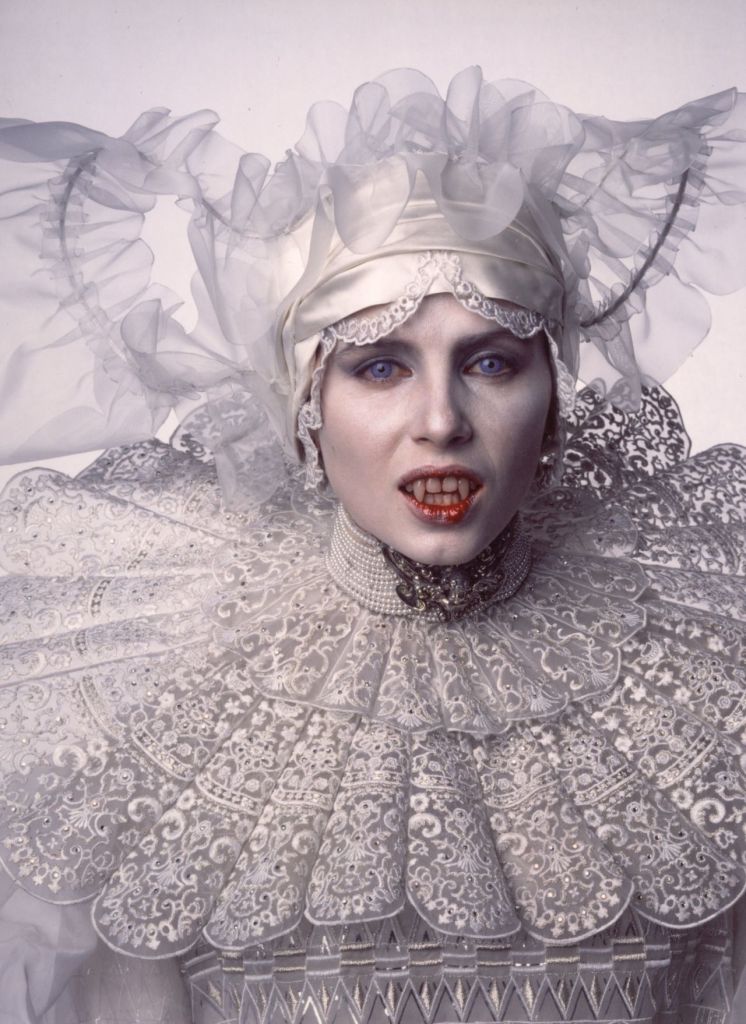
Sadie Frost as Lucy Westenra in ‘Bram Stoker’s Dracula,’ 1992

And that’s pretty much it for Lucy. Here lies a thoroughly modern woman gone too soon, punished and criticised by the Victorian sexual codes and patriarchal society that she found herself stuck in. Lucy dies about halfway through the novel, so even though she isn’t around for long, she is important. Her death spurs on the others, particularly Mina, to hunt Dracula down and kill him.

Thanks for reading!


[1] Bram Stoker, Dracula (London: Penguin Clothbound Classics, 2011), p. 64.

[2] Ibid., p. 131.

[3] Ibid., p. 121.

[4] Ibid., p. 210.

[5] Ibid., p. 213.

[6] Ibid., p. 226.

[7] Ibid., p. 225.

[8] Ibid., p. 225.

[9] Ruth Bienstock Anolik, ‘The Missing Mother: The Meanings of Maternal Absence in the Gothic Mode’, Modern Language Studies, Vol. 33, No. ½, (2003), p. 27.

Henry VIII and Donald Trump: More alike than not?

Henry VIII and Donald Trump are probably two of the most famous men in history… but don’t tell them that or we’ll never hear the end of it. On the surface, I didn’t think they would have much in common, but there was more there than I thought.

Beginnings

Both are second sons, so were not intended to inherit their father’s empire. Henry’s older brother Arthur died, as did Trump’s. Trump’s brother, Fred Jr, died of alcoholism, leaving Trump to take over the family business. Both men ascended to positions of power at a young age, and spent a lot of money that their fathers had saved for them. Both use this money to build their own personal empire, deploying the ancient art of propaganda.

Personality and Propaganda

Henry commissioned a painting by Holbein, featuring himself, his mother and father, and Jane Seymour. In contrast to his son, Henry VII looks weak and feeble, and is seen leaning on a pillar. Henry wants to be better than his father and uses artistic propaganda to perpetuate this image. Written on the pillar on which Henry VII leans, the text is inscribed: ‘the son was born to a greater dynasty.’ Henry spent more money on lavish jousting tournaments and builds 60 palaces just because he could.

Copy in oils of the Whitehall Mural, commissioned by Charles II in 1667. Artist: Remigius Van Leemput.

Trump’s version of this, is to become the president of his father’s, Fred Trump’s, construction empire. Trump bought a lot of property, and to build his own personal brand, stamped his name all over it. Trump opens a gaming industry, casinos, naming one ‘Trump’s Castle.’ He clearly thinks he’s the King. He then opened Trump tower in 1983. Basically, the modern equivalent of lots of paintings, right? There’s a degree of showmanship on both sides here.

Advisors and Governing

Trump and Henry also had the ability to make and break their advisors. Henry had Wolsey and Cromwell, and initially, Trump had Roy Cohn, who was feared throughout Manhattan. In both incidences, both Trump and Henry made their advisors and gave them a degree of power. This means that Wolsey, Cromwell and Roy Cohn all completely depended on those that they served, and if they should cross them… well two out of the three ended up losing their heads. Steven Bannon masterminded Trump’s campaign, and I don’t know about you, but I haven’t seen him anywhere near Trump recently, as he was fired. Henry himself was responsible for 300 executions, and both Henry and Trump appear to govern by fear. Trump has his finger on the ‘nuclear’ button, Henry could cut off heads. Trump noted that his administration was ‘different,’ and warned people not to ‘underestimate’ him, or they will be met with ‘fire and fury.’ Scary stuff. Dominic Sandbrook argues that both Henry and Trump have encouraged a hyper nationalism, ensuring that those who they govern are focused on their country and their country alone, we see this in Trump’s slogan ‘Make America Great Again.’

First Marriage

Trump and Henry both have had tumultuous relationships with women. Both men also don’t like to be upstaged by their wives either. Catherine of Aragon and Henry married in 1509, and had a happy marriage. She even used to sew his shirts by hand. On one occasion, while Henry is away, Catherine fends of a Scottish invasion, noting that the battle was ‘worth more than anything you could achieve in France.’ Catherine’s success outshone Henry’s in France, which probably did not go down well. 500 years later, Trump fell for Ivana Zelnickova, who he later left her in charge with refurbishing and relaunching the Plaza Hotel. Judging by the video footage, Trump is there as an accessory at the opening party, and he doesn’t exactly look happy. With Ivana at the fore, perhaps Trump also felt upstaged.

Divorce

Both men would go through some messy divorces. Henry cast Catherine of Aragon aside in favour of Anne Boleyn, and formally separated from the Roman Catholic Church in order to marry her. This was a very public divorce battle, with Catherine of Aragon, at one point, openly storming out of the divorce court. Trump follows suit by having a very public affair with Marla Maples, which leads to a messy divorce battle with Ivana. Both of these don’t last though, as Anne’s marriage with Henry sours after a riding accident in 1536, which leaves him cantankerous and lacking mobility. Henry’s lack of activity makes him pile on the pounds, eating 5000 calories a day. Anne’s three miscarriages exacerbated the already strained relationship between the pair. All of this culminates in Anne’s execution, in May 1536, which was carefully crafted by Henry’s advisor Thomas Cromwell. Trump and Mala’s relationship also deteriorated, when the papers reported that the pair were regularly have fierce arguments, partly because of Trump’s unhealthy lifestyle. They divorced in 1991.

Mid Life Crisis?

Both men later married younger women, which Matt Frei identifies as a way to rejuvenate themselves. Henry marriages teenager Catherine Howard in 1540, and Trump married Melania, who was 24 years his junior, in 2005.

Campaigning, Fake News and Personal Politics

You wouldn’t think it, but Henry has also had a brush with the old fake news. The printing press was a relatively new invention in Tudor England, and Henry used it to launch and aid his break from Rome. However, he gained some bad press about the war with Scotland, with sources citing that there were mass killings of women and children. Henry fought pamphlet with pamphlet, and went around sticking signs on the inflammatory pamphlets, stating that they were fables… in other words… fake news. Joanne Paul notes that we are told to believe that only those in power hold the truth. Matt Frei argues that Trump’s use of Twitter allows him to communicate directly with the electorate. Both Henry and Trump ensured that politics became personal, and that their own image was at the forefront. Referring back to ‘Personality and Propaganda’…

Germaphobes

Matt Frei notes that Trump is a germaphobe, and its well documented that Henry would cook up all kinds of remedies to combat diseases like the Sweating Sickness. Suzannah Lipscomb goes further, calling Henry a hypochondriac.

Women and Violence

Both men have not treated women well. For Henry, this mainly concerns his advocation of beheading his wives, including 17 year old Catherine Howard. In terms of Trump, rumours about sexual misconduct were, and are, rife. In 2015, videos filmed in 2005 of him speaking about sexually molesting women came to light, and since he has come to office, 20 women have come forward to report sexual assault. He denied all claims. Ivana, Trump’s first wife, reported that he raped her at trump tower, although she later said she did not mean rape in the literal sense. Whatever she meant, Henry and Trump’s behaviour to women is and was unacceptable.

Next in line?

From a young age, Henry and Anne Boleyn’s daughter Elizabeth learnt what it meant to grow up in an unstable political climate. Her arrest at a young age, at the hands of her sister Mary I, made her realise the dangers of ruling, as Mary suspected that Elizabeth was part of a political uprising to overthrow her. Matt Frei sees Ivanka Trump in the same way, arguing that Trump is preparing her to take over the family dynasty. She is always at his side, is his senior advisor and is her own independent businesswoman. Perhaps like their fathers, Elizabeth and Ivanka have some things in common?[1]

They may have these similarities, but will Trump have the same legacy as Henry VIII? Only time will tell.

Thanks for reading!


[1] All information taken from:

‘Henry VIII & Trump: History Repeating?’ Channel 5 Documentary:

https://www.imdb.com/title/tt12158188/

And my own knowledge.

Navigating Love in D. H. Lawrence’s ‘Sons and Lovers’

D. H. Lawrence’s semi auto-biographical novel ‘Sons and Lovers’ is very complex, so much so that part of me thinks I need to read it again. The story revolves around Paul Morel, and his relationships with three women, his mother, Miriam Leivers and Clara Dawes. All three are different, all three impact the others. Paul loves them all in different ways, even though sometimes between them can cross and blur. Lawrence’s writing at times is so subtle that it’s tricky to keep track of what Paul is thinking. Other times it is clear but it chops and changes so much that it’s just as difficult. Each woman acts as a sort of stimuli to a part of Paul’s character, propelling him to discover more about himself, his sexuality and ultimately, love.

It’s funny that, originally, Paul’s mother Gertrude always preferred her older son William. However, when William pops his clogs, she moves on to favour Paul. Paul’s closeness with his mother impacts his relationship with Miriam, his first long term girlfriend. Gertrude’s dislike of Miriam makes Paul dislike her in turn, showing Gertrude’s influence over her child. It’s Gertrude’s jealousy that breaks Miriam and Paul up, which gives us real Oedipus vibes. Freud developed the Oedipus Complex based on the Greek tale of Oedipus, and it basically refers to a child having sexual desire towards the parent. Paul and Gertrude’s relationship does link to this idea, as he sometimes to Miriam as ‘another mother,’ when he does break up with her.[1] Hashtag, weird. His breaking up with Miriam shows that he wants to get away from his mother, as he compares the two, but also doesn’t want to upset his mother further by staying with Miriam. Even Paul is subconsciously conflicted about his relationship with his mother, and the love he bears her.

The title ‘Sons and Lovers,’ is equally strange as it’s not fully clear. Are the words two separate ones, for two separate groups? Or is it saying that the sons are lovers? This may not seem that strange because Paul is lover to both Miriam and Clara… but could we throw his mum into the mix? He is Gertrude’s son; is it implied that he is her lover too? Does Paul operate on both levels? Let’s dial down on the weirdness…

On to Paul’s first love, Miriam Leivers. Miriam is the conservative and spiritual type, believing that everyone should be the same. She’s complicated, but essentially hers and Paul’s relationship is one of intellect and one of the mind. Her aversion to sex and physical contact does drive a wedge between them. Paul even questions that their desire to keep purity between them is ‘fierce,’ and that perhaps this is unnecessary.[2] Paul does convince Miriam to have sex with him, even though she confesses that she is ‘afraid’ of it.[3] She gives her virginity to Paul not for herself but for him. She treats it as a ‘sacrifice’ so that Paul can have pleasure.[4] She redefines sex in her mind, by saying that it’s just the concentration and peak of emotion, which she attaches some divinity to.[5] So even though they are physically intimate with each other, Paul and Miriam treat sex very differently. Although physical contact distresses Miriam, she feels that Paul will always come back to her, as together they form some kind of intellectual super couple. They bring out the best in each other intellectually, so she believes that Paul will always belong to her. Paul says that he feels ‘naked’ before her, as he literally lays his soul bare to her.[6] In a way it’s the purest love out there, unaffected by sexual desire. They love each other for their minds, and personalities. But Paul discovered that this type of love was not enough for him. Even though Paul recognises that his soul will always belong to Miriam, the question of his body is left unanswered… until the entrance of Clara Dawes.

Clara Dawes is a modern woman, and she carries some real feminist ideas. She’s a Suffragette for starters. She’s also married when she starts an affair with Paul, which is quite scandalous. She provides a kind of excitement that Miriam didn’t, and Paul becomes attracted to her very quickly, and very soon after he leaves Miriam. In fact, Miriam introduced them. Harsh, Paul. Clara and Paul have an intense physical relationship, even though intellectually, there’s not much common ground there. See where Lawrence is going with this? Later on in the novel, even when the two have sex, it’s just not that great because Clara doesn’t feel Paul has fully committed to her, but Miriam is still on Paul’s mind.[7] Paul’s indecisiveness rightly bugs Clara, and eventually pushes her to reconcile with her husband Baxter, leaving Paul all on his lonesome. It’s heavily implied that this will happen, as Clara doesn’t feel that her and Paul will last.[8] She also feels that Baxter, belongs to her, and that this tie can’t be severed.[9] She also feels guilty about how she treated him, even though he cheated on her. He does emotionally mature though, with Paul’s help. Paul was just a bit of a distraction for Clara, until she realised that she wanted something more permanent, prompting her U-turn back to Baxter. Perhaps Laurence is implying that Paul needs a woman who has both the intellectual qualities of Miriam, and the sexual appeal of Clara…?

Paul spends half of the time being confused, and only manages to find his definition of love 400 pages in, saying that love basically means ‘freedom.’[10] Maybe Paul gets the freedom fully when his mother dies. I say dies… but Paul and his sister Annie euthanise her… without her consent.[11] The two of them see that their mother is in pain, crush up all her pills and feed them to her in a glass of milk.[12] There’s a weird kind of inversion here, as usually it’s the mother feeding her child milk, to get her child healthy and strong. Here, we see the child feeding his mother milk, but using it poison her. It’s all very strange. Paul contemplates suicide after this, but overcomes it, deciding to return to the town, to begin the next chapter of his life.[13] Maybe without his mother, Miriam and Clara Paul can finally be free? Maybe he’s learnt enough about women to get it right next time.

Thanks for reading!


[1] D. H. Lawrence, Sons and Lovers (Oxford, Oxford World Classics, 2009), p. 335.

[2] Ibid., p. 318.

[3] Ibid., p. 322.

[4] Ibid., p. 321.

[5] Ibid., p. 322.

[6] Ibid., p. 319.

[7] Ibid., p. 400.

[8] Ibid., p. 407.

[9] Ibid., p. 406.

[10] Ibid., p. 407.

[11] Ibid., p. 444.

[12] Ibid., p. 444.

[13] Ibid., p. 474.

Murder! Victorian Crime Firsts

The Victorians really would’ve loved all the crime channels we have nowadays. It was in this era that the thirst for all things crime really took off, and newspaper companies noticed this in their sales. Papers would see spikes in sales when reporting high profile crimes, which was bolstered by people’s belief in the Criminal Class, a group of people who were predisposed to committing crimes due to their social standing. As well as being some of the first people in the country to truly love their real-life crime thrillers, there were plenty of other firsts for crime in the Victorian era.[1]

The First Railway Murder

“This train will be stopping at Fenchurch, MURDER and Chalk Farm…”

People became much more suspicious of trains as the century progressed, with some women so fearful of them that they put pins in their mouths to halt unwanted advances. I’ve never seen a woman do that on the Met line. People went truly nuts over the murder of 69-year-old Thomas Briggs, the first man to be killed on a train. He was found on the 9th of July 1864, on the embankment next to the train lines. Briggs died several hours later of his injuries. Suspicions fell on German born Franz Muller, after he was caught trying to flog Briggs’ watch and chain. After stealing them from Briggs, Muller had thrown him out of the compartment. The authorities chased Muller to New York, and for the crime he was hanged on the 14th of November, in front of 50,000 people. He protested his innocence until his last moment, saying on the scaffold: ‘I did it.’ The public reaction resulted in the creation of the communication cord on trains, which was a hotline from the passengers to the railway crew. This was required by the Regulation of Railways Act 1868. Railway carriages with side corridors followed, which allowed passengers to move from their compartments while the train was moving.

Britain’s Most Prolific Serial Killer? A Baby Farmer

At aged 33 Amelia Dyer took to baby farming to support herself. She took illegitimate and unwanted children into her care, for a small fee. At first, she let them die of natural causes, but later she began to murder them, usually by strangulation. She did this for about 30 years, taking on new children under different names, ensuring she got paid in full before the children died. Creepily, she later stated that she ‘used to like to watch them with the tape around their neck, but it was soon all over with them.’ What a psycho. The discovery of the corpse of six-year-old Doris Marmon, found in a box in the Thames, led the police to Amelia’s door. She was arrested in 1896, 27 years after she became a baby farmer. She was hanged on the 10th of June for the murder of 200 to 400 children, six of which were confirmed. This makes her one of Britain’s most prolific serial killers, and one that shocked nation. She was known as the ‘Ogress of Reading’… which I think is deserved. Some even speculated that she was Jack the Ripper… but that guy deserves his own post.

The Brides in the Bath Murders – Forensic Fastidiousness

This hellish set of events takes us from the Victorian to the Edwardian era. George Joseph Smith was a serial bigamist and had seven bigamous marriages under several names between 1908 and 1914 as he was constantly short on funds. He killed six of his wives in total, all of which had died in especially strange circumstances. They had allegedly had a fit and drowned in the bath. Several coincidences about the circumstances of the deaths caught the attention of forensic pathologist Bernard Spilsbury. A lot if Spilsbury’s case rested on Bessie Mundy’s unusual grip on a bar of soap, which she maintained even in death. He also noted the goose bumps on her legs, a sure sign of drowning. He took the measurements of the recent victims and the bath they drowned in and used medical knowledge about epilepsy to try and suss out the case. When looking at another victim, Bessie Williams, Spilsbury concluded that the stiffening of the body, caused by a fit, would’ve pushed Williams’ head above water. Spilsbury brought in several female divers to test the theory, which confirmed that the tub was too small for the victims to drown in in this way. Spilsbury conducted his own experiment, and without warning, grabbed one of the divers’ legs and pulled her under water. It took half an hour to revive her, and when she awoke, all she could remember was a cold rush of water. That was Spilbury’s theory confirmed. George Joseph Smith himself had brought the bath as a wedding present for each wife, then promptly returned it after he had murdered said wife in it. It was probably the first time that police detection in a case of multiple murders and forensic investigation had come together to secure a conviction. After this, people hailed Spilsbury as the real Sherlock Holmes.[2]

Luckily horror stories like this didn’t last too much longer, as Robert Peel’s police force, formed in 1829, became more efficient and disciplined. Society itself became less violent, and even though crime did decrease in the latter half of the century, the Victorians themselves still loved and lapped up the drama.[3]

Thanks for reading!


[1] All information taken from BBC History Magazine:

R. Crone, ‘Was Victorian Life Really So Grim?’ The Story of the Victorians, 2019.

[2] All information taken from BBC History Magazine:

C. Bloom, ‘Crime Scandals,’ The Story of the Victorians, 2019.

[3] All information taken from BBC History Magazine:

R. Crone, ‘Was Victorian Life Really So Grim?’ The Story of the Victorians, 2019.

Lydia Gwilt in ‘Armadale’: Flame-Haired Femme Fatale

Lydia Gwilt is the standout character of Wilkie Collins’s ‘Armadale,’ so much so that her wicked ways horrified Victorian readers. It’s no surprise given her status in the story as a liar, bigamist, husband poisoner and temptress. She was truly the antithesis of the demure, domestic and good-natured Victorian woman. I mean, in her first appearance she notes that she does ‘hate’ women… which is strange enough as usually, women club together and support each other in bonds of sisterhood.[1] Lydia’s having none of it.

We know Lydia is antithetical to the desired Victorian woman by her physical appearance as well as her character. Ozias Midwinter is horrified by her hair, noting that ‘It was red.’ This short sentence emphasises the drama of the revelation, which is also signposted by the italics. The modern reader will probably think why? What’s wrong with a redhead? Unfortunately, Victorians associated red locks with female villainy. It’s interesting that Collins wanted John Everett Millais to illustrate the novel, as he was an important member of the Pre Raphaelite brotherhood.[2] This revolutionary group, established in 1848, were known for their detailed, intensely coloured work. Majority of their paintings featured red haired, beautiful women, with intricate and dynamic features. They recycled their life models, so majority of the paintings bear resemblance to the others. A lot of the women depicted in the paintings with red hair, are associated with dangerous or immoral women, such as Ophelia from Hamlet, or Lilith. Collins portrays Lydia in the same vein in the text, and it seems he wanted to in the illustrations. That’s probably why Penguin Classics slapped ‘Madeleine Undressing,’ by John Everett Millais on the front cover. It’s also the header for this article. Even though the figure in the painting isn’t Lydia Gwilt, to me, that’s how Collins wanted her to look, and that’s how I imagine her.

The story of the novel is complex, and Lydia’s plans drive the plot. I don’t want to go into too much detail, but in short, there are two Allan Armadale’s. In the novel, one of them is known as Allan Armadale, the other as Ozias Midwinter. Ozias’ father killed Allan’s father, as the latter stole his proposed bride. Allan’s father did this, as his father before him, gave Allan’s fortune to Ozias’ father. Still with me? Lydia helped Allan’s father steal Ozias fathers’ proposed bride. Her plan? Marry Allan Armadale and get some of his fortune. This falls through. Her new plan? Marry Ozias Midwinter, whose real name is also Allan Armadale, somehow bump off the other Allan Armadale, and pose as his widow, cashing in in the process. Ok, breathe. Murder and deceit? Classic femme fatale tactics.

Lydia’s true nature is exposed when she successfully ensnares Ozias Midwinter after her first plan falls through. In desperation, she sycophantically simpers over Ozias Midwinter and plays the victim in true femme fatale fashion. He notes the ‘magnetic influence of her touch,’ and like a true femme fatale, she uses her femininity and sexuality to lure him in.[3] Collins describes Lydia’s antics as ‘sexual sorcery,’ implying that Lydia’s witch-like power is drawn from her sexual appeal and femininity.[4] Collins is telling us that beauty, when used, can be dangerous, and that men are susceptible enough to fall for it. According to Collins, men love a woman in need, and Ozias ‘yielded’ to her charms, proposing marriage, which she later accepts.[5] However when he leaves, the ‘colour faded out of her cheeks; the beauty died out of her eyes; her face hardened horribly with a silent despair.’[6] This is the real Lydia Gwilt. She is at her most beautiful when she is at her most devious. This subverts traditional ideas of beauty and femininity, and shows a massive contradiction in her character and appearance. Lydia’s true features are worn, hardened and devoid of life, much like her soul.

But is it? Lydia is a complex figure, and perhaps isn’t quite a clear-cut femme fatale, I mean, their known for being morally ambiguous. Considering her part in the plot, between Ozias and Allan’s fathers, is she deserving of a cut of the money? To be honest, it looks like she willingly helped Allan’s father, but her life was pretty rubbish after that. We don’t learn about her backstory until much later into the novel, so the mystery surrounding her is maintained for majority of it. This is also a classic femme fatale trope. Lydia’s first husband suspected her of stealing and whacked her with a horsewhip, then her second husband Manuel spent all her money and then ran off.[7] This does haunt her for the remainder of the novel, especially when Manuel rocks up again, asking her for more money.[8] It’s abnormal for her to have a man love her, truly, and Ozias Midwinter appears to fill that void in her life. She thinks him stupid at first, and pities his affections, as she never expected anyone to genuinely care for her. She slowly comes round to him and falls for him.[9] Although she is the novel’s main villainess, Collins does try to imply there is more to her, in trying to explain her motivations. She’s been abandoned, discarded and used by men surrounding her, so is it fair that she wants a slice of the action?

Her ending is somewhat tragic. She poses as a patient in a Sanitorium and lures Allan Armadale and Ozias Midwinter to her. For their stay Lydia places Allan Armadale in room four, and Ozias Midwinter in room three. She rigs room four, planning to flood it with poisonous gas, and in true Lydia fashion hisses ‘I shall be your widow […] in half-an-hour!’ through the door. It’s interesting that the Sanitorium is one that seeks to cure feminine hysteria.[10] Lydia’s fate is hinted at here, as she’s trusting an establishment that, in the real world, would seek to silence her. The idea of feminine hysteria belittled women in general throughout history, as their genuine mental health issues were dismissed as just another weakness of the female sex. Feminists in the 80’s described it as an agent of female oppression. This does not bode well for Lydia.

Lydia’s pretty scary for readers because of the idea of the domestic poisoner. Lydia’s story takes inspiration from several high profile female killers at the time, whose cases scandalised and scared Victorian society. Female domestic poisoners were particularly feared as they had access to all areas of the home. The evidence of poison is pretty easy to dispose of, it’s not like a bloody knife. The fact that a woman could so easily get into the home and exact some monstrosity was even more terrifying than your average serial killer. Again, this type of woman is antithetical to the ideal Victorian woman. Collins tried hard to make people like Lydia, but, to please the masses, there was only one way her story could end.

Allan Armadale and Ozias Midwinter swap rooms, meaning that Ozias Midwinter is the one set to meet his maker. Lydia realises the mix up, pulls Midwinter out, and manages to save him. Feeling guilty, and seeking ‘atonement,’ Lydia shuts herself in room four and dies.[11] So, does being in the Sanitorium cure her? I mean, she repents right? ‘Even my wickedness has one merit – it has not prospered. I have never been a happy woman,’ she says.[12] Collins kind of has to kill her and make her repent to satisfy the Victorian masses, who don’t want to see Lydia win. If Lydia wins, evil is triumphing over good. And the Victorians aren’t down for that. In a way I see where they’re coming from, especially with Lydia, as throughout the majority of the novel she is evil and unforgiving. So, should she win? Really? Having said that, I was sad to see her go, and upon the event of her death even Collins was ‘upset.’[13] Despite this, throughout the novel she runs rings around majority of the men and maintains this control even in death, in true, iconic Lydia fashion.

Side note, she also dies on page 666… freaky coincidence.

Thanks for reading!


[1] Wilkie Collins, Armadale (London, Penguin Classics, 1995), p. 162.

[2] Ibid., p. xxxi.

[3] Ibid., p. 383.

[4] Ibid., p. 383.

[5] Ibid., p. 385.

[6] Ibid., p. 388.

[7] Ibid., p. 536.

[8] Ibid., p. 566.

[9] Ibid., p. 665.

[10] Ibid., p. 661.

[11] Ibid., p. 666.

[12] Ibid., p. 666.

[13] Ibid., p. xxxi.

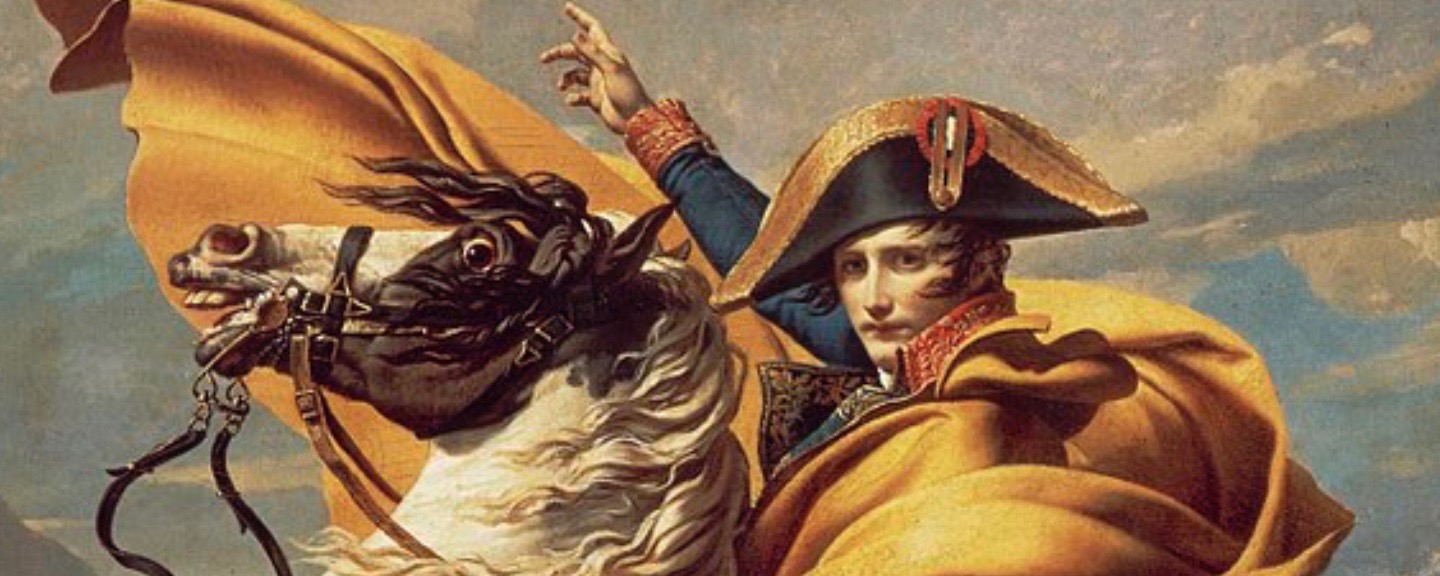
205 Years On: Why did Napoleon fail at Waterloo?

Napoleon was initially successful in his European campaign, which spanned from 1803 to 1815, but this changed for the worse overtime. It was Napoleon’s own poor decision making that led to the depletion of the Grand Armée over time, which allowed the Coalition to eventually defeat him at the Battle of Waterloo in 1815.

Napoleon turned France into an aggressive military power, by mobilising majority of the population, beginning in 1791.[1] At this point revolutionary France had an army of 200,000 men.[2] Napoleon ensured that newcomers learned the traditional methods of warfare, which maintained a high level of discipline and order within the army.[3] He also ordered that his armies march in columns, allowing them to advance further on the battlefield and attack the enemy with close range musket fire, causing greater devastation.[4] These new tactics allowed him to initially exact continuous victories upon his enemies.

However, this didn’t last. Napoleon’s constant refusals of peace caused his forces to deplete further. Austrian diplomat Klemens von Metternich wished to negotiate peace between Russia and France, through the Armistice of Plaswitz, 1813.[5] The Coalition wanted Napoleon to agree to strict terms, which included evacuating the French army from Germany and Italy, and giving up the Grand Duchy of Warsaw.[6] Napoleon refused peace, thus prolonging the wars which would continue to drain his supplies.[7] Metternich was aware that if peace was not negotiated, it would be ‘too late.’[8] Napoleon’s arguments with Metternich and refusal to attend peace conferences led to a series of bipartisan agreements signed at Teplitz on the 9th of September 1813 by the Coalition.[9] This cemented an alliance between Russia, Austria and Prussia, which directly threatened France.[10] If peace had been negotiated, the Coalition would not have united against Napoleon, and Waterloo might have been avoided. By continuing to facilitate war, Napoleon allowed the supplies of his army to further deplete.

Napoleon’s errors in military leadership also contributed to the depletion of the French army. An example of this can be seen when looking at the Battle of Borodino, in September 1812. Napoleon advised his army to attack the Russian forces in a full frontal assault, instead of enveloping them.[11] This led to massive French casualties, as they were gunned down by musket fire.[12] Napoleon also decided not to employ the Imperial Guard, a force totalling 18,000 men, which may have swung the result of the battle in his favour. This poor strategy, coupled with Napoleon’s refusal to make peace with the Coalition, prompted historian Charles Esdaile to argue that Napoleon betrayed France.[13] Similar mistakes were made at the Battle of Leipzeig, in October 1813. Towards the end of the battle, the inaction of the Coalition allowed the majority of Napoleon’s forces to escape the battlefield.[14] However, due to miscommunication amongst the French forces, the causeway that the French used to escape the battlefield was destroyed, resulting in 30,000 deaths.[15] This figure added to the 38,000 causalities that the French had suffered over the three day course of the battle.[16]

The size of the Grande Armée was also an issue, as it could not move quickly enough to encircle an enemy, and Napoleon found the huge force difficult to control.[17] ‘Total war’ refers to warfare that includes all the population and resources of a nation, which Napoleon adhered to by mobilising the entire population of France in the 1790s. David Bell notes that although Napoleon initially made use of the army to wage total war in Europe, he eventually became a victim of total warfare himself.[18] French General Antoine-Henri Jomini too concurred that the size of the Grande Armée became increasingly problematic, advocating smaller sized armies as they were easier to manage.[19]

The size of the Grande Armée led to conflict amongst the generals, as the French high command found themselves disagreeing about how to best deploy the huge force. This lack of cooperation acted as a detrimental factor to the French forces, in contrast to the unity of the Coalition. Before his abdication, in 1814, Napoleon was stationed at Fontainebleau with 60,000 men.[20] Napoleon planned to fight the Coalition, bargaining on a military victory, but his commanders refused to comply and ordered him to abdicate.[21] Napoleon lost support from his generals and commanders due to his previous poor tactics in battle, as well as his inability to negotiate peace with the Coalition. Jacques MacDonald, one of Napoleon’s commanders, staunchly refused Napoleon’s orders, declaring that the French nation was ‘determined to make an end’ of the war with the Coalition.[22]

Napoleon’s ill-fated invasion of Russia just made things worse. Before the Battle of Borodino, Napoleon had already lost supplies due thunderstorms and blizzards, depleting his army before the battle took place.[23] Imperial Guard member Captain Coignet noted that the weather caused a loss in supplies, as the ‘ground was covered with horses frozen to death.’[24] Further supplies were lost due to dysentery, and 10,000 horses died due to malnourishment.[25] Twenty-four year old infantryman Jakob Walter noted that the army was reduced to eating ‘uncooked’ horsemeat.[26] At Borodino, Napoleon prepared to fight against Russia’s 121,000 men, with his 130,000.[27] The French and Russians lost 30,000 and 40,000 men respectively. Although neither side can declare victory in such a situation it is conceivable to think that if Napoleon had not lost so many supplies on the way to Borodino, he would have had a greater chance of winning the battle due to his strength in numbers.

The Coalition, in contrast got stronger, and developed their own tactics to combat Napoleon, and also sought to replicate Napoleon’s in order to defeat him. Upon the French advance into Moscow, the Russians adopted the tactic of ‘scorched earth,’ and set Moscow alight.[28] This exacerbated the precarious position of Napoleon following the Battle of Borodino and cost him even more supplies. Napoleon instructed his troops to ‘live off the land,’ so they survived on the resources of the towns that they plundered.[29] In order to combat this, Russian agents set Moscow alight, reducing the city ‘to ashes.’[30] Russian general Kutuzov then cut the French columns in two repeatedly, inflicting major deaths upon the retreating French army.[31] Due to the lack of food and cohesion of the French forces, Russia was able to exact victories over the French, by attacking them on all sides in November.[32] The French were forced to flee, leaving valuables such as guns behind.[33] Napoleon escaped Russia with 20,000, as opposed to the 130,000 which he led into battle at Borodino. [34] French losses amounted to half a million, which could have been prevented if the French army was well supplied and did not need to rely on the land to live. [35] In response to Napoleon’s failed invasion of Russia, the Coalition adopted Napoleon’s tactic of conscription.[36]

Despite each nations’ own personal aims, the Coalition agreed on March 1st 1814 that their universal goal was to defeat Napoleon.[37] This demonstrates the cooperation of the Coalition, as nations were willing to put their own priorities aside and prioritise dealing with the threat. This cooperation can be seen at Waterloo. During the climax of the battle, Wellington’s troops were reinforced by two Prussian corps, led by Gebhard Leberecht von Blucher.[38] This combined strength overpowered Napoleon, and what was left of his army.

It seems that Napoleon tried to reach too far, as his own ambition, and refusal to desist caused his army to get smaller and smaller, leading to his eventual defeat at Waterloo.

Thanks for reading!


[1] M. Broers, ‘Changes in War: The French Revolutionary and Napoleonic Wars’ in H. Strachan and S. Scheipers (eds.), The Changing Character of War (Oxford, 2011), p. 3.

[2] Ibid., p. 3.

[3] Ibid., p. 5.

[4] Ibid., p. 5.

[5] C. Esdaile, Napoleon’s Wars (London, 2007), p. 504.

[6] Ibid., p. 504.

[7] Ibid., p. 504.

[8] M.A Klinkowstrom, and A. Napier, (trans.) Memoirs of Prince Metternich, vol. 1, New York (1880), c.f. Esdaile, Napoleon’s Wars, p.505 n. 68.

[9] Esdaile, Napoleon’s Wars,p. 509.

[10] Ibid., p. 509.

[11] Ibid., p. 478.

[12] Ibid., p. 478

[13] C. Esdaile, The Wars of Napoleon (London, 1995)

[14] Esdaile, Napoleon’s Wars, p. 515.

[15] Ibid., p. 515.

[16] Ibid., p. 515.

[17] Ibid., p. 468.

[18] D. A. Bell, The First Total War: Napoleon’s Europe and the Birth of Modern Warfare (London, 2007), p. 8.

[19] H. Strachan, European Armies and the Conduct of War (London, 1983), p. 64.

[20] Esdaile, Napoleon’s Wars, p. 528.

[21] Ibid., p. 528.

[22] Found in M. Glover, The Napoleonic Wars: An Illustrated History 1792-1815 (London, 1979), p. 205.

[23] Esdaile, Napoleon’s Wars, p. 463.

[24] J. Fortescue (ed.), The Notebooks of Captain Coignet, Soldier of the Empire (London, 1989), p. 207, c.f. Esdaile, Napoleon’s Wars, p. 463 n. 5.

[25] Esdaile, Napoleon’s Wars, p. 463.

[26] A. S. Raeff, pp. 41-42 c.f. Esdaile, Napoleon’s Wars, p. 463 n. 6.

[27] Esdaile, Napoleon’s Wars, p. 476.

[28] Ibid., p. 478.

[29] Broers, ‘Changes in War’, p. 6.

[30] Esdaile, Napoleon’s Wars, p. 474.

[31] Ibid., p. 478.

[32] Esdaile, The Wars of Napoleon, p. 260.

[33] Esdaile, Napoleon’s Wars, p. 479.

[34] Ibid., p. 479.

[35] Ibid., p. 479.

[36] Ibid., p. 478.

[37] Glover, The Napoleonic Wars: An Illustrated History 1792-1815, pg. 203.

[38] Ibid., p. 215.

Lucrezia Borgia: Incest, Poison and Sexual Scandal?

Lucrezia Borgia’s reputation precedes her, as the debauched daughter of Rodrigo Borgia, more commonly known as Pope Alexander VI. The Borgia family dominated Renaissance Italy, and some describe them as Italy’s original crime family. What an iconic bunch. Lucrezia gets a lot of attention, especially in relation to her three marriages, and reputation as an avid poisoner. Were these rumours true? As juicy as the details may sound, most historians agree that they weren’t, and that she was in fact the target of slander… but then again… although the theories have never been proved… they have never been disproved… see what I did there?

One of the most heinous crimes she is accused of is committing is incest with her brother Cesare, and her father. The accusations came from her first husband, Giovanni Sforza, whom she married in 1493. The marriage was a political one, and originally helped Alexander forge some powerful ties with the Duke of Milan, Giovanni’s uncle. Here, Lucrezia appears as more of a political pawn than a femme fatale, as she was thirteen at the time, and Giovanni was twenty-six. This marriage was annulled in 1497, much to Giovanni’s anger, because Alexander, in a political move, decided to back a French candidate to become the King of Naples. The Sforzas were the enemies of the royal family of Naples, and Giovanni was not happy, so Alexander sent him packing. In an attempt to preserve Lucrezia’s chastity, Alexander argued that Giovanni was impotent.

This was not true, as his first wife died in childbirth. Top marks, Alexander. In response to the whole situation, Giovanni accused Lucrezia of incest with her father and brother. The family weren’t much liked anyway, especially as they had come from Spain, and Italy was automatically suspicious of any outsiders. Enemies of the influential family lapped up the incest rumours, and rumours about Lucrezia’s general sexual discordancy and diabolical nature were rife. Freud would be having a field day. This is ironic, as she was named after the Roman noble woman Lucretia, who killed herself after she was raped by Sextus Tarquinius, in order to preserve her dignity and chastity.

Her reputation as a poisoner was tied to all the mysterious deaths that occurred around the Borgia family, including her own brother, Juan. It was rumoured she wore a hollow ring, containing poison, which she would deploy at parties to bump people off. Poison was popular in Renaissance Europe, as it left a lack of evidence, and was therefore difficult to trace. That’s why it’s popular with Shakespeare. It was probably tied to Lucrezia because poison was tied to women in general. It’s not as violent, subtle or ‘manly’ as thrusting a sword into someone, so a female poisoner was doubly scary, as a woman had easy access to all realms of the domestic sphere.

Gross sexual indecency continued to follow Lucrezia, even after the death of her second husband, Alfonso of Aragon. He was attacked and strangled in his bed, by an agent of her brother, Cesare in 1500. This only bolstered the incest rumours. Then, cue, Eastenders ‘duff duff,’ an illegitimate Borgia baby rocked up in 1501, whose parents were never officially disclosed. Who’s the mummy? Who’s the daddy? Was he Lucrezia’s, with her rumoured lover Perotto who mysteriously died two years before? Was the boy the son of Alexander and Lucrezia? Was it the son of Cesare and Lucrezia? Two Papal Bulls were issued, one saying that Alexander was the father, the other stating that Cesare was. Lucrezia acknowledged him as her half-brother. [1]

The rumoured Banquet of Chestnuts also spread of rumours of sexual discordancy within the family, as Johann Burchard describes:

“On the evening of the last day of October, 1501, Cesare Borgia arranged a banquet in his chambers in the Vatican with “fifty honest prostitutes”,called courtesans, who danced after dinner with the attendants and others who were present, at first in their garments, then naked. After dinner the candelabra with the burning candles were taken from the tables and placed on the floor, and chestnuts were strewn around, which the naked courtesans picked up, creeping on hands and knees between the chandeliers, while the Pope, Cesare, and his sister Lucretia looked on. Finally, prizes were announced for those who could perform the act most often with the courtesans, such as tunics of silk, shoes, barrets, and other things.[2]

… I have no words… which I know is rare.

Lucrezia’s reputation, and status as a mother, caught up with her by her third marriage to Alfonso d’Este in December 1501. It took a large dowry of a hundred thousand ducats to secure the marriage, because of said reputation. She was reluctant to marry again, telling her father that her ‘husbands had been very unlucky.’[3] A bit of an understatement, Lucrezia.

Alexander also paid a medical practitioner to attest that Lucrezia was a virgin. The presence of her son Rodrigo, by her second husband, may have been a slight giveaway. Lucrezia was forced to leave her son behind when moving to Ferrara for her third marriage. She would never see him again. Although this was a political move, Lucrezia was slated for it, with people claiming that she was a child abandoner devoid of maternal affection. I mean, she had eight children with her third husband so… Her image also wasn’t helped by the fact that she allegedly had affairs with poet Pietro Bembo, and her brother in law, Francesco Gonzago.[4]

Apparently, Alexandre Dumas, author of ‘The Three Musketeers’ weighed in, stating that Lucrezia:

“… had a wild imagination, was an unfaithful woman by nature and was the daughter and mistress of her father while also engaging in intimate relations with her brother”

I mean… how would he know? It’s not like they ever met.

Even poet legend Lord Byron had a thing for her, stating that her love letters were the ‘prettiest in the world,’ in 1816. He also claimed that he stole a lock of Lucrezia’s hair which was on display in the Ambrosian Library of Milan, calling it the ‘prettiest and fairest imaginable.’ For goodness sake, Byron.[5]

If we take all of these rumours as fact, we would have a woman who murdered people, committed incest, and discarded her child. She literally would be antithetical to anything found in the Bible, and more importantly the Virgin Mary. People probably classed her as a she-Devil, as the crimes she was accused of were of the most heinous. All this comes with the added irony that her father was the Pope! It’s not hard to understand why Lucrezia, and the Borgias, had such an infamous image. Even though it is believed that all of the rumours surrounding Lucrezia are untrue, even if they can ever be proved or unproved, it still makes for gripping reading.

Hope you thought so too! Thanks!


[1] All information from:

History Extra: ‘Lucrezia Borgia: Is Her Bad Reputation Deserved?’

Available at: https://www.historyextra.com/period/renaissance/lucrezia-borgia-reputation-adulteress-pope-alexander-vi/

[2] Found in J. Burchard, Pope Alexander VI and His Court – Extracts from the Latin Diary of John Burchard (ed.) F.L Glaser (New York, 2018).

[3] A. A. Berger, The Art of the Seductress: Techniques of the Great Seductresses from Biblical Times to the Postmodern Era (Indiana, 2002) p. 59.

[4] All information from:

History Extra: ‘Lucrezia Borgia: Is Her Bad Reputation Deserved?’

Available at: https://www.historyextra.com/period/renaissance/lucrezia-borgia-reputation-adulteress-pope-alexander-vi/

[5] ‘Letter from Byron to Augusta Leigh,’ Milan, 15 October 1816, in. Lord Byron’s Letters and Journals, Chapter 5: Separation and Exile.

Available at:

https://web.archive.org/web/20080509081118/http:/engphil.astate.edu/gallery/byron6.html

Alec D’Urberville: Religious Fanaticism, Temptation and the Bible

Alec D’Urberville is ‘Tess of the D’Urbervilles’ big bad, as his rape of Tess sets all of the events of the novel in motion, leading Tess down a path of misery which ends in her death and his. Alec is initially portrayed as a bit of a moustachioed pantomime villain, but his later resurgence in the sixth phase of the novel shows that he has changed massively… or has he? I mean one thing that has definitely changed is, his moustache… that’s gone for good.[1]

Tess is understandably distressed to see Alec preaching, as he comes across as a massive hypocrite. We are told that he hasn’t just changed, but that he’s undergone a whole ‘transfiguration.’ This is quite an aggressive reference to the Transfiguration of Jesus, perhaps prompting us to compare Alec to Jesus. I don’t think anyone in their right mind would actually do that, but Thomas Hardy wants us to believe that this man is totally different to the one that we originally met… but is he? Hardy is very descriptive about the whole thing, as he always is, but the most striking oxymoron is his note that Alec’s ‘animalism had become fanaticism.’ One minute Alec is the aggressive, forceful animal that raped Tess, next he is the religious zealot seeking salvation. Alec takes the ‘blame’ for Tess’ despair, and promptly wants to resolve the issue by deploying a ‘marriage license.’[2] He wants to marry Tess so that the rape effectively doesn’t count. Any sexual intercourse between them, pre marriage, wouldn’t really matter, as they would be husband and wife. Even before this, their sexual contact, consented or unconsented, would lead Victorian readers to believe that they were married in the eyes of the church. That’s Victorian sexual politics for you. Tess is married to Angel at this point, so naturally she doesn’t agree, and even though Alec’s attempts at making it up to Tess are extremely misguided, in his mind, he is trying to atone. Yes, to modern readers this sounds pretty crazy, but in his mind, and in the minds of Victorian readers, Alec is trying to do the right thing.

This falls flat though, even when he tries not to be tempted. Alec notes that he has a ‘fear’ of ‘women’s faces,’ because of how they tempt him.[3] He even has the audacity to ask Tess to ‘swear’ that she won’t tempt him again.[4] Tess may be tempting, but it isn’t her fault that Alec sexually assaulted her, so even though he is trying to atone, it appears that he still doesn’t realise that he is responsible for his own mistakes. Even though, we are told, that Alec has changed, and from this point is dedicated to his religion, it seems that he still doesn’t understand his past fully. But this conflicts with his declaration that he was to blame for Tess’ misery, so… he kind of atones but doesn’t fully understand how? It’s a tricky one.

This all becomes a bit clearer when his attempts to resist temptation fully break down. He promptly ditches preaching to give way to his ‘passion’ for Tess.[5] So, before we could even fully understand Alec’s supposed conversion, he basically slips back into his old ways. Seeing Tess prompts a revelatory outburst, which adds to the complexity of the character, and makes for dramatically gripping reading:

‘I was on my way to salvation till I saw you again! He said, feverishly shaking her, as if she were a child. ‘And why then have you tempted me? I was firm as a man could be till I saw those eyes and that mouth again – surely there never was such a maddening mouth since Eve’s!’ His voice sank, and a hot archness shot from his own black eyes. ‘You temptress Tess; you dear witch of Babylon – I could not resist you as soon as I met you again!’[6]

He’s gone on a full U-turn here, and goes back to blaming Tess for everything, after initially saying that she was blameless. He again, says that she tempted him, when in fact, she’s spent the last number of pages trying to shake him off. He casts her as a bit of a femme fatale. A lot in the novel is left up to chance, and if Tess hadn’t stumbled upon Alec again, perhaps he would have gone on to fully atone. It’s difficult to tell. Now, we know that Alec’s conversion is really just meant to criticise the hypocrisy of the church, as although it preaches forgiveness and love, Alec has been accepted even though he raped Tess. She suffers and loses faith throughout the novel, prompted by the refusal of the church to baptise her illegitimate child by Alec.[7] Tess is unprotected by everyone in the novel, including the church. Where someone from the church should support her and help her, the church instead gives her the man who ruined her life, the difference being now that he has the backing of divine authority. It is incredibly hypocritical and insulting, and just reinforces Tess’ purity in contrast to the other characters within the novel. Even Angel, foretold as her guardian angel, is no saint. This girl cannot catch a break.

Alec certainly packs in a few Biblical references in his tirade, which is not uncommon throughout the whole novel. His likening of Tess to Eve demonstrates her uniqueness, and the pedestal that he places her on, seeing her as the first woman, and incomparable to all others. She isn’t just a woman, she’s the living embodiment of ‘woman.’ Obviously, Eve is tied up with temptation, and it seems that Alec has it in his mind that she was tempted by him.[8] She did say that she found him handsome, but this obviously does not translate to consent. On the surface it seems pretty clear that Alec is the snake in the Garden of Eden. Tess’ association with Eve prompts the reader to wonder who her Adam is, and this is made even more complex when people debate if Angel is just as bad as Alec, and therefore unworthy of that title. Who sits in the Garden of Eden with Tess? Is it even Eden, considering how badly she is treated?

By the time anyone has the chance to figure out any of these questions, presuming that there is an answer, it is, as Tess says, ‘too late.’[9]

Thanks for reading!

Stay safe, stay inside. Read something cheerful.


[1] Thomas Hardy, Tess of the D’Urbervilles, (London, Penguin Classics, 2003) p. 305.

[2] Ibid., p. 313.

[3] Ibid., p. 310.

[4] Ibid., p. 311.

[5] Ibid., p. 322.

[6] Ibid., p. 323.

[7] Ibid., p. 96

[8] Ibid., p. 77.

[9] Ibid., p. 378.

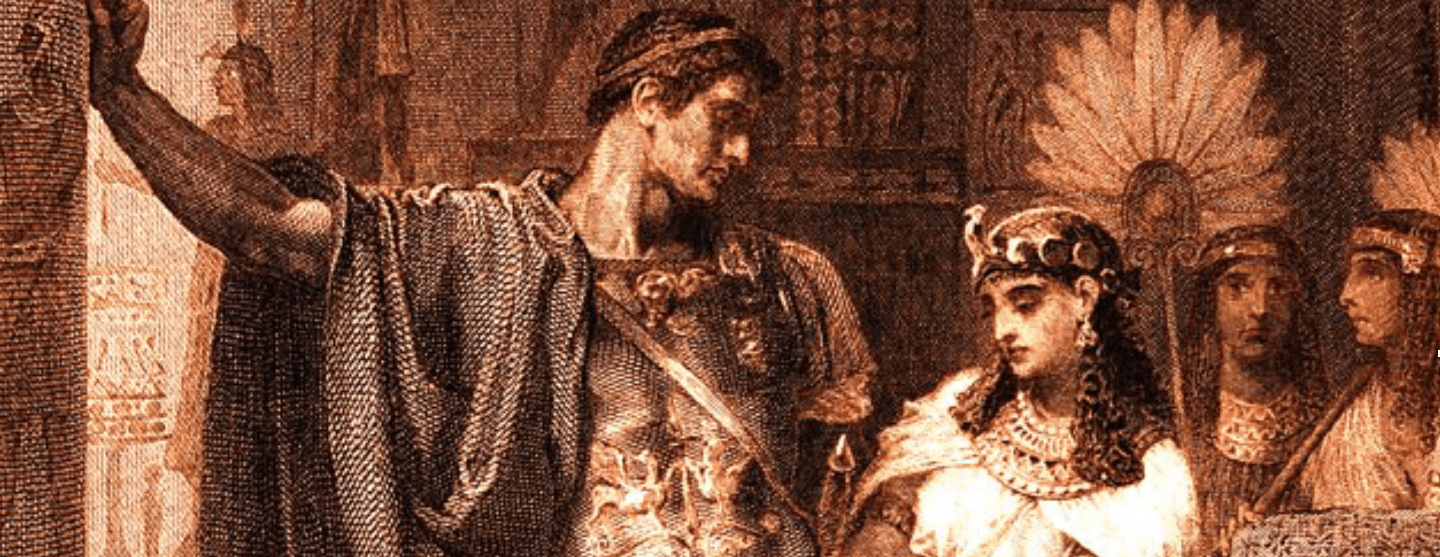
Plutarch on the real Antony and Cleopatra

It’s difficult to separate the fact from the fiction, when dealing with Mark Antony and Cleopatra, as so little sources survive about their love affair. One that does and is fairly accessible, is that of Plutarch, a renowned Roman philosopher and biographer. Now, he was not alive to witness these events first-hand, but his account is frequently cited by historians. I didn’t get the impression that Plutarch was biased in favour of the Romans, and he appeared to portray Antony and Cleopatra both as real people. Shakespeare certainly took the events Plutarch describes as fact, so let us see what he has to say.

On first view, Mark Antony seems like a bit of a jack the lad. From a young age, he is embroiled in ‘drinking bouts, love-affairs and reckless spending.’[1] This continues throughout most of his adult life, but does come into conflict with his ‘love of honour.’[2] On one occasion, before meeting with a senator in the morning, Antony got so drunk the night before that he vomited in his toga in the senators’ presence. Now fellow students, we can relate.[3] This whole party hard lifestyle matched well with Antony’s philosophy to also work hard, as he was a well-respected politician and general, and under Julius Caesar, became one of the most powerful men in Rome.[4] Antony, controversially, boasted that he descended from Hercules, which shows that he was a bit full of himself, but he still was able to accept the ‘good humour and jokes’ that people made about him.’[5] So, he probably sounds like that typical Uni lad, that we all know. It’s clear from his youth that he definitely has a ‘weakness for the opposite sex,’ and this certainly destroys Antony later on. Enter Cleopatra.

Plutarch credits Cleo with having the ‘strongest influence’ over Antony.[6] When they first meet, she’s twenty-eight, and has already had an affair with Julius Caesar, a union which secured her position as queen of Egypt.[7] She meets Antony in 41 BC in Tarsus, Turkey, and travels to him on the river Cyndus, under a ‘canopy of cloth of gold, dressed in the character of Venus.’[8] This was a piece of dramatic, political theatre, as Cleo demonstrated her wealth and power to the stunned Antony, in an attempt to woo him and secure his support, and vice versa. Cleo had a great ‘physical presence,’ and Plutarch rightly portrays her as not just a femme fatale, but a skilled political figure, who used her femininity and beauty for political gain. As well as this beauty, Plutarch writes that she had a certain ‘charm,’[9] and that ‘Plato speaks of four kinds of flattery, but Cleopatra knew a thousand.’[10] Antony is then whisked away to Alexandria by Cleo without hesitation.[11] Her charm is demonstrated in one particular story, in which, at one of her lavish parties, she bet Antony that she could consume a meal worth 10 million silver coins. To do this, she dissolved her pearl earring in a cup of vinegar wine and drank it.[12] It’s beauty and wit that seem to define Cleopatra.

Plutarch highlights the playfulness of their relationship. Cleo often humoured Antony, and when he would go on late night strolls through Alexandria, she would dress up as a maidservant and play along in his silly games.[13] Cleo appeared to bring out this childlike side to Antony, as the Alexandrians observed that he had a ‘tragic mask for the Romans, and a comic one for them.’[14]

The lovers’ ending is romantic and iconic. Their union was controversial and the favour that Antony continually bestowed on Cleo, at times in detriment to the Roman empire, angered the senate, making an enemy of Antony’s brother in law, Octavius.[15] Eventually Octavius declares war on Antony, after denouncing him in the senate.[16] Antony and Cleo recognised their impending doom, and formed a club named the ‘Order of the Inseparable Death,’ pledging to ‘end their lives together.’[17] In preparation, Cleo busied herself with testing poisons, and ascertained that the ‘bite of an asp’ was the most ‘painless.’[18]

The affair takes a dark and betraying turn, when Antony kills himself upon the news that Cleo had done the same.[19] Plutarch doesn’t really give his thoughts on why Cleo did this. It is difficult to see them both as genuine lovers when Cleo makes such a bold political move, knowing that her association with Antony is what is killing them both. His body is ‘hauled’ up the walls of Cleopatra’s monument, where she had retreated to for safety.[20] Cleopatra in anguish tore her dress and lay it over Antony, and ‘beat and lacerated her breasts, and smeared her face with the blood of his wounds.’[21] There’s genuine pain and love here, which contrasts with her previous callous moves. I think that Cleo told Antony she was dead for political reasons, but this doesn’t mean that it’s not tearing her up inside. It’s not a cold-blooded killing but a sacrifice for Egypt, and her heritage. Plutarch portrays her as a complex woman, and maybe it’s part of the point that Plutarch, and by extension the reader, don’t fully understand her motivations, and never will.

Now, in true tragic fashion, we know that she poisoned herself, but it is unclear how the asp was brought to her. What is in a basket of figs? Did she provoke it with a spindle?[22] It’s certainly a striking image. Cleo’s handmaiden, before she too killed herself, noted that ‘It is well done, and fitting for a princess descended of so many royal kings.’[23] Cleo gets the last laugh, as Octavius was reportedly ‘vexed’ that he could not parade her around Egypt as a spoil of the war that her death had ended.[24] Octavius believed that the asp bit Cleo, citing puncture marks in her arm as evidence.[25] In his victory procession, he had a statue built of Cleo with an asp clinging to her.[26]

This article doesn’t cover half of the political drama, blood, lust and betrayal that went on behind closed doors during the lives of Antony and Cleopatra, but even if it did, I think I would still reach the same conclusion that Antony and Cleopatra both ‘lost the world for love.’[27]

Thanks for reading!

Stay safe, stay inside. Read something cheerful.


[1] Plutarch, Makers of the Rome. Translated by Ian Scott-Kilver (London, Penguin Classics, 2004), p. 272.

[2] Ibid., p. 273.

[3] Ibid., p. 279.

[4] Ibid., p. 272.

[5] Ibid., p. 274.

[6] Ibid., p. 292.

[7] Ibid., p. 292.

[8] Ibid., p. 293.

[9] Ibid., p. 294.

[10] Ibid., p. 296.

[11] Ibid., p. 294.

[12] ‘Cleopatra: Mother, Mistress, Murderer, Queen’ Channel 5 Documentary: https://www.imdb.com/title/tt5725570/

[13] Plutarch, Makers of Rome, p. 296.

[14] Ibid., p. 296.

[15] Ibid., p. 321.

[16] Ibid., p. 322.

[17] Ibid., p. 337.

[18] Ibid., p. 337.

[19] Ibid., p. 341.

[20] Ibid., p. 341.

[21] Ibid., p. 342.

[22] Ibid., p. 348.

[23] Ibid., p. 348.

[24] Ibid., p. 348.

[25] Ibid., p. 348.

[26] Ibid., p. 348.

[27] Ibid., p. 355.

Body Horror, Justice and Covid-19 in ‘Jurassic Park’

‘Entertainment is antithetical to reality’[1]

Michael Crichton’s novel ‘Jurassic Park’ is certainly that, to the point where the readers are relieved by it. Crichton’s novel about genetically engineered dinosaurs running amok is a thrilling read, even if it’s not quite the same as actually seeing the dinosaurs for real on the big screen. What is omitted from the novel is the mass amounts of blood and body horror, which serve well to emphasise the threat, and nature, of the Jurassic monsters that roam the novels’ pages.

I mean, we aren’t even ten pages in and there’s already ‘blood everywhere’ after a worker is attacked by a Velociraptor.[2] Next thing you know there’s baby dinosaurs tearing out ‘a ragged chunk of flesh from a baby’ in a hospital.[3] These early scenes set up the threat of the dinosaurs, and tell the reader, before any character sets foot on the island, that the park is a big, bad idea. These initial incidences of violence don’t compare to the fate of Dennis Nedry however, who is caught by a dinosaur on his way to deliver stolen embryos to a rival company.

In the film, we know the dinosaur attacks Nedry, but we only see this through the translucent front window of his jeep. The book is far more graphic, with Nedry first going ‘blind’ after being covered in the Dilophosaurus’ acidic saliva. He then realises that his stomach has been ‘torn’ open by the dinosaur, and that his ‘intestines’ were ‘in his hands.’[4] Lovely stuff. It’s one thing to marvel at a dinosaur, but it’s another thing to come up close to it, and the frankest man in the novel, Ian Malcolm, astutely reminds John Hammond that these dinosaurs are ‘alive,’ they are not passive objects to be stared at.[5]

Henry Wu too suffers later on in the novel but instead at the claws of the Velociraptors, who tear open Wu’s stomach and begin to munch on his intestines while he ‘was still alive.’[6] This is quite different to the film as Wu doesn’t actually die, and has popped up more recently in Colin Trevorrow’s Jurassic World films. There is a real obsession with intestines in the novel to be honest, and we even get a glimpse of a Velociraptors’ insides later on… but I thought two rounds of intestines was enough. It’s obvious as to why the novel is so bloody, as it’s trying to drum home the majority of Ian Malcolm’s remarks, that dinosaurs cannot be controlled. Wu claimed that they could be and look what happened to him. The novel is an exciting one, but to me it appeared primarily as a warning against genetic research, and more importantly, as a warning against messing with Mother Nature.

There’s a strange sort of natural justice in the novel, as the creator of the park himself is eaten by Compsognathus’. Note that this doesn’t happen in the film. John Hammond is oddly chilled about being eaten alive in the novel, and only feels a ‘slight pain’ when the dinosaurs begin to ‘chew his neck.’[7] Hammond didn’t really accept that his park was massively flawed in the novel and remained faithful to the last. It’s kind of fitting that he is consumed by the world that he wished to revive and recreate. He finds himself at the mercy of the Jurassic world, and it seems that he is honoured by this, as recreating the Jurassic era was his dream. In recreating the Jurassic world he was also responsible for all of the sufferings of the dinosaurs at the hands of humanity within the novel, so there is some sort of justice in there, as the dinosaurs take out the man that brought them back, caused them pain, and sort to use them in some crazy prehistoric circus.

We jump to Covid-19 now, and my ability to pretty much link anything to it. When commenting on the chaos within the park, Ian Malcolm notes that they ‘can’t see the other side until you’re there.’[8] We don’t know what the country, or even the world, will look like following the end of this crisis, and therefore maybe it’s best not to worry. It doesn’t really do much good for anyone’s mental health. We don’t know what will happen, and how everyone will emerge, we just have to wait until we get there. Even though the wait may still be quite long, try to rest easy, as the reality of the situation is that, as we see in ‘Jurassic Park,’ ‘life finds a way.’[9]

Thanks for reading!

Stay safe, stay inside. Read something cheerful.

[1] Michael Crichton, Jurassic Park, (London, Arrow Publishing, 1991) p. 123.

[2] Ibid., p. 7.

[3] Ibid., p. 27.

[4] Ibid., p. 196.

[5] Ibid., p. 305.

[6] Ibid., p. 334.

[7] Ibid., p. 392.

[8] Ibid., p. 313.

[9] Ibid., p. 161.