The ‘Femme Fatale’ on Screen

The French phrase ‘Femme Fatale’ translates to ‘fatal woman,’ and describes an archetype that originates from the classic film noir of the 1940s and 50s. This stock character usually brings about the destruction of the protagonist, usually male, and manages to reject traditional ideals of femininity while she does. There have been many iterations of the femme fatale on screen, but there are several traits that they commonly share. Critics generally concur that the presence of the femme fatale reflects male anxieties about women, be that about their domestic role, or their sexuality.

Early versions of the femme fatale can be seen in figures such as Eve or Salomé. Both show the audience what would happen if women were to gain some sort of independence, with Eve eating from the Tree of Knowledge and bringing sin into the world. In Milton’s ‘Paradise Lost,’ after eating from the Tree Eve acquires a dangerous sexuality which seduces and leads Adam astray. Post war films of the 40s and 50s reflected changes in women’s roles, as during the war, they had left the domestic space of the home and entered into work. They earned their own money, and discovered some of the freedom that men had always possessed. This idea of freedom is applied to all aspects of the female in the femme fatale character, and is well reflected in the 1946 film ‘Gilda.’

Rita Hayworth depicts the titular character, and it is her free sexuality that raised the eyebrows of the audience. In the film, Gilda decides to make her ex Johnny jealous by spending her time with other men. Johnny hates Gilda because of this, and does not realise that she is actually married to another man at the time. At the end of the film, she sings ‘Put the Blame on Mame.’ The song talks about a sensual woman who is blamed for all of the world’s problems. Her attire and alluring dance moves force everyone to view her as promiscuous, an idea that Johnny has forced upon her. At the end of the film, when it is revealed that Gilda is married and is not promiscuous at all, Johnny ceases hating her and reconciles with her. The realisation that she does not have a dangerous, free sexuality ultimately resolves the story.

The femme fatale can also appear as the ‘wealthy woman,’ who is obsessed with wealth and material gain. This reflected the money and independence that women earned during the war. Such a woman is depicted in the 1944 film ‘Double Indemnity,’ which starred Barbara Stanwyck as Phyllis Dietrichson. Dietrichson murders her husband for his life insurance, and also murdered his previous wife to marry him in the first place. It is her desire for wealth that drives the plot, and makes her dangerous.

Linking to the idea of wealth is the ‘working woman’ who is deemed dangerous because she can provide for herself. In 1945 film ‘Mildred Pierce,’ Joan Crawford’s Mildred is tormented by her spoilt daughter Ida. Ida would not have been so indulgent if her mother did not earn money to treat her with. It is therefore implied that all of Mildred’s problems stem from her desire to provide for her family. Nicole Kidman’s portrayal of Suzanne Stone in ‘To Die For,’ 1995, is more explicitly dangerous, as, when her husband requests that she give up her career to start a family, she kills him. Stone’s apparent rejection of motherhood make her a dangerous and divisive female, as she rejects the societal role that women were typically associated with, and encouraged to fulfil.

The ‘ageing woman’ is an interesting one, as she is seen as a threat to society purely because she refuses to fade away and let new talent enter the limelight. This is an obvious reference to Hollywood’s obsession with youth. An example of this is Norma Desmond in ‘Sunset Boulevard’ a film from 1950 that stars Gloria Swanson.

Traditionally, femme fatales were reprimanded for their behaviour, an idea that was mentioned in the Hays Code. This was a colloquial term for the Motion Picture Production Code, which acted as guidelines for filmmakers. It was noted that villainous characters should always receive their comeuppance. Due to this, the femme fatale rarely has a happy ending, and is punished for her actions. She may go to jail, or she may die. However, when journeying out of film noir, even this trope appears to change.

A notable example of a femme fatale, that ties many of these ideas together, is Catherine Tramell from 1992’s ‘Basic Instinct,’ played by Sharon Stone. She is fully aware of her sexuality, and uses it to manipulate those around her. Most notably, Michael Douglas’s Nick. She does not kill him, although it is implied that she will at the end of the film, but destroys him from the inside. She awakens in him a darkness that makes him pliable to her. Although she inspires feelings of lust in others, she herself is cold and psychopathic. Tramell survives ‘Basic Instinct’ and returns for its sequel, meaning that, she does not appear to get any comeuppance as her predecessors do. This means that male anxieties about women, in relation to Catherine Tramell, are not dispelled. They survive. If Tramell had been reprimanded, peace would have been restored.

Megara in Disney’s 1997 film ‘Hercules’ is not reprimanded for her deception of Hercules, and is instead rewarded at the end of the film. She is quite obviously a femme fatale, as she is alluring, and draws Hercules to his doom, by drawing him closer to Hades. She does suffer, and nearly die, but ultimately, she is rewarded and given a romantic relationship with the title character. Critics have noted that Megara is a multi-faceted Disney heroine, and perhaps it is this quality that means that she is able to avoid the fates of her femme fatale predecessors.

More recent depictions seem to invert the traditional femme fatale qualities. Natalie Dormer’s popular portrayal of Anne Boleyn in Showtime series ‘The Tudors’ charts Anne’s rise from seducer, to queen. The first season focuses on her femme fatale features, and continually emphasises her sexual beauty, which is what draws Henry to her. In the second season, she is criticised for this, earning her the titles of ‘the Concubine’ and ‘the whore,’ both of which are historically accurate. She also rivals the king, and audience, with her intelligence, in relation to gender roles and religion. It is this, along with her inability to give Henry a male heir, that ultimately leads to her downfall. It seems that in the show, and in real life, Anne reflected male anxieties about the role of women and femininity.

Blake Lively’s character Emily Nelson in the 2018 film ‘A Simple Favour’ does not lead a man astray, but a woman, in Anna Kendrick’s innocent character Stephanie Smothers. Interestingly, Nelson is a mother, unlike previous femme fatales, but like them is judged for being career driven.

Lena Headey’s Cersei Lannister also bucks the trend, as all of her femme fatale-esque actions are driven by her desire to protect her children. Ironically, her love for her children is supposed to be her ‘one redeeming quality,’ and yet it encourages her to kill and manipulate others, including Tyrion and Margaery.

The superhero genre boasts several femme fatales, the most notable probably being Catwoman. Although many actresses have played her over the years, most recently Anne Hathaway, all depictions exhibit femme fatale traits. Hathaway exhibits many, and like her predecessors is mysterious and alluring. Her tight-fitted cat suited highlights her sex appeal, an aspect of her character that is recognised by Bruce Wayne. She also leads Wayne into trouble, by handing him over to Bane. However, she redeems herself, and at the end of the film helps Wayne save Gotham, and in doing so is rewarded with a romantic ending with Wayne.

Krysten Ritter’s Jessica Jones and Rosamund Pike’s Amy Dunne from the 2014 film ‘Gone Girl’ are both femme fatales, but also subvert the trope. Both women are allowed to tell their own stories, and although both are not totally vindicated for their dubious actions, they are at least sympathised with. They are the heroes of their own stories, which gives them a slight feminist edge over some of their predecessors. 2020’s ‘Promising Young Woman’ provides the audience with a fully-fledged feminist femme fatale in protagonist Cassie, played by Carey Mulligan. She continually punishes, and reprimands men for taking advantage of her in a club, a situation she traps them in after faking inebriation. Although I have not seen the film, the promotional material depicts her ensnaring men, and although she does so for different reasons compared to classic femme fatales, it is this feature that aligns her with them.

The femme fatale is often the most memorable character in the story, due to her controversiality. It is certainly true that femme fatales are strong, independent female characters throughout their respective films. It is how others react to them, and see them, that make them fail. As they are chastised for their feminist qualities, notably their free sexuality and desire for independence, the characters themselves showcase anxieties about femininity. Retrospectively, femme fatales have at times been recognised as victims of male dominated societies. Many seek financial independence, and freedom from their oppressive husbands. It is this pursuit of freedom however that condemns them, earning them the label of ‘femme fatale.’

Thanks for reading!

Historical Fiction: Can it make sense?

On the surface ‘historical fiction’ appears to be a contradictory term. ‘Historical’ clearly refers to events within the past, ‘fiction’ refers to ideas that are based upon the imagination. In theory these two ideas should not go together… so how do they? And what are the consequences?

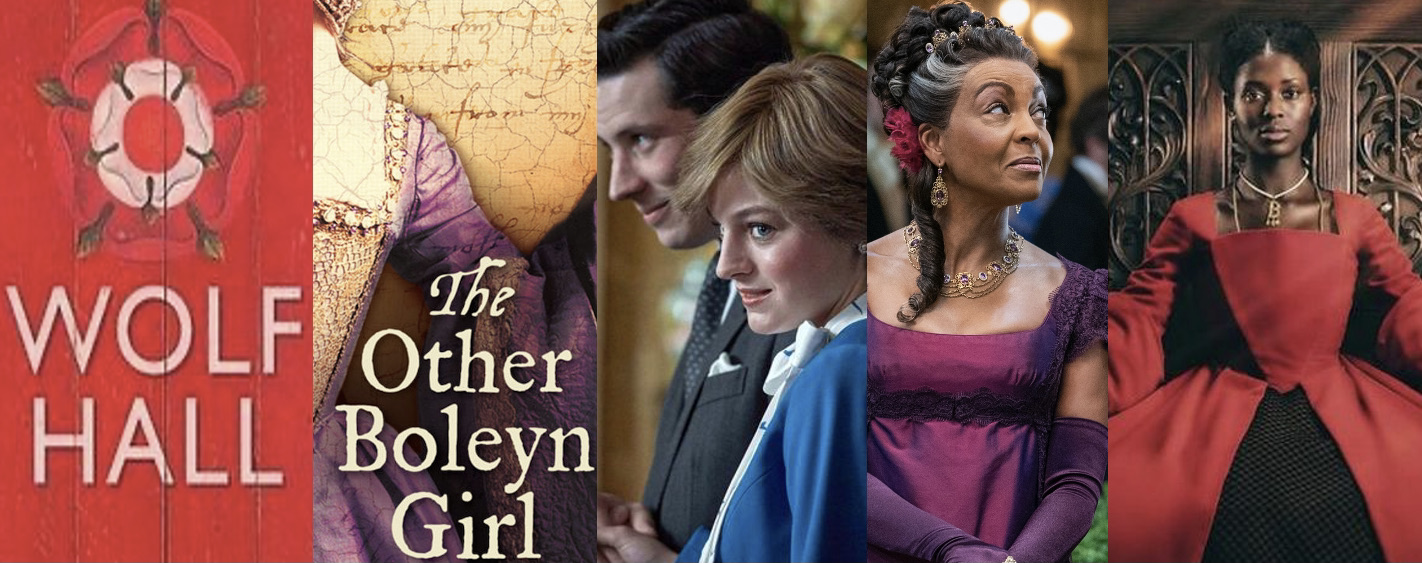
Hilary Mantel, author of ‘Wolf Hall,’ notes that ‘when we die we enter into fiction.’[1] This explains her motivation to write her novels, and also suggests that she believes that the work of the author is to fill in the gaps between historical events. This allows the idea of history and fiction to co-exist, as one does not contradict the other, merely tries to understand and complement it. We do not know what Anne Boleyn said to her ladies the night before her execution – but we know they were all in the same room. Mantel is saying that her role as author, propels her to ask what might have been said, and why.

But, does this make works such as Mantel’s historically inaccurate? The conversations that she creates may not have happened. I suppose this does not make the novel accurate, or inaccurate, as we have no historical documentation to compare it too. If there is no documentation should these conversations be included? I suppose so, as this genre is not non-fiction, it is historical fiction. So, if this is the case, why was ‘The Other Boleyn Girl’ criticised for its lack of historical accuracy? Perhaps it is to do with what is considered to be high and low brow literature. Critics noted that in Philippa Gregory’s novel, historical facts were blatantly distorted. However, on closer inspection, some ideas that Gregory posits are merely things that historians cannot agree on, that she chooses to interpret and use for dramatic effect. Historians cannot agree whether Henry VIII fathered one of Mary Boleyn’s children, and we will not be getting answers any time soon. Gregory just makes a choice, and uses it… is it wrong purely because nobody can prove the answer? Is it right? Perhaps it is because Gregory argued her point so forcefully that there was such a reaction? The novel is certainly more dramatic, and therefore entertaining, due to its inclusion of this plot point… so what’s the harm? It is fiction after all. Anne’s character also came under fire – she is depicted as vindictive and scheming. ‘Wolf Hall’ depicts her in the same way, albeit for different purposes. This is how Gregory and Mantel interpret Anne, and although we cannot know her now, we do know that perhaps she did possess these traits – but maybe not as explicitly. Natalie Dormer’s performance in ‘The Tudors’ seemed to cover all basis, her spitefulness and her vulnerability.

Anne’s incest with her brother was a large plot point in the novel, and amongst historians. Most agree, bar G.W Bernard, that Anne was innocent of all charges, but if we just base our assertions on the historical fact, the indictment and execution, one could say that as she was executed for these crimes, she was guilty. I personally do not believe this, but imagine if all those historians are barking up the wrong tree? We cannot possibly know – what if Gregory’s interpretation is correct? This may well be the point of historical fiction, to flesh out the nuances and different aspects of the historical material. Does this make works of historical fiction inaccurate? Because they explore ideas that are not widely accepted? Well, is Anne Boleyn’s conversation with x at x time about x in ‘Wolf Hall’ widely accepted by historians? If it is not, is it inaccurate, like TOBG? It is quite complicated.

While ‘The Crown’ was lauded by critics, many cited that that it had taken its artistic license a tad too far… even though that probably was the point. Culture secretary Oliver Dowden called for the show to have a ‘fiction’ warning, as the programme was seen to be damaging to the monarchy. This mainly revolved around the royal family’s treatment of Princess Diana. In contrast, Prince Harry praised the program’s ability to capture the constraints and stresses of being a royal. There was a concern that people would take the show as fact, and that, if they were to do so, their respect for the royal family would rapidly diminish. Personally, I do not believe that this is an issue to do with the show itself, but more an issue with the audience. The audience should know that what they are watching is a work of fiction… but is ‘The Crown’ a work of fiction? Perhaps not when drilling into the specific details, especially of Season Four, but the overall themes and dynamics appear to be relevant – especially the marriage of Charles and Diana. Why then were the first few seasons not called out for these so-called distortions? Perhaps it has more to do with the characters, namely Charles and Diana. Their tumultuous marriage, as portrayed in the fourth season, arguably had the ability to do more damage to the image of the monarchy than Philip’s suggested infidelity or Margaret’s alcoholism, due to peoples undying love for Diana. The debate about the ‘fictional’ element of ‘The Crown’ has never ramped up so much than it did last year. The point does still remain though that, whichever way you look at it, Diana had a terrible time, and a large part of this was due to the actions of her in-laws… in this respect, ‘The Crown’ does appear accurate. Perhaps it is not accurate in the right way for some people, perhaps the focus was too much on the family, and not on the nature of the suffocating lifestyle… even though I have just posited this idea, I do find it hard to uphold, as it is the family that uphold the lifestyle, and impart it to Diana. What is true, and does remain, is the fact that the show does draw inspiration from history… so there must be some element of truth.

Controversial casting has also been an issue, which has manifested in the form of colour-blind casting, as seen in ‘Bridgerton.’ Can casting ever truly be colour-blind? Can we believe people when they say it is? Should it matter? The issue is a complex one, and it is obvious that, although the word ‘diverse’ did not exist in the Regency era as it does now, it would be a generalisation to note that it was white-centric. However, Lady Danbury’s note that society has dramatically changed since George III married a black woman, Queen Charlotte, is a tad ridiculous and makes racial equality seem all too easy… especially because it has no historical basis. A huge event, that seemingly solves all racial inequality, is mentioned in one throwaway line. It does a disservice to the issue, and appears inconsiderate especially considering the Black Lives Matter Movement. What ‘Bridgerton’ does allow is for people of all colours to see themselves in all positions on screen. It tackles typecasting. So, should casting be colour-blind? I really doubt that it is, and it seems unsettling that, in casting, peoples skin colour is ignored – as that appears to be ignoring part of their identity. Perhaps ‘colour-bind’ is the wrong term… but then perhaps it is the right one, as the person who can best portray the character should be chosen for the job – no matter what their skin colour. Maybe it is not the job of ‘Bridgerton’ to be diverse, perhaps we must find stories that centre around ethnic minorities to encourage diversity.

Channel 5’s ‘Anne Boleyn’ aired yesterday, starring black actress Jodie Turner-Smith. This caused quite a large reaction, especially from Anne Boleyn fans. It depends how people read Anne’s story, if it is a story about her struggle within a patriarchal world, then surely the colour of the actress does not matter. If she were being portrayed by a black woman in a documentary, I would probably feel more strongly about it, as a documentary is supposed to be historically accurate. I am not saying that Turner-Smith’s casting is not inaccurate, it is inaccurate, as Anne Boleyn was white, but just that perhaps this should not be the focus for a work of historical fiction, as it is, in part, fiction. Perhaps the casting of a black actress is being used to show the difference, and distance, between the royal family and Anne herself, like a physical signifier. I am unsure that I like this theory, as Anne herself was not chastised for her colour, that seems like somebody else’s story. Anne was chastised for her resilience, and in part, her religious views. This should be focused on. Anne Boleyn’s story is not about the struggle of a black woman in a male dominated world, so perhaps it should not be made to be… but is it being made to be, purely by her presence? Turner-Smith’s skin colour cannot be ignored. If the drama focuses fully on Anne’s character, and does it well, then fair do’s. That being said, if a black woman was cast as Diana in ‘The Crown,’ there would have been greater outrage than the casting of Turner-Smith. Perhaps the former would have caused greater outrage as Diana is a more recent public figure… but should that matter? Should some parts of history remain untouched? Laurence Fox has recently criticised the ‘diversity agenda’ behind Turner-Smith’s casting, arguing that it is unfair that a black actress can portray a white woman, and not the other way around. Turner-Smith has said that she wants to tell a ‘human’ story. I doubt these two mindsets will meet and come to some form of agreement. Anne Boleyn’s kiss with Jane Seymour has also drawn particular attention, and it is this that stands out to me as particularly strange… I just cannot see it happening, I imagine that Anne hated Jane! I shall have to withhold comment until after I have watched it.

I am unsure whether this post has achieved anything, but hopefully it has provided some food for thought.

Thanks for reading!


[1] Reith Lectures, 2017.

Close Analysis: King Arthur’s round table at Winchester Castle

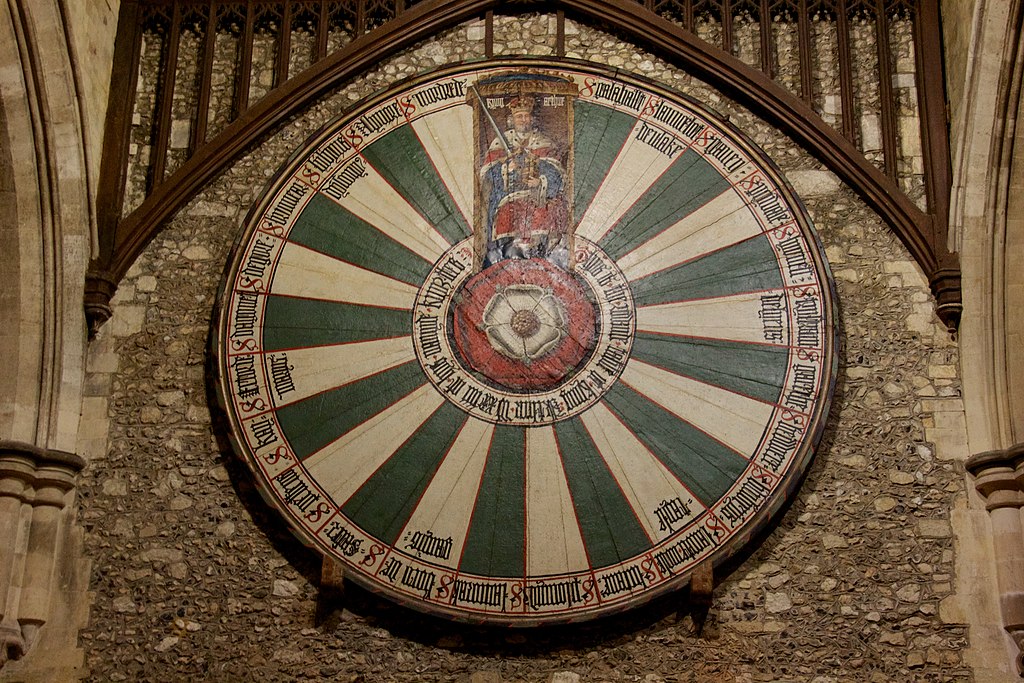
The object is King Arthur’s Round Table which is on display at Winchester Cathedral. The wood of the table dates back to the 1200s and was originally used at court for roundtable festivals. Edward I enjoyed Arthurian legends and the chivalric ideals they epitomised, and Martin Biddle argues that the table was created to celebrate the engagement of Edward’s daughter Joan. Biddle also notes that by 1463, the table was hanging in the Cathedral without its legs. The table was revitalised for the visit of Emperor Charles V in 1522, in which a Tudor rose was painted in the centre, as well as Henry VII sitting on Arthur’s throne. The Arthurian legends enjoyed renewed popularity during Henry’s reign, and for him, they presented a link to Wales, where Henry first landed to fight in the Battle of Bosworth. Henry’s portrait on the table tells us that he wanted to be associated with Arthur directly, and the peaceful reign Arthur presided over. This helped Henry cover up his somewhat dubious claim to the throne, as he descended from the illegitimate children of John of Gaunt. This links to the wider theme of dynasty, and the securing of it which was done with the help of propaganda.

Henry wanted to be associated with table, and Arthurian legend, to bolster the legitimacy of the Tudor family’s claim to the throne. Biddle notes that Henry’s naming his son Arthur, and baptising of him at Winchester was a ‘political tool’ to achieve this. This made the Tudors appear as if they had descended from a prestigious, ancient family. This enhanced their ‘Englishness,’ and also would have increased support for them and patriotism throughout the country. John Guy agrees, and notes that Henry prioritised the ‘security and stability’ of the dynasty, as demonstrated by his desire to be associated with Arthur. This was also demonstrated by his fiscal policies, as he wanted to ensure that he left a financially stable kingdom to his son. Henry VII’s desire to maintain the dynasty can also be recognised in Henry VIII.

Henry VIII’s obsession with primogeniture greatly influenced the Break with Rome, as Henry sought a divorce so that he could marry Anne Boleyn, after Catherine of Aragon failed to birth a male heir. Henry VIII’s obsession with dynasty, and the securing of it is demonstrated in one of his portraits by Holbein in 1536. The original painting was destroyed, but many copies exist. Henry’s pose is one that demonstrates militaristic power and strength, his stance accentuates his leg muscles and his broad shoulders show has the strength to rule England. The painting demonstrates the security, and physical strength of Henry VIII as well as the security and strength of the dynasty. Tatiana String aligns the presence of the large codpiece, the focal point of the painting, with the idea of primogeniture, as Henry is demonstrating his success as the male courtly lover, as he is virile and fertile. This also shows the future security of the dynasty. Patricia Simons calls the codpiece a ‘surrogate political weapon,’ one that confirms Henry VIII’s potency.

Another painting, the 1545 family portrait thought to be by Holbein, reasserted Henry VIII’s claim to the throne by depicting him with his children. The painting resembles ‘The Donne triptych.’ This image shows the Virgin Mary holding Christ at its centre. Henry is at the centre of his painting, which relays the sacred nature of the monarch, and reinforces the idea that they were chosen to rule by God. This piece of artistic propaganda further secures the Tudor dynasty. A copy of the painting was reissued in 1572, following Elizabeth’s accession to the throne. This further asserted her claim, as it presents how she came to the throne, a link that Henry VII tried to root in King Arthur by aligning himself with the table at Winchester.

Other activities were also undertaken to cement the power of the dynasty, such as tournaments, which Henry organised upon the birth of Edward. These conveyed wealth and power, as did progresses. Progresses allowed the monarch to appear directly to the people, with the intention to impress and intimidate.

The Tudors used propaganda to assert the security and validity of their rule in England, but also on the global stage. Biddle noted that Henry VII’s desire to link his ancestry back to King Arthur placed him amongst the monarchs of Europe that traced their ancestry to Charlemagne. These links with British legends and physical displays of power in paintings and in person sought to affirm the security of the Tudor dynasty.

Happiness as a vain illusion in Ibsen’s ‘A Doll’s House’ and Chaucer’s ‘The Merchant’s Tale’

‘The Merchant’s Tale’ and ‘A Dolls’s House’ both examine the idea of marriage, and what a truthful marriage really is. In Chaucer’s fabliau, and satire of courtly love, Januarie’s incorrect and over optimistic view of marriage appears as a vain illusion, especially when the audience is introduced to May’s clandestine affair with Damyan. Despite this, at the end of the poem, one could argue that in the end the happiness of the pair does seem apparent, as both Januarie and May appear to satisfy each other’s’ needs. In Ibsen’s play, this dynamic is in reverse, with the happiness of the Helmer’s marriage coming first, until later on in the play, when Nora realises that her happiness has been an illusion and decides to leave her life behind and begin anew. Critic August Stringberg notes that it was ‘A Doll’s House’ revealed that marriage was no “divine institution,” and strengthened the idea that happiness is indeed an illusion, especially for Nora and Helmer.

The moment at which the illusion is realised for Nora in ‘A Doll’s House’ is somewhat difficult to pinpoint. The audience certainly realise the severity of her actions and the realism of it with the slamming of the door. It is Nora’s own belief in “miracles” that makes her realise the illusion that is her marriage, and makes her see that Helmer is not her knight in shining armour, but in fact vain. His vanity in this scenario makes her realise the true extent of her situation. After his masculine claim that he will not be “lacking in strength or courage” when the real crisis comes, Nora intently waits for the “miracle to happen,” and for him to save her from the scandal of the loan. For Helmer, being able to save his wife is what feeds his ego and superiority, as he needs her to be dependent on him so that he can retain his control over her. Helmer’s tirade, when finding out about the letter, is what shatters the illusion of her marriage, as Helmer’s lack of appreciation hurts her, as she has previously proclaimed that she had saved his “life.” Helmer is much more distressed that she has taken her role as wife too far, and broken societal norms as laid down by Coventry Patmore’s poem ‘The Angel in the House,’ which described the typical role of  a Victorian woman. The patriarchal society in which the characters live dictates that it is the man who should deal with finances, adding to the idea that men and women have different ‘spheres,’ the one of the woman being totally domestic. It is Nora’s actions that have “ruined” his “whole future,” even though it was she who gave him a future. His declaration that he has “forgiven” her is also insulting, as he lays the blame on her and glorifies his own actions, as the man who forgave, and allowed her back into his life. It is in this moment that Nora realises that she is undervalued and underappreciated, building to the realisation that her happiness in her marriage was an illusion, partly due to the vanity of Helmer, and the lack of appreciation he shows his wife. In this respect, Raymond Williams notes that the play is “anti-romantic,” as there appears to be no warmth between Nora and Helmer.

When building on the lack of miracles within their marriage, for Nora and Helmer, it is clear that the statement ‘happiness is a vain illusion’ could not be more fitting. Nora, in her greatest moment of strength exchanges her colourful clothes, tears away the façade of her marriage and discovers her true identity. She then declares that she has “changed,” and the audience is aware of this not just in the literal sense. Nora lays down the law to Helmer, declaring that she has just “had fun,” and that instead of being his equal, Nora has been his pretty “doll-wife.” His obsession with image, and her “pretty little eyes” and “delicate little hands” support the idea, that Nora is his trophy wife. After being let down by the non existent miracle Nora realises that her happiness has been fake, as has Helmer’s love for her in her view, as he cares only for his social position and image. One pinpoints the disappointment of the miracle as being the reason that pushes Nora to understand that a “great wrong” has been done against her, and that societal bonds have entrapped her within a loveless and worthless marriage. In order to combat this, she breaks free of societal shackles, and fulfils the “need of every individual to find out the kind of person he or she really is, and to strive to become that person” as Michael Meyer notes. This need is more important to Nora than maintaining the image of her happy marriage, as she wants to search for something real, in the real “world.” For Nora, happiness is a total illusion, and she denounces the validity of her entire marriage as soon as she claims that Helmer never loved her. In this respect, the marriage can be seen as a vain illusion, as all efforts to keep up the façade of a happy marriage have failed for Nora and Helmer.

When arguing against this illusion, it is fair to point out that the two had been happily married for “eight years.” This happiness is channelled by Nora herself, as she enjoyed making Torvald happy, and being responsible for saving his “life,” and also adding to his vanity. This gave her great “pride and joy,” and it may be difficult for the audience to understand why this was an illusion, when to Nora it was clearly not. Nora herself delights in furnishing the house with “nice things just the way Torvald likes,” and thrives on making Torvald happy, and the attention he gives her for it. This is demonstrated in the dancing of the “tarantella,” as Nora notes that it is Torvald that “wants” her to go dressed as a “fisher girl.” It is obvious that in this form, she arouses Torvald, and she is more than happy to oblige. He also wishes to fuel his own vanity, by parading her in front of the party in an attempt to make people jealous of him, as Nora is his. However, in the case of the tarantella, Nora’s excitement and happiness are an illusion, as the moral implications of the letter are weighing on her mind. The tarantella was usually performed following a bite from the wolf spider, and it was thought that the dance would prevent a dangerous fit of hysteria, which would result in death. This emphasises the meaning of the tarantella to Nora, and it is not one of pleasure. One could also argue that the pair still find each other physically attractive, as they have had three children. However, this could lead one to argue that sexual attraction does not constitute a happy marriage. Even after Helmer finds out about the loan, Nora still declares to him that she loved him “more than anything else in the world.” As the miracle has already failed her, one questions whether happiness is truly an illusion for Nora, as this profession of love does seem genuine despite the underlying melodramatic tone.

Januarie’s perception of marriage does appear to be a vain illusion throughout the poem, as he is made to be a “cokewold.” Januarie justifies his new desire to marry saying that there is is “so parfit felicitee,” and that within marriage, the couple will experience “hevene in erthe here.” Januarie also wants a wife so that he can get himself an heir, and he also wants to be able to “pleye,” which within the context of marriage is perfectly permissible. Januarie’s true intentions are revealed in his declaration that his new wife “shal natte pass twenty” years old. Januarie hopes that marriage will provide him with sexual fulfilment, as well as an air. It is also permissible to speculate that having a young wife will make other men jealous, fuelling his own vanity, much like Helmer and Nora. Critic Aisling Murray notes that his objectification of women is commonplace, and he expects to be able to do what he likes. It is this mindset that makes Januarie think that marriage will be full of bliss and happiness, as it will allow him to do what he likes without being judged negatively by society. However, for Januarie this happiness is an illusion, and this is realised by the audience when “fresshe” May begins her clandestine affair with “this Damyan.” The use of the word “fresshe” highlights the irony surrounding May, as she is in no way pure or chaste. Januarie’s metaphorical and moral blindness continues until his “sighte” is restored, in which he realises that his happiness has been an illusion, and that his wife has been having an affair. Although May provides him with a “suffisant answere” to persuade him otherwise, it is at this moment that Januarie realises his happiness with May has been an illusion, and his own perceptions and views of marriage have been changed, with the restoring of his sight as he realises that his happiness has been an illusion, as the wife that he has adored has been having an affair with his “owene man.”

Although this encounter dispels the myths about happiness and truth within marriage one could still argue that Januarie’s discovery of the truth strengthens the bond between himself and his wife. Prior to this, Januarie, upon becoming “blind” appears humble, and notes that he can at times be “jalous.” He understands that her “beauty” may not belong with the “unlikely elde” of him and ultimately that he would be at a loss without her “compaignye.” Januarie appears to mature, and realises his need for human companionship, rather than sexual pleasure. This appears to be the first point in the poem in which he shows genuine affection for May. After she convinces him of her innocence, he “hire wombe he stroketh hire ful softe.” When discussing happiness, it could be argued that both Janurie and May are at their happiest here, and their struggle towards happiness has not been in vain. Januarie has believed May’s innocence, and as Proserpina has gifted her with the answers that she needs, she is free to continue her clandestine affair with Damyan. Perhaps this is permitted as Januarie realises that he is not worthy of the beauty of May, and that he doesn’t want to lose her. For May, as well as this permission, she has financial security and an increased status through marriage, and appears to have everything that women in the 13th century sought to obtain through an advantageous marriage. The focus on the “wombe” could imply that May is pregnant, although we don’t know the paternity of the child. By his stroking of the womb, one can expect that Januarie will raise the child as his own heir, meaning that the needs of the husband and wife are well satisfied by the conclusion of the poem. The happiness lies in the compromise that has occurred between the two, which allows them to forgive and forget their past mistakes and go forth stronger and happier.

A similar scenario occurs in ‘A Doll’s House’ between Linde and Krogstad. The set up of the ‘Well Made Play’ consists of a simple plot and set up of characters, and in keeping with this theme, the story of Linde and Krogstad form one of the two plot strands, and contrast the relationship of Helmer and Nora. Linde acts a foil to the character of Nora, as she displays great maturity, which she has acquired though her experience of “poverty.” Linde notes that she couldn’t marry Krogstad due to his lack of “money,” which caused considerable anguish for him. Their relationship appears to be one of great emotional depth as Linde claims that Krogstad would have once done “anything” for her. In their last conversation of the play, Linde asks to be reunited with Krogstad, as she needs someone to “work for,” and wishes to be a “mother” to his children. Her declaration that her and Krogstad “need each other” carries great emotional resonance, as each of them have changed since their last meeting, but have both wanted to be with each other since. In a way this conversation makes it appear that happiness is no vain illusion, and that there is genuine hope within the world of the play for an honest, loving relationship to emerge. Perhaps it is the separation and time that allowed Linde and Krogstad to grow and reflect on their previous encounter, and maybe something like this would be beneficial to Nora and Helmer.

In the world of ‘The Merchants Tale’ and ‘A Doll’s House’ happiness could be seen as a vain illusion because of the setting. The “gardyn” is used to fuel Januarie’s sexual appetite, and bolster his vanity, as he feels that in the garden he will perform better sexually. The images of the “welle” and phallic trees emphasise the object of the garden, to expand Januarie’s sexual fantasies. However, this image of vanity is too an illusion, with the entrance of the “lechour in the tree,” who is sitting “under a bussh anon.” The entrance of Damyan destroys Januarie’s dreams about the garden, and effectively steals the attention from Januarie, through May, as Damyan becomes her only concern within the garden. The garden is also used to demonstrate Januarie’s paradise, leading to a satire of Genesis. It is Damyan who, like Satan, destroys the perfection of the garden and shatters the present illusion.[1]

For Nora and Helmer, their apartment also represents this vanity, although it is “comfortable and tastefully” furnished, it is not “expensively” furnished. In creating the Helmer’s Ibsen formed a classic bourgeois family, which would have been greatly relatable in the 17th century. The audience would’ve felt that they were looking into their own apartment, the difference being the dramatic events that occurred within. The “stove” in the play appears to represent the warmth within the apartment and gives the impression of the harmony within the family home. Nora uses the stove to extort money from Helmer, whilst playing with his “coat buttons.” The entrance of outside forces into the apartment represents great danger for Nora, and shatters the illusion of security, represented by the stove. Even by leaving the door “ajar,” Krogstad is able to enter from the cold, outside world, and disrupt Nora’s “games” with her children. It is from this point that the illusion of happiness within the house begins to falter, as Krogstad begins to exert his influence over Nora, using the “I.O.U” as leverage.[2]

Although both couples realise that happiness is a vain illusion at different times, both marriages suffer for it. Januarie suffers towards the end of the poem upon finding out about May’s affair, but seemingly forgives her in the hope that she will produce him an heir, and in the hope that she will continue to be his companion. In contrast to this somewhat happy ending, for Nora and Helmer, the realisation of the illusion comes at a crucial point for Nora, who comes to terms with the fact that she needs to discover the world herself, and no longer be caged within the apartment by Helmer. In discovering this, she realises that her marriage has been nothing but a vain illusion.


[1] All quotes from:

Geoffrey Chaucer, The Merchants Prologue and Tale, ed. Sheila Innes (Cambridge: Cambridge University Press, 2001).

[2] All quotes from:

Henrik Ibsen, A Doll’s House, ed. by Nick Worral (London: Bloomsbury, 2008).

Did Barack Obama’s election to the Illinois state senate secure his place as a candidate for the presidency?

When debating the most important factor that led to Obama’s nomination for presidency, many points in his career can be cited. Although the Illinois state was a significant turning point, his high profile and public image were the most significant factors that led to him becoming the candidate for presidency.

Obama’s election to the Illinois state senate can still be deemed as a significant turning point in his career to become the future Democratic Party nomination for president. This appointment showed that Obama had experience in a position of high authority, and also improved his reputation. Obama was elected to the state senate in 1996, and the 13th district of Illinois contained the South Side of Chicago, an area of high social deprivation for black people. 65% of the South side of Chicago was black. Obama made a name for himself as he worked with Republicans and Democrats to pass legislation within the state senate. He focused on social issues, and passed legislation to expand healthcare and early years education. He became the chairperson for the Illinois senate Health and Human Services Committee, and helped to improve the rights of suspects by requiring video taping of police interrogations. Obama carried out significant social reforms within the state senate of Illinois from 1997 to 2004, proving it to be a significant turning point in his career. However, it is not of the greatest significance, as although his role in the senate gave him significant political experience, it was due to his positive image and high profile that people decided to support him, as the Democrat Party candidate.

Obama’s high profile and image was the most significant turning point in his career that led to his elevation as the Democratic Party’s nomination for President. Obama initially gained greater recognition when he gave the keynote speech at the Democratic Party National Convention in 2004. Only two other black men had been in this position previously, immediately boosting Obama’s public profile. His endearing personality and rhetoric made him a highly sought after speaker, raising his profile even higher. It was this recognition, and positive response to his character that led to him becoming the Democratic Party candidate for President. Obama appealed to all voters, with his moderate views. Another black activist who spoke at the convention, Al Sharpton, appeared more radical citing the failures of the Civil Rights movement and Lincoln. Obama in contrast appealed to all people, and was not tainted by the Civil Rights Movement unlike previous black speakers. This immediately gained a positive response. John Kerry placed Obama in this position knowing that he could win minority votes. The positive response gained from Obama’s speech increased his profile, making him an eligible candidate for the Democratic Party nomination.

Obama’s high profile as a black man within the senate also attracted him great attention, paving the way for his elevation to become the Democratic Party candidate nomination. When elected to the state senate in 2004, Obama won with 70% of the vote, and was the 99th senator out of a 100, in terms of seniority. This immediately increased his profile, as he was the third black American senator since the Reconstruction. The Democrats were also a minority, and despite this, Obama increased his already high profile by collaborating with Republican and Democrats alike. His place in the senate, as the only black man, increased his profile, increasing his chances at becoming the Democratic Party Candidate.

Obama’s high profile and public image gained him the Democratic Party nomination. He gained a place on the Foreign Relations Committee, and also created a website that tracked federal spending, with Republican Tom Coburn. This followed Hurricane Katrina in 2005. Obama himself went to visit victims of the disaster, which increased his profile further, as he appeared as a caring man who was willing to help. This increased Obama’s image as a positive figure, which was met with a positive response from the American people. This response led to his nomination as the Democratic Party candidate.

Obama’s high profile and image as a family man also helped his campaign, as Americans saw him as a role model and aspired to be like him. This admiration for Obama led to his elevation to the Democratic Party candidate. Obama appeared to embody the American dream, as he had an attractive family and good job. This increased his public profile as people responded well to him. This positive response to Obama’s manner and image acted as a turning point in his career to becoming the Democratic Party candidate.

It could be argued that his campaign was also a significant turning point in his career, and that this led to him becoming the Democrat Party candidate for the presidency. Obama adopted new election strategies, which showed that he was the candidate for change. Obama utilised the Internet, noticing that in 2007, 26% of the American population were using it. Obama used Facebook, Twitter and YouTube to campaign, and set up his own website. 42% of 18-29 year olds noted that they, to read the news, used the Internet. Through his website, which 450,000 people signed up to, Obama was able to raise $6.9 million, which was significantly greater than Hilary’s $4.2 million. Obama embraced new strategies in order to win the Democratic nomination, and by taking smaller donations, but more frequently, Obama raised more money than his opponent. Obama’s strategies acted as a turning point which led to him becoming the Democratic Party’s nominee for President.

The failure of Obama’s fellow Democrat nominees could be seen to be a significant turning point in his career to becoming the Democratic Party candidate for President. In the Primary elections, Obama faced considerable opponents who had higher profiles than he did. Blair Hull was a significant opponent, and he had a personal fortune of up to $444 million, some of which he donated to Democratic campaigns within Illinois in 2002. However, Hull’s marital problems and ensuing divorce greatly benefitted Obama, as Hull’s public image was damaged. Although this may not be considered a failure on Hull’s part, in this incident, it was the poor image of his opponents that benefited Obama, making him a possible candidate for the presidency.

The failure’s of fellow Democrat Hilary Clinton’s campaign to become the Democratic nominee could also be seen to enhance Obama’s chances at becoming the Democratic Party candidate. Hilary herself was linked to the scandal of Bush’s presidency, and did not represent change, as America needed. Political scientists Heliemann and Halperin could not imagine Hilary being able to control the cabinet, f she could not previously control her husband. She also did not raise as much as Obama, and used old traditional tactics during her campaign. She also engaged in negative campaigning against Obama, declaring that he was “un-American.” Clinton also only had one pollster working for her, unlike Obama’s four. Clinton’s campaign was run poorly by her friend Patti Solace Doyle, and this led to conflict between the two. Bill Clinton too appeared to damage the campaign of Hilary, by going off script and attacking others in order to hide that his wife was losing. The failure’s and mistakes of Clinton’s campaign to become the Democratic nominee boosted Obama’s chances of achieving this goal.

The failures of the Republican party also enhanced Obama’s chances at becoming the Democratic Party candidate for president. Obama noted that change was needed, following the Republican presidency, which had plunged the economy into a recession and into the Iraq war. Obama’s policies, and focus on stabilizing the economy and withdrawing from Iraq, was attractive to Democrat voters, demonstrating that he was the candidate for change. Obama’s emphasis on his emergency plan to save his economy could be regarded as a significant reason which led to his ascension to becoming the Democratic Party candidate, as he sought to rectify the mistakes of the Republican presidency led by Bush.

The most significant turning point in Obama’s career to becoming the Democratic Party candidate can be identified in his increasing profile, beginning with his keynote speech in 2004. This speech increased his profile as a talented speaker who appealed to all with his moderate views. The positive response that this speech was met with increased his profile and chances at becoming the Democratic Party nominee.

Thanks for reading!

Nora Helmer in ‘A Doll’s House,’ Act One: Puppet or Puppeteer?

In Ibsen’s ‘A Doll’s House’ the main female protagonist Nora displays many traits. Her role within the play and the dramatic action she takes at the end rest on how much control she has within the house, leading the reader to question whether she is the puppet or the puppeteer. Nora is able to manipulate her husband, making her seem like the puppeteer as she uses her sexuality to gain money from him. Similarly, when her forgery is unveiled she again appears as the puppet master, as it is she who has secretly saved the life of her husband using her own intelligence and cunning. However, it is clear that Nora is also the puppet in certain circumstances. Helmer treats his pretty little wife as a dolly, and as the dutiful wife that she is; she is automatically under his control by traditional social convention. Krogstad also wields power over Nora due to his knowledge of the forgery, and he attempts to use her to retain his station and position at the bank.

Initially, the audience pick up on Nora’s status as the wife of Helmer, and this could make one see her as a puppet. She appears to run around doing Helmer’s bidding, and takes it upon herself to prepare the house for Christmas, as can be seen when she sorts out the delivery of the Christmas tree. Helmer has affection for Nora, and teases her like his plaything by calling her ‘squirrel’ and ‘squanderbird.’ At this point, one could argue that the relationship between Helmer and Nora is a paternalistic one, and that he treats her like a child. In this context a child could mean a puppet, as he plays with Nora as a father does his child. Also, like a child, Nora is excitable about Christmas day and the incoming money from Helmer’s new job. Nora does Helmer’s bidding, and does ‘promise’ that she could never disobey him. Helmer obsesses over her ‘pretty eyes and your delicate little hands,’ emphasising the idea that she is Helmer’s doll, and that she is in fact his puppet to play with. Helmer even refers to Nora as his ‘creature,’ making her seem like a being that exists purely to do his bidding. It does not reflect well on the character of Helmer, and it is this attitude of his at the end of the play that pushes Nora to leave him. Due to the role that she has within the home as Helmer’s wife, and the way that he treats her, it is conceivable to see Nora as Helmer’s puppet, as she is there to do his bidding, to be played with and to be admired like a pretty ornament.

Nora can also seem like a puppet during her heated conversation with Krogstad about her forgery. His sudden entrance into the house shatters the happiness Nora is sharing with her children, and his presence immediately makes Nora uncomfortable, as Krogstad is from the outside, and with him brings the harshness of the world outside Nora’s comfortable, warm home. As the door was ‘ajar’ he assumes that he can enter, which increases his threat and hold over Nora, as she is not safe even in her own home. It is this initial scare that makes Nora vulnerable and allows her to be played by Krogstad, as he already has her attention. Nora appears completely helpless here, as she fails to understand that Krogstad also has ‘influence,’ and is a significant threat to her. Although Krogstad is calm towards Nora, the information he has distresses her, leaving her ‘almost in tears.’ It is the information about her forgery that he holds over her, and allows him to play her as a puppet. By exercising his influence over Nora, he plans to use her to exercise her influence over Helmer, in order to retain his position at the bank. In this scenario, Nora is powerless to defend herself from Krogstad, as he has information that could send her to jail. Her childish reaction, to burst into tears, displays her desperation, emphasising how much she needs Krogstad to keep her indiscretion a secret. This could imply that, throughout the rest of the play, Krogstad will use Nora to do his bidding, as he has knowledge, which will destroy her. As he has significant information against Nora, and doesn’t appear afraid to use it, Nora is put in a position of weakness, as Krogstad is the puppet master. The situation is made clear by Nora herself, almost making Krogstad look like a villain, as he is threatening to expose her ‘pride and joy.’ As the secret is important to Nora, it places her in an even more precarious position, which emphasises her vulnerability, and current state as a puppet, as she is being controlled by Krogstad.

However, it is Nora’s ‘little business sense’ that allows her to be seen as the puppeteer, as it was she who organised the loan that ‘saved Torvald’s life.’ It is important to note that this was illegal for women in the late 18th century, which further emphasises Nora’s resourcefulness. Nora is proud that she has a ‘secret’ to unveil to Mrs Linde, and in revealing this secret Nora becomes the puppeteer, as she has been secretly working to turn events to her advantage in the light of Helmer’s illness. She appears secretive and cunning, as it is this private knowledge that makes her feel ‘proud and happy.’ Nora also seems to be planning for the future, and will deploy this information when she sees fit. The fact that she is going to keep the secret of the loan ‘up her sleeve’ for when she is ‘no longer pretty,’ displays Nora as conniving, and makes it seem like she is pulling the strings to her own advantage again. It is almost as if she is ensuring that she has something to fall back on, as she fears, that in her old age, Helmer will fall out of love with her. In order to keep hold of Helmer, Nora plans to unveil this secret at the right time, making her seem like the puppeteer, as she is certain that he will feel that he owes her, and will not cast her aside as a result. Nora enjoys exercising the ‘influence’ that she has, and recognises that if Helmer were to find out about the loan, he would find it ‘painful and humiliating.’ As the puppeteer, Nora appears to be cunning and resourceful, as it was her who acquired the loan, and her who is keeping it secret from her husband. Nora’s secret dealings with Krogstad make her look like the puppeteer behind the doll’s house as without the loan, it is possible that Torvald would’ve died. It is this added responsibility that makes her realise that without her aid, the family would not have survived. It is this added sense of self-importance that Nora relishes, making it clear that she is the puppeteer, and that she enjoys being in this position of control, which pushes her on to abandon Helmer at the end of the play.

It is also clear that Nora has control over her husband, and uses her sexuality to acquire it. Helmer can be seen as a slave to Nora in this sense, as when she flirts with him he gives in and lets her have what she wants, which is usually ‘money!’ These encounters usually take place near the ‘stove,’ the area that Nora moves to if she feels threatened or vulnerable. Here is a place of heat and love, which serves as a comfort to her and her husband, and sets the scene for her flirtations with him. Initially, Nora asks Helmer for money, and when he refuses, she retreats to the stove and begins to ‘play with his coat buttons.’ It is this flirtatious nature that allows her to obtain the money from Helmer, making him seem like the puppet, and her the puppeteer. It also makes him look shallow, as, he lets go of his financial worries when she begins to flirt with him, and prioritises her advances over the stable environment which he values. This allows Nora to ‘indulge’ herself, which ironically Helmer discourages. This emphasises the control that she has over her husband, as although he discourages overspending, stating that a home built on debts can ‘never be a place of freedom and beauty.’ Although he acknowledges that she is a little ‘spendthrift,’ he still gives in to her sexual advances, compromising his own morals and values. This makes Nora seem effective and skilful as the puppeteer. These encounters with Helmer demonstrate Nora’s role in the play, and the influence she has over her husband.

Within act one, Nora shows both sides of being the puppet and the puppeteer. She is able to use her sexuality in order to extricate money from her husband, and has even plotted behind his back to acquire a loan from Krogstad. Both of these examples display Nora as the puppeteer, and show how she is an integral part of the play as without her influence and resourcefulness, the Helmer’s may not have a roof over their head. However, it is this decision that haunts her, and also makes her appear as the puppet, as Krogstad uses details of the forgery to gain control over her, and push her to use her influence over Helmer. When deciding which persona Nora adopts the most, considering the details of the loan and the security that it gave to the family, it is fair to see her predominantly as the puppet master.[1]

Thanks for reading!


[1] All quotes from:

Henrik Ibsen, A Doll’s House, ed. by Nick Worral (London: Bloomsbury, 2008).

Was the Printing Press and growing literacy rates the main reasons for Martin Luther’s widespread support in Germany?

In the 16th century, majority of the people in Germany were illiterate, meaning that it was difficult to communicate or circulate ideas, as this could only be done by word of mouth. However, growing literacy and the introduction of the printing press, which was invented in the 1400s, provided Luther with an opportunity to spread his reformist views and ideas. Luther developed his ideas in response to papal corruption, which would become the basis of the Protestant faith. ‘Widespread’ is defined as gaining support from multiple areas and people. The printing press and growing literacy can be seen as the main reasons for the widespread suport Luther received, as it increased his support from the laity and the nobility. However, Luther could also be seen to gain support due to the weak structure of the Holy Roman Empire, which the Princes took advantage of, as well as the papal corruptions within the Roman Catholic Church.

The printing press and growing literacy can be seen as the main reasons for the widespread support given to Luther’s ideas in Germany in the years 1517 to 1555, as they increased Luther’s support from the laity and the nobility. Among those who were literate, Luther was able to circulate his ideas with the use of pamphlets, such as “Address to the Christian Nobility of the German Nation.” This pamphlet, published in 1520, declared that the pope was an adversary and attacked church doctrine. The deployment of the printing press ensured that many pamphlets were distributed quickly, thus spreading Luther’s ideas in the same fashion, which gave his idea’s support from many different people and places. Growing literacy rates meant that they could be appreciated, which gained Luther popular support. In 1524, Luther also published his first collection of hymns, aimed at those who were not fully literate. By replacing the rude, bawdy lyrics with religious teaching, Luther also used word of mouth to spread his ideas, which gained him further support from more people and areas. Luther also gained support from the laity, after he supported them in putting down the Peasant’s Revolt of 1524. After this, Luther dedicated much of his time ensuring that people understood his doctrine, which gained him further support from the nobility, as they were more able to understand his doctrine and teachings. The use of the printing press ensured the fast spread and movement of Luther’s ideas, while the growing literacy rates ensured that people could appreciate and understand his pamphlets, thus making both of these factors main reasons for his the widespread support Luther received in Germany. From 1530 to 1555, Luther began to receive wider support from the Prince’s, who were able to appreciate his work because of the growing literacy rates. The Princes also had the power to install Lutheranism within their individual towns and cities, and many Princes, such as Philip of Hesse, began to convert. The growing support for Lutheranism, as aided by the printing press and growing literacy eventually culminated in the 1555 Peace of Augsburg, which meant that Lutheranism achieved legal status in the empire. As support for Luther’s ideas was strong, and Charles V and Ferdinand I could not quash it, their only way of uniting Germany was to legalise it. It must be noted that this support would not have been so strong if it were not for the printing press and growing literacy rates. Both of these factors ensured that Luther’s ideas were circulated around the whole of Germany, and the growing literacy rates ensured that people of any class were able to understand his ideas, thus providing him with a great deal of support in the years 1517 to 1555.

One could argue that a more prominent reason for Luther’s widespread support was due to the weak structure of the Holy Roman Emperor. One can easily criticise the behaviour of Charles V, and has lack of influence over the empire, partly because of its size. This reduced influence meant that Charles did not have much control over Germany, and was more of an afterthought in the minds of the people, who were more concerned with Luther’s ideas, due to the rapid circulation of pamphlets. The power of Charles was also suppressed and weakened by the Princes. The Princes had full autonomy when governing their individual states, and would only carry out the emperor’s commands if they agreed with them themselves. This meant that Charles lacked a significant amount of control, which can be seen throughout the 1530s when the Prince’s began converting their own states to Lutheranism. When looking at the structure of the Holy Roman Empire, it can be argued that growing literacy rates and the printing press were not main reasons for Luther’s widespread support, as the lack of a significant authority within the Holy Roman Empire meant that Luther was not suppressed or stopped. Charles’ lack of authority, when compared to the Princes, ensured the spread of Lutheranism, as well as its support, as the Princes openly welcomed the new religion into their states, against the wishes of the Holy Roman Emperor. For majority of his rule, Charles was not in Germany, but was away dealing with threats from France, Spain or the Ottoman empire. This is also a significant reason as to why Luther’s ideas gained support from many people and places, as there was no authority present to stop him. For example, in 1542, Charles faced attacks on his Italian inheritance from the French and the Ottomans. This issue took precedence over the threat of Lutheranism, and Charles left Germany. This provided Luther, and the Lutheran Princes with an opportunity to gain more support in Charles’ absence, as there was no significant authority present to stop them. Charles absence was taken advantage of by the Lutherans, to ensure that Luther’s ideas gained more popular support, and with the addition of people becoming more literate, Luther’s ideas did acquire this support. The weak structure of the Holy Roman Emperor can be seen as one of the main reasons Luther’s ideas gained popular support in the years 1517 to 1555.

It could also be argued that one of the main reasons for the increase in widespread support of Luther’s ideas was due to the corruptions of the Roman Catholic Church. It was the Humanists, such as Ulrich Von Hutten, who brought attention to these issues, and informed the laity about them. These corruptions formed the basis of Luther’s ideas, as he developed his faith as a response to Catholicism, and considered his ideas to be an improvement on it. The Indulgency scandal of 1517 was heavily mentioned in Luther’s 95 Theses, and he openly criticised it, declaring it to be a significant example of papal corruption. Another example of this is Luther’s support of papal marriage, which would stop priests and clergyman engaging in sodomy, which was condemned in the Bible. The growing literacy rates helped people understand corruptions within the church, and also helped them to see Lutheranism as an attractive alternative, and a way in which issues could be solved. Luther also sought to combat issues of absenteeism, as the laity felt neglected by their local spiritual authority. In response to this Luther believed that priests should live within the parish, or very close to it. This gained Luther support from the people as he was seen as a heroic, national figure, who was fighting for the rights of the German people, in a time in which Germany was being heavily exploited by Germany. From this perspective, it could be argued that Luther gained support from many areas and people because the laity, nobility and humanists were dissatisfied with the corruptions of the church.

The most important reasons for the support given to Luther’s ideas from many people and areas in Germany are the use of the printing press ad growing literary rates. These combined factors ensured that more people are able to access Luther’s ideas, and also meant that people from all over the country and from different classes could read and understand them. This made Luther appeal to the people, as they believed he was fighting for their rights, and he became a nationalist figure. As the printing press and growing literacy rates ensured more people could understand Luther’s doctrine, they can be seen as the main reasons for the widespread support that Luther gained from 1517 to 1555.[1]


[1] A. Grundy, Religion and state in early modern Europe, (London, Pearson Education, 2015).

And my own knowledge.

The Demonic in ‘Tess of the D’Urbervilles’ and ‘Wuthering Heights’

Tess spends majority of the novel attempting to resist the demonic forces in her life, but yields to Alec for the sake of her family. If she becomes Alec’s mistress, he will financially support her family. Alec is a demonic figure in the novel. His assault of Tess and carrying of a pitchfork demonstrate this quite strongly. The Edenic setting of their first meeting, and his forcing of fruit into her mouth, fully realise Alec as the devil who will lead Tess into sin.  It is at the end of the novel that her entrapment by Alec, and loss of Angel for a ‘second time’ drives her to extreme action. Tess compares herself to a ‘caged bird!’[1] Her exclamation emphasises her distress, and the paragraph in which this quote is based in is littered with hyphens and ellipsis, implying the fractured nature of her mental state and distress. While confronting Alec, Mrs Brooks notices that her ‘lips were bleeding from the clench of her teeth.’[2] Throughout the novel the drawing of blood has been in reference to violence enacted on Tess, and the forced loss of her virginity by Alec’s. Here it foreshadows the violence that Tess herself will enact upon Alec.

Tess sees violence as the only way to achieve her goal, of being accepted by Angel. Alec too used violence against Tess in the Chase, in order to achieve his own goal of sexual gratification. In killing Alec she adopts his violent, demonic tendencies, and the descent of red blood from the ceiling subverts the traditional position of heaven with hell, emphasising that Alec has trapped Tess in a hell on earth. Despite Angel’s status throughout the novel as Tess’s supposed saviour, it was he who informed her that they could not be together ‘while that man’ lives.[3] It appears that Tess did not kill Alec as much for herself, but more so for Angel. This action transforms Angel supposed saintly image into a devilish one, as it was his comment, coupled with Tess’s distress, that encouraged her to act so violently towards Alec.

It is this act that leads directly to Tess’s demise. Although Tess has taken control in this act, she is still dominated by the influence of others, and the demonic presence in her life that is personified by Alec. To an extent this negates her agency and demonstrates the Gothic nature of Hardy’s narrative, as Tess’s life is governed by supernatural forces that are beyond her control or understanding.

Like Alec, Heathcliff demonstrates a significant demonic force in Cathy’s life in ‘Wuthering Heights.’ It is therefore unsettling to the other characters that such a being would bring Cathy comfort. However this is disrupted by the presence of Thrushcross Grange, and Cathy’s forced isolation there. Heathcliff recounts the event in which Cathy is bitten by Edgar’s dog Skulker, saying that ‘the devil had seized her ankle.’[4] The first syllable of the animal’s name, skull, foreshadows Cathy’s own macabre death at the Grange. The name’s likeness to the word ‘skulk’ personifies the dog, by implying that it had sinister intentions in keeping out of sight. As the Grange is the antithesis of the Heights, Skulker’s holding of Cathy against her will frames him as a demonic creature that threatens to tear Cathy away from her own personal paradise. Cathy does not ‘yell out,’ and instead it is Heathcliff who ‘vociferated curses enough to annihilate any fiend in Christendom.’[5] Cathy is acted upon by Skulker and actively defended by Heathcliff, rendering her as a passive figure in her own assault. Heathcliff believes his words carry a force unavailable to the average human being, stating that they could ‘annihilate any fiend.’[6] The violence and finality of ‘annihilate’ emphasises Heathcliff’s status as a supernatural being, who exerts a greater power than the humans who surround him. Heathcliff attempts to ram a ‘stone between its jaws,’ in an attempt to free Cathy.[7] This description of Skulker’s mouth adds to the monstrosity of the and dangerous nature of the scene, as it styles Skulker as the opening and entrance to the Grange, and by extension, Cathy’s own personal version of hell. Despite Heathcliff’s own self proclamation of his power, he cannot subdue Skulker. It is Cathy who is subdued by these two demonic forces that battle over her, resulting in her being ‘carried’ into the Grange.[8]

Heathcliff is banned from visiting her and can only watch from the outside as ‘spy.’[9] Cathy’s feet are ‘washed,’ her hair is ‘combed’ and she is ‘wheeled to the fire.’[10] This episode results in the loss of Cathy’s independence, as her physical maiming prevents her from venturing onto the moors. She passively accepts the Linton’s kindness and becomes a doll like figure whom they wash and dress. Her forced insertion into this environment represents her forced insertion into domestication and adulthood. On her return to the Heights, it is obvious to Heathcliff and Nelly that she is no longer the ‘hatless little savage,’ of her childhood.[11] It is from this point onwards that Cathy begins to accept the reality of her situation as a woman, which ultimately fractures her bond with Heathcliff irreparably. This acts as a preview of her future life at the Grange, and Skulker’s bite acts as a precursor to the violence that Cathy will experience at there should she choose to stay. The grandness of the Grange appears deceptive in this light and appears more like a gilded cage.

It is Skulker and his attack of Catherine that offsets a key turning point within the novel, much like Tess’s first meeting with Alec. This calls into question whether either heroine has any control over their own lives at all, and whether they are really just the playthings of supernatural, specifically, demonic forces.

Thanks for reading!


[1] Thomas Hardy, Tess of the D’Urbervilles (London: Penguin Classics, 2003), p. 381

[2] Ibid., p. 381

[3] Ibid., p. 243

[4] Emily Brontë, Wuthering Heights (London: Penguin Classics, 2003) p. 49.

[5] Ibid., p. 49.

[6] Ibid., p. 49.

[7] Ibid., p. 49.

[8] Ibid., p. 49.

[9] Ibid., p. 51.

[10] Ibid., p. 51.

[11] Ibid., p. 53.

Vaisakhi: A Brief History

Vaisakhi is a festival observed by both Sikhs and Hindus in the Panjab. The festival is usually celebrated on the 13th of April, although in some years it has been celebrated on the 14th. Vaisakhi is a harvest festival for the people of Northern India, and for Hindus, Vaisakhi marks the beginning of the solar New Year. As well as cultural importance, the festival also carries religious significance for Sikhs. Guru Gobind Singh was crowned the tenth Sikh Guru on the 29th of March 1676. He was crowned following the martyrdom of the ninth Sikh Guru, Guru Teg Bahadur Singh, who was killed by Emperor Aurangzeb for refusing to convert to Islam. Vaisakhi marks the anniversary in which Guru Gobind Singh formed the Khalsa, on the 13th of April 1699. On this day, Guru Gobind Singh asked Sikhs to gather at Shri Anandpur Sahib and addressed the crowd.

He emerged from a tent, carrying a knife, asking who would be prepared to give their life for their faith. One volunteered, went into the tent, but did not come back out. Guru Gobind Singh did, only with a bloody sword. Guru Gobind Singh continued to ask for volunteers, and five Sikhs disappeared into the tent. People feared the five to be dead, but they all emerged wearing turbans. Guru Gobind Singh proclaimed that these five were to be known as the Panj Pyare, the ‘Beloved Five.’ Guru Gobind Singh praised them for their dedication to their faith, as shown by their willingness to die for their faith. Guru Gobind Singh baptised the five men into the Khalsa, by saying prayers and sprinkling them with holy water called Amrit. The five men were then given the surname Singh, meaning lion.

On this day, Guru Gobind Singh also introduced the Five K’s.

  1. Kesh: Uncut hair. This stated that Sikhs should not cut their hair, out of respect for its status as God’s natural creation.
  2. Kangha: A wooden comb. Used to keep hair tidy.
  3. Kara: An iron or steel bangle worn around the wrist. It is supposed to remind Sikhs that God is eternal and that we should also strive to commit good acts, not bad.
  4. Kirpan: a small sword. This reflects the fearlessness of the Sikh warrior, and their willingness to defend their faith.
  5. Kachera: A pair of shorts usually worn as underwear. This is supposed to remind Sikhs that they should control their sexual desire, and treat those of the opposite sex respectfully.

The wearing of the Five K’s acts as a physical signifier of Sikhism. Mid-April is also a significant time for Sikhs as it marks the anniversary of the rise of Ranjit Singh. On the 12th of April in 1801, Ranjit Singh was named Maharaja of the Sikh empire which he had helped to establish. His crowning created a unified political state.

The 13th of April also marks the anniversary of the 1919 Armritsar massacre, in which Acting Brigadier-General Reginald Dyer ordered the British Indian Army to open fire at a crowd of unarmed Indian civilians. 379 died, and over a 1000 were injured. The civilians had assembled at Jallianwala Bagh to celebrate Vaisakhi, and were not aware that Dyer has banned all meetings, fearing an insurrection. Some, particularly those who benefitted from the formation of the British Raj, praised Dyer’s actions. However, many condemned them. He was never reprimanded for it however, and Britain has never formally apologised for the massacre. In light of this, one could say that Vaisakhi is an important day for many different reasons, but the one that is probably remembered the most is the formation of the Khalsa, which is representative of the dedication that people should have to their faith.

Happy Vaisakhi!

Thanks for reading!

‘Warming Her Pearls’: Status, Possession and Lust

It is the status of the mistress that separates her from the maid, and acts as a permanent barrier between the two characters. There is no social mobility in the poem, as demonstrated by the description of the pearls as a ‘rope’ (l. 8),[1] symbolising the relationship between master and slave, as one is bound to serve the other. Hallett notes that the symbol of the pearls allows ‘eroticism [to intersect] with ideas of class’[2] as they represent an unattainable, desirable object, much like the mistress to the maid. The maid is unable to break free from her low status, and so cannot enter into a romantic relationship with her mistress.

Duffy’s uses the titular image of the pearls to discuss the idea of possession. The maid is firstly jealous that her mistress dances with ‘tall men’ (l. 7), which heightens her obsession for her mistress, as the image presented here shows how men disrupt, dominate and interfere with female relationships. To combat this, the maid infuses the pearls with her ‘persistent scent’ (l. 11), like an animal marking her territory. The maid tries to use the pearls to claim the mistress as her own, demonstrating her possessive nature.

The maid’s lust remains unchanged throughout the poem and is exacerbated by the absence of the pearls. Duffy’s maid is part of an unchanged cycle, as she warms her mistress’ pearls every day and then gives them up to her. Her lust for her mistress is heightened by the loss of the pearls, as she notes that she feels ‘their absence and I burn’ (l. 24). The burning sensation demonstrates the strength of the maids’ desire for her mistress. Nobody dies in this poem, unlike in the Browning poems I wrote about over the last two weeks. Does this say that the maids’ lust perhaps is not as strong as Porphyria’s lovers’? Is her possessive nature weaker than that of the Duke? Perhaps it is purer, as it does not manifest in any murderous intent. Perhaps it is purer because it is the love of a woman, not a man? Maybe there is no murder because the social status of the maid remains unchanged, unlike Porphyria and the Duchess. Some things to think about…

Thanks for reading!


[1] Carol Ann Duffy, ‘Warming Her Pearls’, in The Norton Anthology of Poetry, ed. by Margaret Ferguson, Mary Jo Salter, and Jon Stallworthy, 6th edn (London: Norton, 2018), pp. 2117-2118.

[2] N. Hallett, ‘Did Mrs. Danvers Warm Rebecca’s Pearls? Significant Exchanges and the Extension of Lesbian Space and Time in Literature’, Feminist Review, 74 (2003), pp. 35-49, 39.