‘Speed’ at the Bush Theatre Review and Analysis: A Portrait of South Asian Rage, Trauma and Identity

The Bush Theatre’s newest show, written and directed by Mohamed Zain-Dada and Milli Bhatia respectively, follows four British Asians whose paths cross at a speed awareness course, set in the basement of a Birmingham-based hotel. A play with an all-Asian cast, writer and director slots well into the Bush Theatre’s rich history of giving a platform to underrepresented voices, and whilst veiled in comedy, ‘Speed’ successfully uses its intimate setting to tackle the wider themes of South Asian rage, trauma and identity. Fasten your seatbelts.

The cast of ‘Speed’

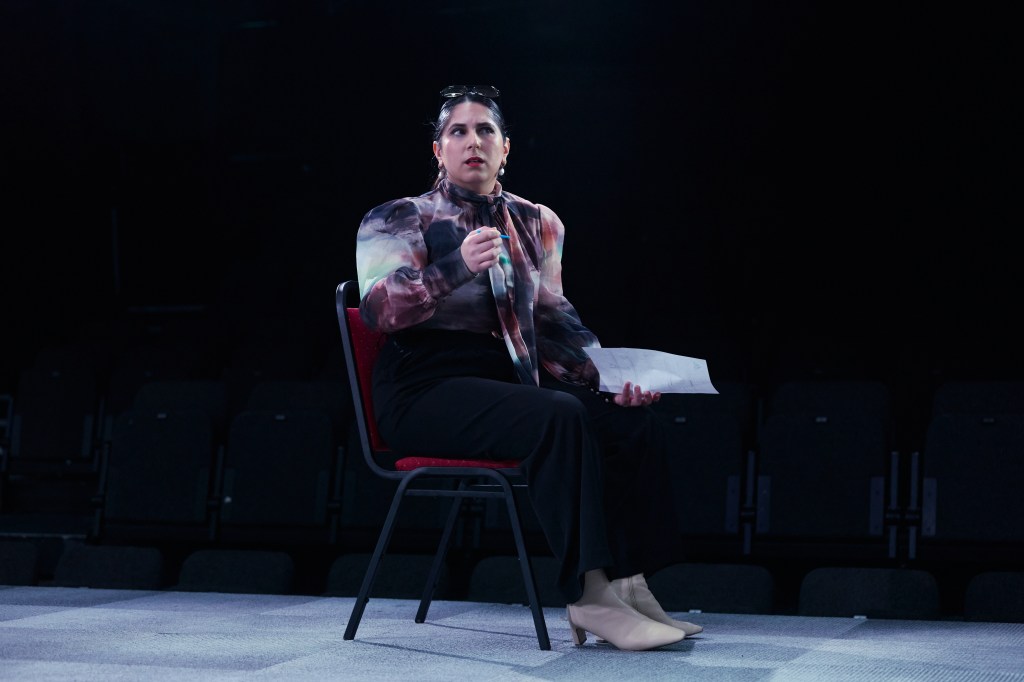
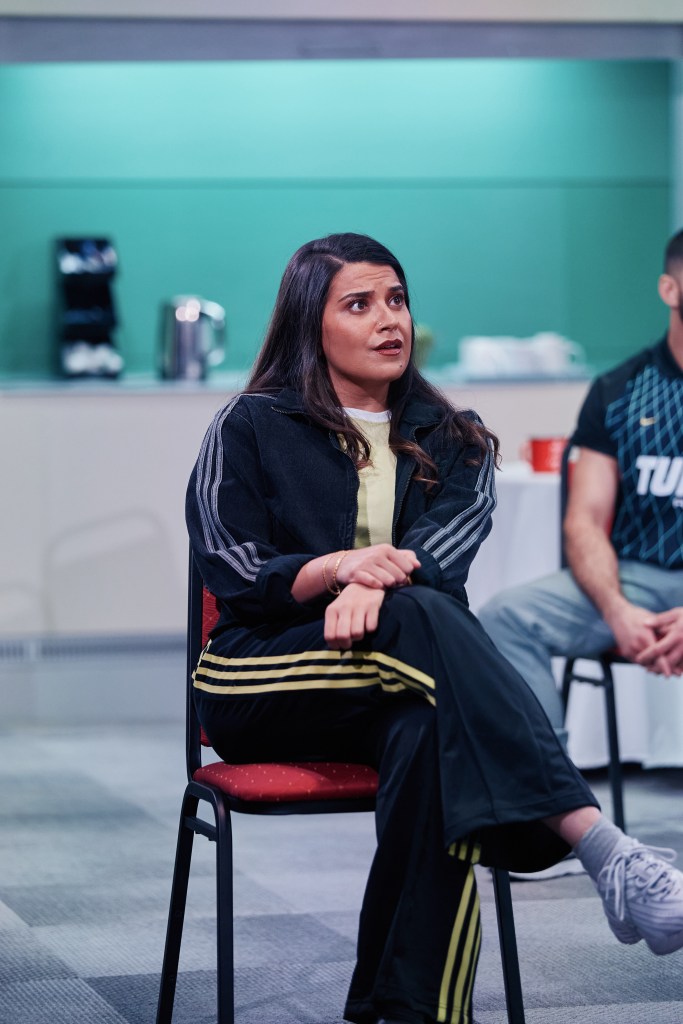
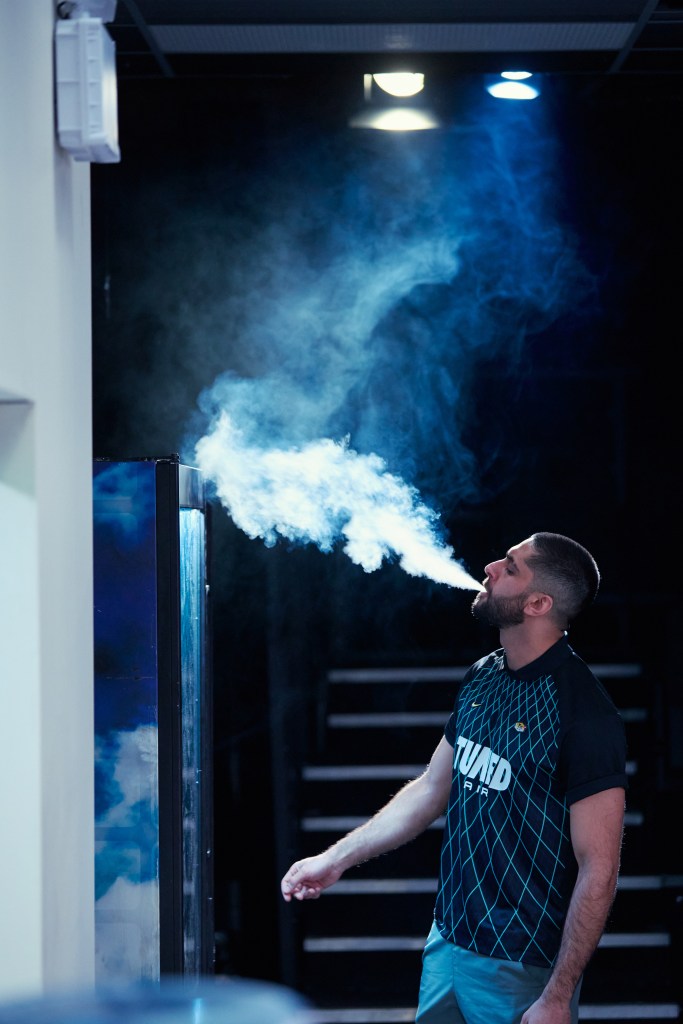
The main question Nikesh Patel’s Abz, as course facilitator, asks is what has made the three participants so angry? They are girl boss Faiza, nurse Harleen and delivery driver Samir. Although initially appearing as stock characters, the play successfully uses its setting to pile on the pressure and dig deeper into their respective psyches. Abz notes that they are ‘mirrors’ of each other. By that logic, the characters mirror us as well.

The action takes place on a central stage, adding to the interrogatory feel of the production – these four characters are under the microscope, surrounding by our prying eyes, rabbits in headlights. This also allows the audience to feel as if they are participating in the course, in the way that a traditional theatre set up would not. Throughout the 90-minute production, we see characters bend and break, resulting in an emotionally charged therapy session.

Spoilers to follow…

Shazia Nicholls as Faiza

The characters’ varying acceptance of their Asian roots initially causes divides. Sabrina Sandhu and Arian Nik’s Harleen and Samir are in touch with their Asian identity, dropping words in Panjabi and Urdu. However, Shazia Nicholls’ brilliantly comedic Faiza is prouder of her St Albans heritage and is complemented when Samir opines that she ‘don’t look Pakistani.’ Her distinct departure from her Asian side, as we later discover, might have more practical reasoning. She details that one of her business ventures fell through because ‘the FSA don’t want brown women to succeed.’ Although this garnered laughs, it speaks to the wider theme of the struggles that women, specifically Asian women, face in the business-world. Faiza has had to fight to earn that BMW, and perhaps suppress her Asian-ness in the process. The idea that South Asian’s need to downplay our identities, and that they could be under threat, is revisited throughout the play.

The simple question of what has made Faiza, Samir and Harleen angry and end up on the course is fairly simple – the patriarchy, unfair and unsympathetic systems, and racial abuse. Faiza, Harleen and Samir stand by the actions that led them here, as do we, but Abz refuses to look at each of their stories holistically, instead concluding that the law, no matter the injustice that they faced, should be upheld.

Nikesh Patel as Abz

Abz, coupled with the DVLA, is representative of a system of reform. RUNDI, a speed awareness course of Abz’ own devising is what is on trial here, as well as the three participants. He believes in meaningful engagement and the idea of ‘unlearning and rehabilitating.’ His maintenance of these ideals, as well as the distinctly British phrase of ‘keep calm and carry on’ means that he fails to consider each participants’ individual identities and experiences. We see this early on when he continually calls Harleen ‘Helene.’ I go by Harpal, or Harps, but have had Hearts, Harpy and Harpull to name a few botched examples of my name. The irony is that, while Abz encourages this meaningful engagement, he fails to properly engage with those in front of him, enforcing a ‘one size fits all’ system. It is throughout the course of the play that we see that this is wholly untrue, and if it does not work for these three, why would it work for wider society? This little microcosm, this mirror, is deftly used by Zain-Dada to make broader statements about British society.

A good example of this is the discussion about the race riots last year. The play does well to include this, as the situation last summer presented the greatest racial unrest I have experienced in my lifetime. I was advised by people in my high street to go home for my own safety. Whilst Harleen and Samir detail the racial abuse they witnessed and experienced, Faiza is silent and Abz maintains that, despite this horror, we should ‘take it on the chin,’ and keep calm and carry on. Sabrina Sandhu shines as Harleen here, her passion and controlled anger crackles under the surface and gives her enough confidence to silence comedy duo Samir and Faiza, and authoritarian Abz. Samir and Harleen ask why South Asians should be silent in the face of racial attacks, and calls out the very behaviours that many of us have over the past year.

Sabrina Sandhu as Harleen

As the tension between the four bubbles over, ‘Speed’ puts its foot down veering into the thriller genre with the revelation that for all his high and mighty behaviour, Abz has not been honest. After some shouting and road rage, albeit without the car or road, the wheels fully come off and Abz is forced to admit that, after also being racially abused, he engaged in dangerous driving that had dire consequences. Unfortunately, this gear switch may not come as a surprise, Jessica Hung Han Yun’s lighting throughout the play foreshadows some sort of trauma. However, this revelation gives Patel the chance to show his range, and his quick switches from disciplinarian, desperation and devastation succeeds in making this plot point genuinely affecting.

Abz’ suppression of his Asian side, in response to his racist encounter, has manifested into internalised racism, hinted at throughout the play by his desire to save the participants from what he describes as their ‘base selves.’ His paternalistic attitude towards the participants echoes the very historical arguments that white supremacy and racism were founded upon. Although Faiza did indulge in some of the stereotypes that Abz perpetuated, referring to Samir as a typical ‘brown boy,’ her distancing from her Pakistani roots has not marred her judgment to the point at which she can be described as racist.

Arian Nik as Samir

Due to Abz’ harsher treatment of Samir throughout the play, even going as far to refer to him as a ‘typical paki,’ it is fitting that the pair close the show. Although both men have bared their souls, a rarity for South Asian males, but a staple of Zain-Dada’s work, see ‘Blue Mist,’ Abz and Samir cannot come to an understanding. Both Abz and Samir, and by extension Patel and Nik, come full circle, shedding the stock characteristics established at the beginning, of the disciplinarian and the joker, to add real nuance to their characters in the closing moments. They are two sides of the same coin, their experiences of racial prejudice are similar, but their response, perhaps due to their differing age, and how they deal with their trauma are markedly different. The ending is not quite the ‘let’s unite against racism and celebrate our cultural heritage’ message that audiences might expect or hope for. ‘Speed’ poses bigger questions, asking what will become of South Asians if we do not unite and find strength in our shared experience, even if that experience involves the trauma of experiencing racial discrimination.

While Abz’ revelation may not be break-inducing, the play succeeds when it speeds towards the wider themes of South Asian rage, trauma and identity. The nuanced presentation that the plays characters and themes showcase makes for compelling, revealing, and relevant viewing, especially for members of the South Asian diaspora. It’s certainly a speed awareness course I will not forget.

4/5

Thank you for reading!

Speed is playing at the Bush Theatre until May 17th!

Tickets: https://www.bushtheatre.co.uk/event/speed/

Photography by Richard Laker

‘Anora’ 2024 Analysis: Sex, Class and the Fairytale Narrative

TW: Sex and Sexual Assault

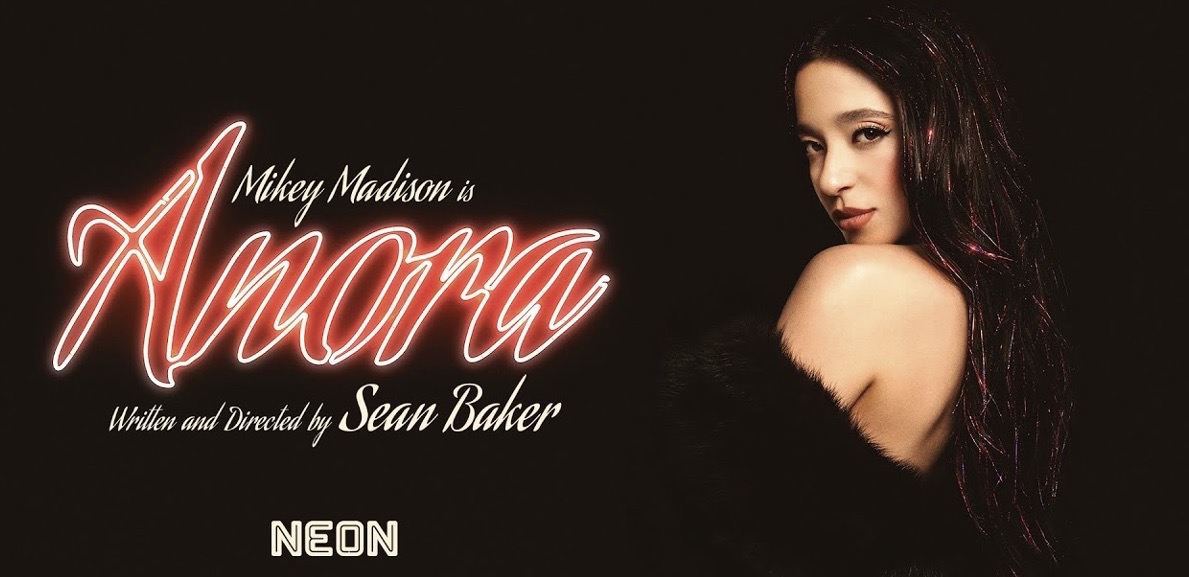
Sean Baker’s tragic, romantic comedy-drama took the most recent Oscar’s ceremony by storm and clinched the best actress award Mikey Maddison, who plays the eponymous heroine. There’s no doubt that from the opening seconds of the film, Maddison grabs the audience by the throat and does not let them go, and I do think it is safe to say that she is key to the film’s success. I’ll admit, certain narrative points within the film did lose me, but it cannot be denied that the film had a lot of interesting points to raise about the sex industry, class, treatment of women and the fairytale narrative.

Let’s start with our heroine. I found the name ‘Anora’ to be intriguing and beautiful, it almost has a princess quality, probably due to its suffix, reminiscent of Disney heroines such as Cinderella, Tiana and Aurora, ex cetera. Already I am drawing links to Disney narratives! In Latin, ‘Anora’ translates to ‘honour.’ Although to me, the name seemed quite unique, Anora prefers to be known as ‘Ani.’

Immediately, Ani feels different – she crushes existing stereotypes with her heels. Ani is not a sex worker because she was trafficked, or forced, or destitute, unlike other fictional heroines such as Fantine. She is in her control; this is her choice. This is why we are drawn to her, she stands out, and her brassy Brooklyn accent is instantly distinct and recognisable. She also does not comply with the ‘hooker with a heart of gold,’ stereotype either, an example of this being Julia Roberts’ Vivian March from ‘Pretty Woman.’ Ani is brash and ballsy; we see her in the opening moments of the film wrapping men round her little finger with ease, and going for what she wants.

The film has received praise for its depiction of the sex industry, and for me, the film appeared to demystify and decriminalise it. Scenes of Ani dancing are intercut with scenes of her having a cigarette break with a friend, and eating her dinner out of a Tupperware box. The film is trying to say that the structure of her life is not that different to ours. The job she is doing is different, but then… my job is probably different to yours. She lives as we do. She works, she laughs with her friends, catches up on sleep, she parties. She is not discriminated against because of her personality, but only because of her job. This is evidenced by Vanya’s Russian, oligarchical family, who, without even meeting Ani, declare that their son has ‘shamed’ his ‘family by marrying someone like’ her. It feels like the film is asking us why. Why is she so discriminated against for her work? She is just a young woman making a living, which surely, many people of all genders and ages can relate to.

We see her go home in the morning, make up free in her beanie hat. It could be conceivable to think that dollars we see Ani receive, the dizzying bright lights, dresses and heels imply that she earns a lot of money. The film further normalises her by presenting her as a standard twenty-three-year-old in a flat share with her sister. All these plot points work to break the stereotypes that already exist around sex work, and sex workers themselves.

I think it’s important to remember from the start that Ani is only twenty-three. She is incredibly young. She does seems older, as Ivan points out, but this is probably due to her clothes and confidence. Her youth and girlishness are hinted at by the tinsel in her hair that shimmers throughout the film. Note the how the colours change. While she is in her abrupt wedded bliss with Vanya, it is a shocking pink.

The first half of the film does indeed play like a Disney fairytale. Ani is swept off her feet, has a world-wind romance and marries a wealthy suitor, Vanya. It is important to note that Ani does not see Vanya as a way to leave her sex work behind but work in general behind. Ani seeks freedom from the tedious, boring nature of work. Don’t we all? She is not looking to be saved from what others perceive to be a shameful profession. She is not ashamed of her work. I originally doubted if the relationship was genuine on Ani’s part, because we see her flatter her clients all the time. However, after remembering her age, I think it is conceivable. I think many twenty-three-year-olds would see Vanya’s lifestyle as an escape from the mundane. We also see this genuine nature reflected in her make up. Her look becomes more natural in the film, as we begin to peel back the layers of her character. She becomes more transparent and vulnerable, as her relationship with Vanya progresses. Both her and Vanya are swept up in the moment and make that age old mistake of ultimately mistaking lust for love.

The situation Ani finds herself in is very different to what she is used to in the nightclub, and just proves that the power dynamics in the nightclub are just a simulation. In the night club, women hold the cards, men hold the dollar bills. On the outside world, I Baker’s Brooklyn, women, especially of Ani’s age and class, do not have this power. This is proved throughout the film, as she is berated and manhandled by the men around her, first and foremost because they are men, but also because they possess greater wealth than her. Now, it is the nightclub that looks like a fantasy land, as in Baker’s real-world Brooklyn, a woman of Ani’s age and economic status is no match for the wealthy man.

Vanya’s poor treatment of Ani speaks to the wider theme of men’s treatment of women in the world. Vanya is spoiled, and sees Ani as a possession, he literally buys her as a plaything in his playground. He then discards her when told to by his family and replaces her with a co-worker. Vanya’s abandonment of Ani is incredibly traumatising for her as it leads to her encounter with his bodyguards.

Ani finds herself in a scary situation once Vanya’s family bodyguards come for him and try and force the two to divorce. Ani is bound and gagged, and in a disturbing image, bodyguard Igor pulls Ani on top of him, almost simulating a lap dance, but in this dance, Ani is not in control. She is forced into silence by the men around her, which seems like a broader thematic statement about the treatment of women. The blood red of the scarf used to gag Ani could refer to passion and sexuality but is also disturbing as it the colour of blood. It could therefore imply the potential violence that Ani could be subjected to in this situation. At the end of the film, Ani asserts her belief that, if given the chance, Igor would have raped her in this scene.

Igor brings the red scarf with him on their quest to find Vanya, offering it to Ani when she becomes cold. Ani wraps it around her neck. It seems like she is taking back control here, but her choice to wrap it around her neck simulates that of a hangman’s noose, implying the desperate, and perilous situation she has found herself in. The changing use of the scarf contributes to the wider question of control in the film. Is Ani ever in control? Or is she constantly controlled?

After realising she is no match for Vanya’s wealthy family, Ani agrees to leave Vanya for the sum of ten thousand dollars. This negotiation scene simultaneously gifts Ani with control but also takes it away. She wins, because she has the money, but she is still being bought, and controlled. This led me to wonder whether people would see Ani as a gold digger, but this presents an interesting discussion of gender. Would someone consider Ani a gold digger because she is a woman? What is the male equivalent of a gold digger? Although not explicitly gendered in its form, the phrase ‘gold digger,’ is almost exclusively associated with women, not men.

We close the film with a conversation between Ani and Igor. It is here Ani claims that Igor would have previously raped her. For her, it is inconceivable to think that someone would not want sex from her. Despite their difficult relationship at the beginning, Igor later shows kindness to Ani and defends her, proclaiming that she deserves an apology from Vanya. Some commentators claim that it is the relationship between Igor and Ani that would blossom into genuine romance. Whilst I would not personally say that their first meeting could be described as a meet-cute, they certainly start with the bickering and dislike, and then end in an intimacy.

We see Ani incredibly vulnerable at the end of the film with Igor, and when simulating sex with him, she takes control and places herself on top of him. Unlike Vanya, Igor does not break eye contact with her, and it presents the most intimate portrayal of intercourse in the film. Vanya would not look Ani in the eye during their furiously fast coital sessions. Ani’s relationship with sex is complicated, and I did wonder why she would want to engage in sex with Igor at this moment. Perhaps she needs comfort after what she has just experienced, or perhaps it is because she only encounters men who want sex from her. This is the only thing she knows. This thread, however, does not appear to empower Ani, and victimises her further, massively contrasting how we first saw her at the club in Brooklyn.

It is also tragic, as Ani finally has the space to process her trauma and breaks down in tears. There is also the realisation that despite this experience, nothing in her life has really changed. To the outsider, her life almost seems worse, as the last few frames of the film are less aesthetically pleasing and exciting than the opening of the film, Ani strutting across the club floor. Unlike the classic fairytale formula, Ani does not ascend to wealth, riches and happiness, but seems to fall much further as it all comes crashing down. Unfortunately, there is no happily ever after here. It appears that this film is very much a fairytale that is grounded in reality.

Thanks for reading!

Snow White: Origins, Womanhood and Christian Allegory

Disney’s Snow White hit cinemas last weekend after many controversies and tribulations. At the heart of the story is the famed fight for the fairest of them all between two iconic Disney, and literary, characters, the Evil Queen and Snow White. In the most recent adaptation these characters are played to perfection by Gal Gadot and Rachel Zegler. To interrogate the relationship between the two popular characters, not just in the Disney world, we will have to go back to their origins.

Both characters first appear in a collection of fairytales written by the Brothers Grimm, published in 1812 and originally titled ‘Schneewittchen.’ Much of it is familiar, but as you may have already guessed, the original story has some darker elements. For a start, the Evil Queen is Snow White’s biological mother, and when she tries to kill her daughter Snow White is only seven. Also, said Queen does not originally ask the Huntsman for Snow White’s heart, but her lungs and liver, so that she can eat them with salt. Well, at least she is using seasoning. I found this plot point particularly shocking, as it was not enough for the Queen to dispatch Snow White, she also feels that she must ingest her. Snow White quite literally was intended to be engulfed by the Queen like her prey, implying the Queen’s sheer force and influence was nearly enough to overcome Snow White. Did the Queen think that by cannibalising Snow White, she could absorb or ingest her fair nature? Perhaps this mutilation was the Queen’s way of ensuring that Snow White was truly dead and gone. After letting Snow White go, the Huntsman provides the Queen with a boar’s lungs and liver instead.

In the Grimm fairytale, the Queen, after twigging that Snow White is alive, embarks on not one, but three attempts to kill her. The Queen, disguised as a peddler, offers a silk, laced bodice to Snow White, who faints after the Queen ties it too tightly. The dwarves arrive home and cut her out of it. Next, the Queen sells Snow White a poisoned comb, but once the dwarves remove it, she is restored. Her third attempt involves the poisoned apple. However, only one half is poisoned, the Queen takes a bite from the white, non-poisoned half to reassure Snow White, who then tucks into the other red half. These methods of killing all seem gendered, they are all objects associated with femininity. If Snow White were a man, I doubt anyone would be selling poisoned combs or laced bodices to him. If we were dealing with a wizard and a prince, I am sure there would be some violence or sword fighting involved. The above three scenarios describe female warfare, one that is rooted in the domestic and free of explicit violence.

The colouring of the apple is significant and ironic. Despite Snow White being the innocent and purest of all, normally associated with white, it is the red half that she takes. While referencing passion and sexuality, nowadays red is reminiscent of danger, both symbolic of the Queen herself, building the image that the Queen is the one who killed Snow White in ‘apple form.’ The two halves of the apple represent the Queen and Snow White herself and highlights their incompatibility. When Snow White bites from the red half, she dies. Snow White and the Queen are antithetical to each other, and therefore incompatible. In Marc Webb’s 2025 version, the sweetness of apples is highlighted by Snow White, who as a child, would pick apples and bake apple pies for the townspeople, noting that something sweet can remind people that there is ‘more to being alive than mere subsidence.’ I would argue that the Queen uses an apple to lure Snow White in this version because she is aware of this emotional attachment.

While the apple is not present in every version of Snow White’s story, bear in mind many countries have their own versions, the apple is a feature in majority of them. An apple might have been chosen as the poisonous fruit due to its biblical connections. In Genesis, after being tricked by Satan, Eve eats the fruit from the Tree of Knowledge and brings all sin into the world. The Queen, as Satan, tricks Snow White into eating the forbidden fruit, thus releasing evil into her own body, killing her.

In the 1812 version, an unassuming Prince then stumbles upon the scene of Snow White in the glass casket and is so taken by her story that he stays with her. Ironically, despite the amount of poison that the Queen is serving Snow White does not ‘die.’ Although how it occurs is slightly different version to version, once the chunk of apple is knocked out of Snow White’s throat, she is as right as rain. So… she was more choked into a coma? When revived, the Prince then declares his love for Snow White, and they marry. Enraged, the Queen, after being told by the Mirror that Snow White is still alive and kicking, storms the wedding, and tries to kill her again! She’s persistent I’ll give her that. The Queen is then forced to dance in red hot iron slippers until she drops dead. Snow White’s resurrection and the vanquishing of good over evil can similarly draw Christian interpretations.

In the 1937 Disney film the Queen, whilst being chased by the dwarves, falls off a cliff and is crushed. In the most recent film, the Queen destroys the Magic Mirror, which is the source of her powers. She then turns into glass herself and is pulled into the Mirror, which repairs itself. In a way, Gadot’s Queen is immortalised in the Mirror. Her turning into glass, and the fragility of the material, is stark contrast to her previous immortality.

Snow White and The Evil Queen are representative of two different sides of womanhood. Two sides of the same coin or two sides of the same apple, if you will. Feminist scholars Sandra Gilbert and Susan Gubar believe Snow White and the Evil Queen to be the two female stereotypes of the angel and the monster. Snow White is pure, innocent and in Disney’s version maternal and loving. We see this through her interactions with woodland creatures and the dwarves. The Queen is antithetical to that, and therefore antithetical to the prevailing idea of womanhood at that time. Snow White and the Queen could also be discussed in the context of Freud’s Madonna-Whore complex. It is obvious that Snow White fulfils the Madonna trope, but it is never explicitly stated that the Queen is promiscuous. However, she is styled as a femme fatale, and in the most recent adaptation it is revealed that the Queen enchanted and then murdered Snow White’s father. The Queen, in this version and Disney’s 1937 version, is seen wearing make-up, unlike Snow White. Historically, heavy make up in society was an indicator of sexual promiscuity or prostitution, particularly in the Victorian era. Again, this does not suggest that the Queen is promiscuous, but she is portrayed as a sexual being, who has used that sexuality to gain power, and dispatch of their rivals. This is how she captured the attention of Snow White’s father. Gadot’s recent portrayal of the famed villain certainly leans into this idea, and into the Queen’s obsession with material wealth. At the close of the film, the Mirror tells her that her beauty is only ‘skin deep.’

Snow White has grown up with nothing, and is reduced to rags. She is generous and loving, as showcased in the 1937 film. She has no desire for material things, but for love and happiness. While the Queen in the 1937 film is not explicitly concerned with material wealth, Gadot’s iteration of the character is. This material obsession matches well with the Queen’s desire to be the fairest of them all. It is from this beauty that she exerts her influence and maintains her power, something Gadot explains in her solo song, ‘All is Fair.’ Again, Snow White is not concerned with such things, she seeks to be fair in her personality, not physically.

This is explicitly fleshed out more in the recent film, as Zegler’s Snow White goes head-to-head with the Evil Queen to take back her kingdom, using kindness and fairness as her weapon. Zegler attracted criticism when discussing the original 1937 film, and implied that Snow White was passive. Upon a recent rewatch, I believe she was more active than people give her credit for. She stands up to the dwarves, most notably Grumpy and at times she tells them off. Yes, she fills the maternal role, and perhaps her limitation is that she was active in the domestic space which is typically gendered female.

Zegler was accused of promoting the ‘Girlboss’ narrative. The ‘Girlboss’ narrative was popularised by Sophia Amoruso and described an empowered woman who is successful in the capitalist world. While praising individual achievement, people have criticised the narrative as it does not focus on encouraging systemic change. Promoting such a narrative risk invalidating Snow White, and other women who are happy in the domestic space. An example of this is the relationship between Meg and Jo March in ‘Little Women.’ Meg must remind Jo that, just because she dreams of being a wife and mother, this does not mean that her dreams are any less than that of Meg’s.

The 2025 film gives Snow White greater agency, a subtle example of this is in ‘Whistle While You Work.’ In this version, she encourages the dwarfs to clean with her, instructing them. In the original she tidies up their mess upon her arrival. Zegler also criticised Snow White’s decision to marry the prince, someone who she barely knows. This is also rectified in her version, and her relationship with vigilante Jonathan is given much more time to develop.

To be honest, I feel like Zegler could not win and, and the response she received was incredibly sexist. If Disney did not seek to update the previous story for a 2025 audience, it would have come under fire, and Snow White’s decision to marry a man she barely knows would, I am sure, have provoked the ire of many women out there. Especially in light of dramas like ‘The Crown’ shining the troublesome light on the mismatched union of Charles and Diana.

It is also unlikely that a man would find themselves in Zegler’s position, as they perpetually exist in the male version of a ‘Girlboss’ narrative. By and large, it is male characters that drive stories and have greater agency than women, therefore, it is not a fight or argument that they would have to make. Men would not ever find themselves in Zegler’s position, and if a man advocated for another male character to be a strong, fearless leader, I am sure that no one would bat an eyelid. We can see these feminist updates in other Disney adaptations, such as 2019’s ‘Aladdin.’ Now, Jasmine seeks to rule the kingdom herself, she is not just concerned with marriage as she was in the original. Women must actively advocate for greater autonomy and agency in the fairytale world but also the real world.

I have already talked about the Queen’s obsession with her appearance, but over the past few years, it is the public who have been obsessed with Snow White’s. In the original story, Snow White has ‘skin as white as snow, lips as red as blood and hair as black as ebony.’ When Zegler was cast, in an example of colour-blind casting, she was subjected to racist abuse online. This response, and Snow White’s original story, perpetuates the narrative that whiteness is superior. Zegler hit back at the abuse, citing the fact that Snow White is popular in Spanish-speaking countries, and is known as ‘Blanca Nieves.’ In Zegler’s version, the title character is named Snow White after surviving a snow blizzard as a child.

Snow White holds the special Disney status of being the original Princess, and the film itself is instantly recognisable due to its iconic imagery and iconography. The changes made between Disney’s two versions, and countless iterations unmentioned, showcase Snow White’s adaptability and versatility, but also the idea that the themes within her story, as with many other Disney fairytales will forever be universal.

Thanks for reading!

‘The Convergence of the Twain’ 1912: An Analysis

Despite being a Thomas Hardy fan, I was unaware that he had written a poem about the Titanic soon after its sinking. The content of the poem, and the time of its publication caused controversy as some deemed Hardy’s work to be distasteful and disrespectful towards those who lost their lives. Let’s take a closer look, starting with the title.

‘Convergence’ references the moving of two independent objects, specifically the point at which they come together. ‘Twain’ refers to two, so the title quite simply means, the meeting of two things. Stylistically, the phrase ‘the Twain’ makes it sound as if the ‘twain’ is a definite article, which implies that the object, or in this case objects, are common knowledge and have been mentioned before. Perhaps this references the fact that the Titanic and iceberg were very much ingrained in the public consciousness at the time of publication.

The first stanza appears to address the iceberg. In ‘solitude,’ the iceberg floats in the ‘sea,’ away, and untouched, by human hands. This emphasises its status as a naturally occurring phenomenon, the direct antithesis to man-made material objects. This is referenced in line two, as the iceberg is hidden away from ‘human vanity.’ As well as touching on human materialism, the phrase directly refers to the Titanic herself, as the physical embodiment of this materialism.

At first glance, I was not fully sure who ‘Pride of Life’ had ‘planned.’ ‘Pride of Life’ is personified, and is credited with creating something, which could either be the iceberg or Titanic. The iceberg is comfortably couched in the North Atlantic, and the Titanic was originally couched in Southampton before she set sail. Before the collision, Titanic was obviously in her pride, or prime, of life as she had not yet obtained a single scratch on her paintwork, and the same could be said, metaphorically, of the iceberg. On closer analysis, the use of the word ‘she’ references the ship itself, and her status sitting at the bottom of the ocean floor.

Stanza two discusses the physical mechanics of Titanic, referencing the engines and the tides that propel the ship forward. ‘Pyres’ are mentioned, perhaps to reference the Titanic’s large engines. Typically, the word is associated with a funeral pyre, foreshadowing the ship’s metaphorical death along with those onboard. ‘Salamandrine,’ is interesting, and could simply refer to something that is like a salamander. Salamanders can survive fire, meaning that they can master one of the elements. The use of the word here could reference the feigned belief that the Titanic was unsinkable, triumphing over the element of water. Hardy equates the natural movement of the tides with music, referring to them as ‘rhythmic tidal lyres.’ A lyre is a u-sharped harp. By drawing this comparison Hardy emphasises the natural beauty in nature, and essentially compares it to art. ‘Pyre’ rhymes with ‘lyre,’ implying that the tides of the sea have extinguished the funeral pyres of those that perished.

The next two stanzas take sharp swipes at Titanic’s ‘opulent’ nature, and renders it as a waste, for now only a ‘sea-worm’ frequents its wreckage. The worm is ‘indifferent’ to the splendour before them, as was the iceberg to the Titanic. It is now useless, and of no consequence.

Hardy recognises that the ‘jewels’ of the ship were originally crafted to ‘ravish the jewels of the sensuous mind.’ While these days ‘ravish’ refers to something enchanting, historically it can refer to sexual assault or rape. The human mind is described as ‘sensuous,’ implying that we enjoy things that are pleasurable, and therefore would be receptive to the luxurious nature of the ocean liner. Hardy equals the materialism of the ship to some sort of sexual gratification within the human mind, essentially painting the ship and its creation negatively. Throughout the poem Hardy seems to equate the ship with some of the Seven Deadly Sins, here being gluttony, lust and, previously referenced in ‘Pride of Life,’… pride.

Hardy employs some good juxtaposition to emphasise the tragic decline in the Titanic’s circumstances. The former ‘sparkles’ of the jewels now lie on the seabed, alliteratively ‘black and blind.’ Titanic’s glow has died, after the collision that wrecked her opulence.

The fifth tercet follows the same themes, focusing on some ‘moon-eyed’ fish. In innocent awe and wonder, the personified fish look to the ‘gilded gear’ to ask, ‘what does this vaingloriousness down here?’ While the ship itself is not especially vain or proud of itself, those that created it, are. It was their greed that created Titanic, and ultimately sank it. Chairman of White Star Line J. Bruce Ismay received a lot of criticism at the time for this, as he reportedly encouraged Captain Edward J Smith to increase Titanic’s speed and decrease the number of lifeboats on the vessel. This stanza again reiterates Hardy’s belief that the Titanic ended up being a waste. Also, the fish put it all into perspective. What is beautiful to humanity, is rubbish to the sea life, and means nothing at the bottom of the ocean.

Stanza number six opines that whilst humanity was busy ‘fashioning’ Titanic, ‘fashioning’ both referencing creation and materialism, ‘The Immanent Will’ was stirring. This philosophical concept is used by Hardy to emphasise his idea that, this collision itself was unavoidable and out of human control, in fact, it is closer to divine intervention. The event was predestined.

An enjambement leads us to stanza seven, which compares the ‘Shape of Ice’ to Titanic’s ‘sinister mate.’ The poem takes a strange, turn here, as the iceberg is compared to the Titanic’s mate, or sexual partner, an idea picked up at the close of the poem. The foreboding sense of stanza eight is quite chilling, as encapsulated in the last line ‘in shadow silent distance grew the Iceberg too.’ The stanza talks about both independent forces of the disaster slowly growing, setting the scene for their fatal collision. ‘Shadowy’ and ‘silent’ personifies the iceberg, making it sound particularly cunning and nefarious.

The ninth stanza picks up on the sexual union of the Titanic and the iceberg, by mentioning that, although the two forces seemed ‘alien,’ they would soon have an ‘intimate welding.’ ‘Alien’ implies that the forces of the iceberg and Titanic cannot be understood by humanity, imbuing them, and the tragedy, with an unfamiliarity that is almost disturbing. The physical closeness implied by the word ‘intimate’ and clinical implications of ‘welding’ make for an explicit example of juxtaposition. When the real-life crash happened, the ship scraped alongside the iceberg, they touched but did not become physically bond together. ‘Welding’ implies that both ship and ice were permanently fused together, which as described, did not happen. Perhaps this is more metaphorical, as both the iceberg and Titanic are bonded together in History. One is not mentioned without the other.

Stanza ten follows this idea, describing ship and berg as ‘twin halves of one august event.’ ‘August’ does not refer to the month here, but instead a distinguished and revered event, which befits the fame and scale of the sinking.

Final stanza time. The first line talks about the ‘Spinner of the Years,’ referring again to the powerful, unseen force that has dictated the fate of Titanic and iceberg. This could reference the Fates in Greek mythology, who spins the web of life, extending it and cutting it as they see fit. When this mythical force shouted ‘Now! And each one hears,’ Titanic and iceberg collide. Hardy describes this collision as ‘consummation.’ This again alludes to the idea that the collision is in fact a sexual union. However, the union is an unpleasant one and undercuts the supposed bliss at consummation by framing it around a violent tragedy. The ship is referred to as ‘she’ throughout the poem, making the iceberg the male in this scenario. The violent penetration of the berg into the ship alludes to sexual violence, and the ship’s passivity in receiving the iceberg, alludes to Titanic’s real-life lack of control over her fate. This union ‘jars two hemispheres.’ The Earth has four hemispheres, but the crash is so colossal that it reverberated and shook half of the globe. The use of several verbs in this stanza, more than the previous ones, create a crescendo towards the collision and the climax of the poem, emphasising the shock and violence of the event.

Thanks for reading!

‘The Phantom of the Opera’ 1910: The Phantom, Raoul and Christine – A Toxic Love Triangle

Happy (early) Valentines Day!

What better day to break down one of literatures most famous love triangles? Gaston Leroux’s novel ‘The Phantom of the Opera’ has charmed, and haunted, the world long before Andrew Lloyd Webber took to his keyboard. Despite the books success though, it was Webber’s words that immortalised the story and loves of the Phantom, Raoul de Chagny and Christine Daaé.

Before delving deep into the triangle, let’s have a quick Phantom recap. The novel opens with the narrator discussing the Phantom’s existence, confirming that ‘yes, he did exist in flesh and blood, although he assumed in every respect the appearance of a ghost – that is, of a shadow.’[1] Immediately the Phantom is drawn as a gothic figure, and he straddles the dichotomy of appearing to be a living, physical being, but also a ghost. In the world of Paris, in artistry and music, the Phantom is a significant Other and classed as something ‘not of this world.’[2] This immediately complicates the love triangle and gives it elements of a gothic romance, presenting greater danger, and greater risk, for Christine.

This is encapsulated well by the narrator, after setting the scene to tell the famed story of ‘love and terror.’[3] This juxtaposition represents the conflict around Christine and her situation and foreshadows the perilous story that unfolds across the remaining pages.

In her initial encounters with the Phantom, Christine is quite understandably terrified:

‘The shadow turned round and beneath the hood I saw a terrifying skull, whose staring eyes burned with the fire of Hell. I thought I was face to face with Satan himself. It was like a vision from beyond the grave. I felt so helpless that I lost consciousness…’[4]

Christine’s mention of ‘hell’ further emphasises the gothic nature of her relationship with the Phantom. Geographically, the Phantom’s residence underneath the Opera House bases him closer to hell, he inhabits his own underworld. This directly contrasts the world above, or the world of the living. In the musical, Raoul declares his love for Christine on the roof of the opera house, the opposite end of the Phantom’s abode. What connects these two hemispheres is Christine, her physical presence, and her voice.

It is her voice that draws the Phantom to her, and vice versa, and forms the basis of their relationship. It is always on an uneven keel though, as the Phantom falls in love with Christine, a feeling that is unreciprocated. Raoul overhears a conversation between Christine and the Phantom, in which she says, ‘I only sing for you!’ and ‘tonight I gave you my soul and I am dead!’[5] This is reminiscent of someone selling their soul to the devil. Christine describes the Phantom as her Angel of Music, her private tutor, spiritual and musical guide. It is through this talent that the Phantom initially exerts control over Christine, as he wishes to possess her so he can possess her voice. This is why she convinces him that she only sings for his pleasure alone.

As the novel progresses, Christine becomes increasingly distressed by the Phantom’s ever-looming presence. Although initially appearing to her as a ghost like figure, the Phantom later becomes a physical manifestation, and gifts Christine a piece of him in the form of a ring, stating that, he is only letting her go on the ‘condition that you wear this ring all the time.’[6] Christine however loses it, and lives in constant fear that she may anger the Phantom because of this. This ring signifies the control the Phantom has over Christine, a physical structure that physically is intended not to let go.

For the Phantom though, the ring is symbolic of his desire to be accepted as a human being by his fellow man. Seeing it as a noble proposition, this act is antithetical to his typical bestial behaviour. The honourable proposition of marriage humanises the Phantom, communicating a desire to live a life respected by society. This speaks to various competing themes oscillating within the love triangle, such as control and freedom, love and oppression.

Let’s check in with our heroine, Christine. Christine goes along with the Phantom’s demand as not to incur his ire or hurt his feelings, highlighting Christine’s compassionate nature and her desire to maintain her obligation. Throughout the novel Christine is pretty vocal about the conflict she faces with the Phantom, summing it up to Raoul by saying that the Phantom ‘fills me with horror and yet I do not hate him.’[7] Christine cannot find a reason to be cruel to the Phantom as others do, and recognises that, just because she is scared of him, it does not mean that she wishes him ill. Christine seeks to find a balance between being kind to the Phantom, and kind to herself, trying in every attempt not to be ‘too cruel!’[8]  What I feel is overlooked in some adaptations of the novel is Christine’s magnanimity – she is willing to try and be kind to the Phantom sometimes at the cost of her own mental wellbeing.

Christine’s connection with the Phantom causes her such mental anguish that it physically changes her, to the point at which she almost adopts his physical form. Raoul describes that ‘a contented smile appeared upon her bloodless lips, the smile of a patient at the first glimpse of hope that her illness might not be fatal.’[9] The lack of blood in Christine’s complexion emphasises her now ghostly, corpse-like nature, mirroring that of the Phantom, her ‘illness’ being a metaphor for the Phantom himself, as a physical drain on her mentally and physically, thus making her ill. The fact that his illness ‘might not be fatal’ gives hope at this point in the novel, implying that there is an end and solution to the problematic presence of the Phantom.

However, the Phantom, who I will now refer to as Erik, reverts to his old ways, and abducts Christine, prompting the Persian to lead Raoul in a search to find her. As well as using emotional manipulation to gain control over Christine, Erik, unlike Raoul, resorts to violence. Erik’s abduction of Christine is also in part response to Raoul’s presence, he wishes to keep her physically away from him. Erik’s love of Christine, and later jealousy towards Raoul, fuels his desire to control her, using the ring and through physically taking her by force to his lair. The irony is, I do believe that Erik is acting with pure intentions. I do not believe he wishes to hurt Christine, but his behaviour can be explained by his lack of human connection throughout his life. This lack of contact means that his moral compass is askew. He operates on a natural justice, not the man-made moral codes that his isolated life never allowed him to be exposed to.

Let us now turn to Raoul de Chagny, and his claim over Christine. Raoul and Christine are childhood sweethearts and reconnect after he sees one of performances. As she confides in him about Erik, he is increasingly confused, but also becomes increasingly resolved to protect her, vowing to ‘break his power’ over her.[10] At this point in the novel, Christine has taken on Erik’s ring, and cannot marry Raoul. To remedy this, she suggests a ‘secret betrothal,’ only the two of them know about.[11] Raoul happily agrees, but secretly affirms to himself that ‘by the end of the month Christine will consent to be my wife.’[12] This made me wonder. Does Raoul want to free Christine from Erik for the sake of Christine, or just so that he can have total possession over her. While Erik still lives, he will always occupy part of Christine’s mind – once he is gone, Raoul will have Christine all to himself. Also, at this point in the novel, Christine’s mental state, as previously discussed is unstable at best. Is Raoul taking advantage of this?

Throughout her whole ordeal, Raoul is also quite obsessed with Christine’s virtue. He privately questions, on multiple occasions if her relationship with Erik means that she is still ‘pure.’[13] It is very much a thought of the time, but given the wider situation and later peril, one wonders whether this should be Raoul’s top priority. If she were impure, and he did not marry her because of this, one must ask if he genuinely cares about Christine or about himself and his reputation more. He appears fickle, and insincere – he openly does not trust Christine, although she has the purest intentions of anybody within the novel.

It seems that jealousy plagues both men and affects their treatment of Christine. At times it appears that both men may not even want Christine, take Raoul’s doubts over her chastity, they just want to ensure that the other man does not have her. Both men put their feelings above that of Christine’s and seem to ignore her in the process. Both ignore her true, kind nature, and ignore what she needs throughout the novel. She does not need pressure and smothering from Erik, and she does not need judgement from Raoul, but support. They both do not recognise the complexity of her situation, and her desire to ensure everyone escapes unscathed. The jealousy that both men show distorts their worldview massively, and essentially adds to the toxicity of the love triangle.

However, in classic gothic literature, the most palatable conclusion for society is opted for. Although at the close of the novel Christine does display some reluctance in leaving Erik’s lair, she does work to ensure that Raoul is free from Erik’s grasp. Given the time of the novel’s publication, it is expected that Christine ends up with Raoul, in a good respectable marriage and of course this plays out. Erik tragically fades away but finishes the novel in a much more humane light than at the start.

Justice for Christine I say, she would have been better off without both of them!

Thanks for reading!


[1] Gaston Leroux, The Phantom of the Opera (London, Penguin Classics, 2012) p. 5.

[2] Ibid., p. 5.

[3] Ibid., p. 9.

[4] Ibid., p. 73.

[5] Ibid., p. 28.

[6] Ibid., p. 55.

[7] Ibid., p. 141.

[8] Ibid., p. 129.

[9] Ibid., p. 110.

[10] Ibid., p. 126.

[11] Ibid., p. 120.

[12] Ibid., p. 120.

[13] Ibid., p. 97.

New Year’s Resolutions: A Brief History

It’s that time of year! Everyone is either making New Years Resolutions or has broken them already. All this discussion got me thinking, where did this common practice originate from?

Answer? The Babylonians, nearly 4000 years ago. The Babylonians lived in Ancient Mesopotamia, which is now known as southern Iraq. It is the Babylonians who are credited with starting the tradition of New Year’s Resolutions, although they were not specifically called that at the time. For the Babylonians, new year fell in mid-March, to coincide with the planting of new crops.  At this time, the Babylonians hosted the festival of Akitu, in which they either reaffirmed their loyalty to the current king or crowned a new one. At this time, they also promised to pay any outstanding debts – if they failed to do this, their pagan gods would not be happy.

Like many things in the modern world, we can thank the Romans for the next few developments. In 46 BC Roman emperor Julius Caeser put his own spin on the Babylonian calendar, declaring January 1st as New Year’s Day. January is named after the Roman God Janus, the two headed Roman God that looks both to the future and to the past. In attempts to please Janus, and gain good fortune for the forthcoming year, Romans would make offerings to the deity.

During the Middle Ages, knights would take the ‘Peacock Vow,’ which sounds way more colourful than it was. Knights would renew their fealty to the current monarch and maintain their values and morals of being a knight. While swearing this verbally, knights would place their hand on either a live or a roasted peacock.

Enter Christianity. For Christians, the 1st of January became a day of reflection. Methodist founder John Wesley founded the Covenant Renewal Service in 1740, which are also known as a watchnight service. On these nights, typically held on New Year’s Eve or New Year’s Day, Methodists would pray and make resolutions for the new year. The service became a spiritual alternative to the usual socialising that came hand in hand with New Year’s Eve. Since its inception, Evangelical Protestant churches have taken on the custom of watchnight services.

New Year’s Resolutions also have other religious parallels, such as Christians giving up something for Lent to improve oneself. Jews also have Yom Kippur, or the Day of Atonement, which is seen as a time of reflection and seeking forgiveness for ill behaviour over the past year.  New Year’s Resolutions entered more into the mainstream in the 1800s, and the complete phrase of ‘new year resolution’ first appeared in a January 1st edition of a Boston newspaper in 1813.

As you can imagine, different countries have different traditions. In Italy, they are called ‘buoni propositi,’ or ‘good intentions.’ Around this time of year, Italians also try to draw in as much good luck as they can, by wearing red underwear at New Year or eating black-eyed peas. In Brazil, resolutions should be made all in white, as it represents purity, at the beach. After the clock hits twelve, Brazilians go into the ocean and jump seven waves whilst making seven wishes. Here they are paying tribute to Yemanja, the goddess of water. Interestingly, Colombians do not make resolutions but make wishes. When the clock strikes twelve, Colombians make twelve wishes, one for each chime, and to signify each wish, they eat a grape. Some people write their wishes on paper, keep it throughout the year and then burn it on New Year’s Eve, ready to make a new one.

Now New Year’s Resolutions are common practice, but whether people actually stick to them remains to be seen!

Thanks for reading!

Cameron Cook in ‘Rivals’ 2024: Racism in the Television Industry

TW: Racism and Sexual Assault

Disney Plus’ 2024 series ‘Rivals’ follows the lives and lusts of an elite group of countryside dwellers in Rutshire. The series, based on Jilly Cooper’s novel of the same name, has been well received by critics and fed everybody’s current craving for escapist soapy melodrama. I did not realise though, that the series would shift focus to the world of television in its latter half. As someone at the beginnings of their television career, the series highlighted the highs and precarious pitfalls of this cut-throat industry. Amongst all the romance and romping, it was Nafessa Williams’ portrayal of Corinium producer Cameron Cook that held my interest.

As a person of colour, I was immediately grabbed, and intrigued, by Cameron Cook’s presence. Originally Cook was described in the novel as having ‘pale skin.’ When decisions to race-switch characters are taken, one wonders whether it was for genuine reasons or the diversity quota. I have frequently discussed my thoughts about diversity and representation, and diversity on screen makes little to no impact if it is just for the tick box. Including Williams in the cast without addressing the racism within the television industry and the attitudes in the 80s, would have been a pointless waste. Thankfully, ‘Rivals’ does not shy away from the minority, specifically the minority female, experience, and manages to address the issue with subtlety and balance, refraining from shoving it down your throat with risk of alienating viewers.

Whilst reading reviews for the show, I noticed that Cook herself, and the racial prejudice she faces, received a real lack of attention. More focus was given to the sex in the show, and the performances of David Tennant as Tony Baddingham and Alex Hassell as rogue Rupert Campbell-Black. People of colour, especially women, being overshadowed by older, privileged white men feels very true to life.

Although Declan O’Hara, played by Aidan Turner, is one of the more progressive and morally sound of the characters in the show, his initial reaction to Cook is steeped in blind prejudice. Upon meeting her, O’Hara immediately hands Cook his bag, believing Cook to be his inferior. It is unclear whether this is exclusively because she is a woman, or exclusively because she is black… but I am willing to go with a mix both. Considering the latter, O’Hara’s disbelief at Cook’s presence and position emphasises the bold step taken by the show’s creators to make her black in the first place, and highlights the lack of black female opportunities in television at the time.

Whilst O’Hara picks his jaw up off the floor, Cook recognises that he was not expecting ‘a woman and God forbid a black one.’ Not only is the rug pulled from under O’Hara’s feet, but the audiences’ too. O’Hara continues to dig his own grave, by confessing that he believed Cook to be a ‘publicity girl.’ His use of the word ‘girl’ to describe a grown woman is incredibly patronising. Cook sets him straight, informing him that she is a ‘prodcuer-y woman.’ This is the scene, and character that kept me watching. Shows about the sexual exploits of the privileged white upper class are ten a penny, Cook’s presence offered something different.

Quite early on Baddingham threatens to put Cook back on the ‘boat’ that she came from, knowing full well that she flew from New York. While Baddingham defends this choice as ‘semantics,’ the reality remains this phrase would not have left his lips if Cook was white. Not only is it a reference to her skin colour and status as an immigrant, but also to her class and wealth. Cook is clearly an outsider, in more ways than one, making the playing field she plays on less than level.

Whilst Cook wields her own power, she is always subject to the power of the white man. Although Cook and Baddingham are connected romantically, Baddingham does remind her that without him, she has no job, and with no job she has no visa. Without the visa, she has no choice but to return to America. The constant threat of being sent back to “where she came from” has xenophobic undertones. Phrases of that nature have been thrown around historically with the intent to make people of colour feel unwelcome, and grateful that Britain opened its borders to them. It is a constant put down, a constant threat, a way for those around Cook to lord it over her and exert control over her.

The relationship between Cook and Baddingham unsettled me, maybe because I did not fully understand it.  Was Cook sleeping with Baddingham just to retain her job, or was she using him? Should we praise her for his, or doubt her morals? Did Baddingham bring Cook to Britain for her talent, or to bed her? I was never sure if any of it was genuine. But as a black woman in a white dominated male industry, would she have had much choice?

Being a minority in any situation comes with a degree of hyper awareness, which would only be exacerbated by comments about Cook’s modes of transport and visa. There is the added pressure of being in a minority, as you are not just representing yourself, but a whole host of others, a whole colour, a whole people who cannot be in the room to fight for themselves. Granted, it is a pressure that we may on ourselves, but it is the fault of others to not help alleviate that pressure, by ensuring that there are equal opportunities.

Cook also taps into the ‘strong black woman trope’ but is nuanced enough to not be a stereotype. Her name, Cameron Cook, exudes a masculine energy, which in Jilly Cooper’s world is synonymous with strength and virility.

However, Cook is not so career dedicated that it is all that she has in her life. She is sensual, and sexual and allows herself as much pleasure as any other man in her vicinity. Like them, she is virile, and willing to pair work and play. We see in Spain that she has a vulnerability, and we see in the office that she has an unbending strength, which is in no doubt fuelled by her minority status – she needs to be able to stand up to her peers, and remind them that that is what they are. With this trope, there is the risk that the black woman is only praised for her ability to help white characters, such as Gina Torres’ Jessica Pearson in ‘Suits,’ or Whoopi Goldberg’s psychic Oda Mae Brown in 1990 classic ‘Ghost.’ Cook stays away from this trap, as although her and Baddingham work together, towards the end of the series she acts on her own terms, joining rival Campbell-Black and O’Hara in their bid for the franchise to further her own career and status.

At the close of the series, Baddingham detects deceit on Cameron’s part, and a confrontation in their office ensues. She finally says no to him, and so he dishes out his usual threats, of sacking her which would put her visa in jeopardy. How will Cook ever break free of these men? During their confrontation, in which Baddingham strikes first, Cook bludgeons him with the television award that she collected in Spain for Corinium. Cook literally takes Baddingham down with her success, asserting a type of physical dominance that up until this point, had been asserted over her by her male peers.

Sometimes societal change has been born out of violence. Whether it’s the Holocaust, the American Civil War or the shooting of George Floyd, history tells us that big change has been sparked by the drawing of blood. Cook drew blood to topple Baddingham, and break free from his controlling nature, in the bedroom and in the workplace.

The series has explored several cover ups, most notably Daisy’s rape at the hands of Reverend Penney. Incidences like this happened and happen in the television industry and reinforce the troubling power dynamics present. We only have to look back at 2024 to reaffirm this. In this scenario, the men closed rank. In Cook’s case no one will know for sure that it was in self-defence bar the audience. As a black woman there is the risk that she will be stereotyped as overly emotional and essentially, in the wrong. It will be interesting to see if anyone comes to Cook’s aid, and their reasons for doing so. Campbell-Black and O’Hara need her for the franchise bid, but again, would their help put her in the debt of the white man again? She has just managed to break free of one. We will have to wait until series two to see whether Baddingham survives, and whether Cook does too.

Thanks for reading!

‘The Substance’ 2024: An Analysis

Coralie Fargeat’s Cannes 2024 winner ‘The Substance’ is an atmospheric, visceral tale about the ageing body. It follows Demi Moore’s character, Elisabeth Sparkle, as she begins to fall out of favour with TV Execs not due to any misconduct, but simply because her age is advancing. What follows is quite an incredible examination of many themes, including femininity, male objectification, celebrity and stardom.

The film opens on a star featuring Elisabeth Sparkle’s name on the pavement, in the style of the Hollywood Walk of Fame. The concrete seems permanent, but during the opening minutes of the film, it cracks as people walk over it. Although Sparkle’s celebrity seems permanent, it clearly is not. A passer-by drops his burger on the star, mopping up the tomato sauce. The smeared sauce is reminiscent of blood, referencing the body horror genre of the film, and the bloodiness of the films ending.

We then see Sparkle in the studio, streaming live on television doing her workout video. We follow her into the toilets, and she disappears into a cubicle. Dennis Quaid’s Harvey is then introduced. The camera is right up in his face, and he stands at the urinal whilst on the phone. The uncomfortable closeness of the angle coupled with the fact that he is handling his genitalia almost feels reminiscent of some kind of sexual assault. Following the MeToo movement, it is not inconceivable to think that in many situations, the camera could directly reference the viewpoint of a woman being subjected to unwanted male attention.

Harvey explains that he is going to fire Sparkle, and that he needs somebody who is ‘young,’ ‘hot’ and ‘now.’ He speaks about Sparkle in a derogatory way because of her age, which is especially ironic considering that he is no spring chicken himself. This scene quickly highlights the double standards between men and women, setting it up as a major theme throughout the film.

As already hinted at, Harvey is a predatory figure. This is fully realised in a scene where he dines with Sparkle. Sitting opposite her, he de-veins and messily eats several prawns. She in contrast does not eat. His physical dismembering, ingestion and discarding of these, formerly, living things directly references Harvey’s intention to discard Sparkle, after he has used her to fuel his career. His gluttony when it comes to food is the same when it comes to money and popularity and drives his decision to get rid of Sparkle. After he leaves, Sparkle notices a fly in her drink, floundering. She is the fly. Harvey did not formally sack her in that meeting, but she knows she is treading water.

This is what pushes Sparkle to use The Substance. This is organised via a phone call between sparkle and the mysterious organisation. These interactions, that deep male voice reminded me of scenes from horror films, such as ‘Scream.’ It added to the mysterious, and ultimately ominous, nature of The Substance. The elusive nature of the The Substance works well in the film, and, if one were to try and explain it fully, we would probably find ourselves caught in many logic knots. It mystery adds to its attraction, and helps to draw the viewer in. The sentiment that Sparkle and her improved self are one will be discussed in greater detail later. Sparkle’s ‘better version’ of herself is named Sue.

When Sparkle uses the substance, she does so in the bathroom and is nude. The clinical nature of the white tiled bathroom and her nudity are reminiscent of a hospital birth. This is fitting, as Sue crawls out of her back. Sue is almost ejected, in a strange birth that is in some ways similar, but also different, to a vaginal birth or caesarean. Sparkle also rests in a foetal position, again reinforcing the idea of birth. The physical ejection of Sue from Sparkle’s back foreshadows Sparkle’s later rejection of Sue. Sue, crawling out of Sparkle’s back, evokes the phrase ‘stabbed in the back.’ Later, Sue will do this, as she does not respect the balance. The violence enacted on Sparkle’s body as Sue emerges does not directly resemble the action of a stab but foreshadows and reinforces the idea that betrayal is imminent. Sparkle cannot see what is happening behind her, she is metaphorically and literally blind to it. She does not know what she is getting herself into and does not fully realise what has occurred until a week later when it is her turn to take over.

Sue auditions to join Sparkle’s network and impresses Harvey. Sue is markedly different from Sparkle, and not just because she is more youthful. Sue often wears pastels, in contrast to Sparkle’s darker blues, and is much gigglier. She frequently sports heart or star shaped earrings and sometimes wears her hair in a high pony. She reminded me of Ariana Grande, and my sister remarked that her jewellery looks like it’s from Claire’s Accessories. Sue is more girlish, which to some means more feminine, and by some, I mean Harvey and the men at the network. They are taken in by her childish innocence and naivete, and Harvey praises her for appearing ‘pure of heart.’ Without saying it, he is drawn to her because of what he perceives to be virginal qualities, girlishness and innocence. Sue is almost a blank canvas for all these older men at the network to project on. The male gaze that they hold dictates that she is virginal and innocent, and this is the reason why they like her – they feel like they can control her. In their eyes, she does not fall into the offensive and sexist category of ‘damaged goods,’ she is undamaged and untouched. All these male onlookers want to be the first.

There is one shot of her strolling down the street, sucking a lollipop and wearing sunglasses. It is reminiscent of the film poster of Stanley Kubrick’s 1962 adaptation of ‘Lolita.’ This quick frame fits the idea that this young woman is about to enter a world where she is going to be continuously preyed on.

Sue’s workout ‘Pump It Up’ is hardly a gruelling workout. There’s more hip gyration than hip thrusts. The network is blatantly trying to sexualise Sue, as has been the case with many a young female star, such as Ariana Grande or Britney Spears. During a later ‘Pump It Up’ a bulge pushes out of Sue’s right buttock. Those in the gallery asked to run it back, and conveniently there is one camera permanently angled at Sue’s buttocks. The crew gather in front of a screen to watch the footage back in slow motion, and much like real life, they are all male. Sue, and previously Sparkle, are constantly being objectified by all men in their life, and said men shield their blatant ogling by claiming that it is in a professional capacity. This scene feels very relevant especially considering the MeToo Movement.

The agreement is that when Sparkle gets seven days, Sue gets seven day, something which Sue promptly begins to disrespect. Even though it has been stated that both women are one and the same, it is so easy to forget that they are… because they are literally played by two completely different people. Sparkle refers to Sue as a ‘selfish bitch.’ It’s a real meta moment, as she is referring to herself. Obviously to the character it feels separate and looks separate as they are two different physical bodies. As Sue continues to disrespect the agreement, Sparkle begins to age rapidly, originally spreading from only one side of her body. The idea of two women, one old, one young, is physically represented by Sparkle’s body. One half of her is youthful, the other old and wrinkled. She is physically two halves of one woman at different stages of her life – the irony is that the two halves of women that she represents is representative of her current predicament. Demi’s hatred for another woman due to their youth speaks to the idea of female competition and resentment… it’s like Snow White and the Evil Queen.

Speaking of the Evil Queen, Sparkle then descends into stereotypical mad old spinster mode. While watching Sue on TV, Sparkle mocks her while cooking. She waddles around the kitchen, with grey unkempt hair and ferociously cooks ingredients in a frying pan that sparks and catches fire. She reads in her recipe book, as if she is reading from a book of spells and narrates that she next must ‘eviscerate the turkey.’ ‘Eviscerate’ means the removal of internal organs. Sue was birthed from Sparkle, and although no one removed her from Sparkle’s body, she came from it, in the same way that offal comes from the animal that it was originally housed in. While eviscerating a literal turkey, Sparkle wants to eviscerate her personal turkey – Sue. Sparkle’s wrenching of the offal out of the Turkey references Sue’s violent and bloody birth. Sparkle also screams while doing this, and this aggressive form of penetration into a passive body is reminiscent of sexual violence. It is quite an unsettling scene.

Many aspects of the female experience are referenced within the film, such as Sue’s birth. Later in the film, when needing a booster of Sparkle’s spinal fluid, Sue runs into the bathroom whilst suffering from a nosebleed. The stress of the situation makes her increasingly irritable, and her boyfriend, upon seeing the blood, jokes that she is irritable because it is her time of the month. He makes light of a serious situation, by concluding that Sue is overacting because she is on her period. It is incredibly dismissive.

There are plenty of examples throughout literature and film that suggest that the root cause of all women’s problems is their period. As it is seen as the gap between girlhood and womanhood it is a significant event, but certain works endow it with negativity. The opening scene of ‘Carrie’ references this, as Carrie getting her period is an incredibly traumatic experience and sets the tone for the whole novel. She had no supernatural experience before this event, her period offsets this chain and eventual death.

Sparkle decides that enough is enough and decides to put an end to Sue. The lethal injection is labelled as a ‘Termination.’ If this is not a direct reference to abortion, then I do not know what is. It could be argued that as Sue physically emerged from Sparkle, she is her offspring, her child. Sparkle is debating whether to abort her, the only difference is, Sue is a fully grown woman at this point, not in her womb. Perhaps because Sue is physically present, Sparkle cannot carry out the termination.

She realises that she needs Sue, she needs her youth, ‘you have to come back,’ she says. Visually, it is literally an old woman begging for the revival of her youth. She recognises that once women lose their youth, they are discarded, and she is desperate for it back. She is then discarded and dispatched by Sue when she awakes. It is quite horrible to see an old frail woman being brutally murdered… ageism is represented from all angles in this film.

Fast forward to the end of the film, when Sue makes her New Years Eve appearance. After being half terminated, and then injecting herself with some spinal fluid, she morphs into something unrecognisable. Sue wears a giant blue chiffon dress, proving that, no matter how you dress your body up, it is still going to change, and age. Sometimes we do not have control over Mother Nature, and when you try, Mother Nature can bite back and turn you into Monstro Elisasue.

As her body continues to mutate, a breast pops out of the side of her head, squelching onto the stage. It is probably the first time an audience has shied away from the appearance of a female breast, something regarded as beautiful is now deemed as repulsive. In everybody’s panic, Elisasue is pushed under a studio light. She is placed under the spotlight, her body scrutinised by the audience, just as how women in the public eye are scrutinised by everybody. She protests that she is the ‘same’ as she was before. The older versions of us and the younger ones are the same, society just does not view us that way.

In the end, the Elisasue breaks down, forming a mass of flesh with Elisabeth Sparkle’s original face at the centre. She crawls onto her start on the walk of fame, and eventually melts away. She is then cleaned up in the morning. She is forever to be a face on a paving slab, trodden on by society, a star that once brought her recognition is now her graveyard. Despite her best efforts, Elisabeth Sparkle and Sue have both been discarded by a misogynistic and patriarchal society.

Thanks for reading!

‘Wicked’ 1995: Race Relations and Good and Evil

Whilst reading Gregory Maguire’s revisionist Wizard of Oz novel, the thing that shocked me was peoples’ surprise at the novel’s existence. The glitzy, well-known musical has a larger following than the novel, despite the latter’s critical and commercial success. As a revisionist text, the novel seeks to give some background to The Wicked Witch of the West, or Elphaba to her peers. The novel details the events that led to her acquisition of the infamous title and documents her tumultuous friendship with Glinda. The two together stand at the opposite ends of the spectrum of good and evil, and everything else in between. The problem of evil, and its root, is a prevalent theme in the novel. However, and maybe this is because I am reading the novel in 2024, or because I am a person of colour, to me the novel was clearly about racism.

Before the novel shifts to the emerald tones of Elphaba’s skin, it opens in familiar territory, on the yellow brick road. Elphaba seethes as Dorothy and her companions march to the Emerald City and discuss the Wicked Witch that pursues them. Elphaba is described by the group as ‘castrated’ and ‘hermaphroditic.’ Elphaba appears to be a walking inversion throughout the novel, but in this specific instance she is a physical inversion of a man and woman. By describing Elphaba this way, the Lion, Tin Man and Scarecrow note her difference. This makes her a threat to their very existence. She is consistently ‘othered’ by everyone else in the novel, and a key source of this is the colouring of her skin.

Elphaba’s colouring also presents contradiction, as the colour of her skin is a curse, yet integral to the land of Oz. When first mentioned, Elphaba is not described as green, but as ‘pale emerald.’ Elphaba is immediately tied to a precious, rare jewel, and even though her nurses debate drowning her at birth, it is this shade that does gets her noticed, negatively and positively. In other contexts, the colour is coveted, but in Elphaba’s hands it is spurned. It is almost like a poisoned chalice in her hands. The green ties her to the earth itself, and to nature, but also to the industry of the Emerald City. Perhaps Elphaba’s overt link to the Emerald city references the fact that the Wizard is her father.

It is Elphaba’s skin colour that immediately distances her from her parents. On the day of her birth, her fanatically religious father Frex fears that the ‘devil’ is in the air. When his green baby arrives, you can guess the conclusion that he jumps too. Elphaba’s very presence drives a wedge between her mother and father, as Frex immediately accuses Melena of infidelity. He of course, is not wrong, but both parents’ denial of Elphaba only serves to intensify her isolation and means that she grows up devoid of love. Childhood trauma pending.

While Elphaba’s feral nature in her childhood is well documented, the racial abuse she experiences becomes clearer when she enrols at Shiz university. It is the arrival of Galinda, Elphaba’s obvious foil, that highlights Elphaba’s difference in skin colour and class. It is Galinda’s beauty that makes her ‘significant,’ a note that foreshadows her materialistic nature. Galinda has an air of celebrity about her, she is beautiful, something that she uses as currency, and has connections and high social status through her birth. She hails from an old ‘Gillikinese’ aristocratic family, and while she is accepted into Shiz for her intellect, it is not inconceivable to think that her heritage also makes it her birthright. Elphaba is of noble birth too, but Galinda’s emphasis on her old aristocratic connections appears to set her above everyone else.

Galinda’s presence offers up a significant slice of racial discourse: she is white privilege. Her appearance is almost Aryan, she is white and blonde. She knows that her ‘flaxen hair’ grants her ‘natural advantages.’ This is why she ensures that it is always on show. Her hair is frequently loose, and she is depicted as constantly playing with it. Elphaba’s lack of these physical qualities immediately makes her inferior. Elphaba’s hair is described as ‘foreign-looking,’ and those around her believe she hails from ‘exotic climbs.’ She is only described this way due to her difference in colouring, and despite people’s interest in looking at her, they are not interested in befriending her.

Nowadays, words such as ‘exotic’ are recognised as racially loaded lexis. This ties together with the idea of otherness, as people immediately assume that Elphaba’s difference in hair and skin tone must mean that she hails from a different land. These judgements are cast upon her before she has even spoken, and shows that Galinda and her peers are exercising explicit racial prejudice. The irony of this is of course the fact that Galinda and Elphaba are not of different races. However, due to the judgements made about Elphaba based purely on her skin tone, to me, racism seems like the best word to describe the discrimination that she experiences. The casting of Cynthia Erivo, a black woman, as Elphaba acutely reflects this shift in culture, something that Maguire would recognise considering his American heritage and the countries’ history of racial unrest.

What is interesting throughout the novel is the development of Galinda and Elphaba’s unlikely friendship. This friendship raises Elphaba’s status, a story note that references the white saviour narrative. Galinda’s association has saved Elphaba from being a social outcast. Galinda does display paternalistic tendencies towards Elphaba at first, feeling sorry for her, and feeling the need to coach her in becoming popular, the focus of a whole song in the musical. So, while, the optics of this narrative may not fare well in 2024, it serves Galinda’s character development. While initially she is snobbish and materialistic, her growing acceptance of Elphaba, and diminishing judgement, does reference some form of racial cohesion between the two.

However, their lives and priorities pull them in different directions. Elphaba’s revolutionary calling only others her further from the inhabitants of Oz, and makes her the object of their hatred. In Elphaba’s view though, her main downfall has been the ‘curse’ of her skin colour. This self-awareness is interesting, and does mirror sentiments of people of colour in society. Elphaba argues that this physical feature is what has attracted discrimination and by extension all hardship in her life.

Elphaba’s ultimate downfall is her humanity – and search for love. In ‘The Wizard of Oz,’ Elphaba is obsessed with Dorothy’s ruby slippers. These were of course obtained from The Wicked Witch of the East, Elphaba’s sister, and known in the novel as Nessarose.

The shoes were gifted to Nessarose by her father Frex, the man that Elphaba too believed to be her father. After Nessarose’s death, Glinda gifts Dorothy the shows, not wanting them to fall into the hands of the corrupt Munckinlanders. In response to Elphaba’s fury at not being given the shoes herself, Glinda hits the nail on the head, telling Elphaba that the shoes ‘won’t make [your] father love [you] any better.’ Elphaba’s quest to obtain the shoes results in her watery end, and if there was any plot thread that could humanise Elphaba so far into the novel, it is this one. Her desperation for love and acceptance is her undoing. Elphaba herself knows that this is something she could never have obtained, due to the colour of her skin. Even when Fiyero looks beyond this, their affair does not last because he is murdered. As remarked by the Cowardly Lion at the beginning of the novel, Elphaba is notoriously ‘unlucky in love.’

This leads nicely onto the problem of evil within the novel, and the nature and nurture debate. Had Elphaba received love as a child, perhaps she would not have desperately wanted the shoes, and perhaps she would still be alive. Even Elphaba’s revolutionary ideas may have been spurred on by this lack of love, as had she not been so deprived as a child, she may not have felt so connected to the marginalised animals she fought to give a voice to. Throughout the novel Elphaba is described as animalistic, and so her awareness of their mistreatment is not unsurprising.

Glinda has been given everything, wealth, social status and aristocracy. While she endeavours to do good work, she does not fight for the underdog as Elphaba does. Perhaps this is because Glinda has never been the underdog. It is not something that she can relate to, her white privilege sees to that.

Despite their differences, and how differently they are perceived, Boq does a neat job of summing Elphaba and Glinda up:

‘Glinda used her glitter beads and you used your exotic looks and background but weren’t you just doing the same thing, trying to maximise what you had in order to get what you wanted? People who claim that they’re evil are usually no worse than the rest of us.’ He sighed. ‘It’s people who claim that they’re good, or anyway better than the rest of us, that you have to be wary of.’

In a world where people, especially women, are reduced to stock characteristics, Boq in his little speech tries to add some nuance. As stated earlier, both women are one end of the spectrum, they cannot meet in the middle. Even Dorothy, as soon as she drops down to Oz is labelled in extremity. She is a saint, for bringing the house down on Nessarose. She acquires sainthood status through one accidental act.

In short, Boq opines that Glinda and Elphaba are neither good nor evil, they both have just used what they can to get what they want. Glinda traded on her wealth and looks, and Elphaba embraced the mantel of wickedness placed upon her to further her revolutionary cause. If there is no good and evil, one must ask why both women have been labelled this way. There are bigger political machinations occurring in Oz, and it seems the whole place is a big, propaganda machine. Both gained publicity and harnessed it for their own ends.

In this statement, Boq comments on Elphaba’s skin tone but also does not. He notes that both women really, are not that different. Their intent and aims are, but the way that they operate is not. And if they are not so different, should Elphaba’s skin tone be a factor? In a way no, as it is not relevant to their aims, but also in a way, yes. Boq does say that Elphaba used her emerald hues to get what she wanted. So maybe without her ‘exotic looks’ Elphaba would not have become the famed, notorious revolutionary. It seems Elphaba’s skin colour, albeit at different points of her life, is both a blessing and a curse.

Thanks for reading!

‘Dilwale Dulhania La Jayenge’ 1995: An Analysis

‘Dilwale Dulhania La Jayenge’ is one of the most celebrated Bollywood films. Even after twenty-nine years, it still plays at the Maratha Mandir Theatre in Mumbai. The film tells the story of two young NRI’s, non-resident Indians, Simran and Raj. Both embark on a trip around Europe after finishing sixth form and their meeting changes their lives forever.

Many critics have noted that a Bollywood exists before DDLJ, and after DDLJ. The film is credited with fundamentally changing the nature of Bollywood itself. It boasts all the classic Bollywood features, such as a lengthy runtime and catchy songs, but also adds a lot more to reflect cultural shifts that were happening within the 90s.

The fact that the film is about non-resident Indians has been regarded as a massive selling point, and a string of films following after have targeted that market. Originally, director Aditya Chopra wanted a Caucasian American lead and considered casting Tom Cruise as one half of the star-crossed lovers. The non-resident Indian aspect does immediately make the characters of Simran and Raj more relatable to younger audiences.

Both Simran and Raj manage to balance Britishness with their Indian values, and although this is what encourages their union, it is also what drives it apart. It creates a personal conflict for them both, and throughout the film we see them lean into their British side, and into heir Indian side. Depending on who they interact with, one side is more prevalent than the other.

Let’s start with Kajol’s Simran. More so than Raj, due to her strict father Baldev Singh, Simran must straddle the line between British and India. When with her friends, she wears English clothes, at home, Indian. In a humorous scene in the film, Simran, her mother Lajjo and sister Chutki are seen dancing to western music. However, when Baldev comes home, the prayers are on and the prayer books come out. Baldev is also most affectionate towards his daughter when she is being religious. It is whilst praying in the morning that Simran successfully gets her father’s permission to go interrailing, with the assurance that she will comply with her arranged marriage upon her return. The film appears to hit the zeitgeist of a massive cultural shift, as by the 90s, more Indians had moved out of India to places like the UK.

While Shah Rukh Khan’s Raj feels more western than Indian, his heritage is not fully disregarded. In a controversial scene where Simran worries that while drunk, she slept with Raj, Raj informs her that he knows the value of an Indian woman’s honour, and that it is something that he would not dare disrespect. When the film moves to India also, in front of Simran’s family he is well mannered and respectful. He acts differently in front of his friends, as does Simran, as does everyone. Balancing the east and west is something that NRI’s still do now, although recently I feel that there has been a bit of a rediscovery of Indian culture amongst the youth, and a reclaiming of it.

It is unfortunate though, that Indian culture in the film is what disrupts the union between Simran and Raj. This is personified by Amrish Puri’s Baldev Singh. From the opening scene we learn that although he resides in London, his heart and soul is in Panjab. He has a very idealistic view of what Panjab is, and although he seeks to uphold culture and tradition, he does so nearly at the cost of Simran’s happiness. His idealistic view is showcased with the opening song, as women dance and sing throughout the fields. It is idyllic, and ironic, as while preparing for her arranged marriage, it is in Panjab where Simran is the most unhappy. His strong patriotism does highlight some hypocrisies. When Raj and his friends steal from his shop, he notes that they are devoid of Indian values. However, the Panjabi Kuljeet Singh at the end of the film, along with his friends, savagely beat Raj. Surely violence is not part of Indian values? When watching DDLJ Baldev does come across as the villain of the piece, but I do sympathise with the fact that what Simran is asking for him is different to everything he knows, and everything that he loves – his culture.

In contrast is Simran’s mother Lajjo. Although the film is set in the 1990s, in the patriarchal Panjab, Lajjo’s feminist edge does tap into the changing mindset of non-resident Indians. Lajjo recognises that women have had to sacrifice their happiness for the sake of men, and realises that unless she intervenes, her daughter will have to do the same. This is why she encourages Simran and Raj to run away and fulfil their desires, because in her youth, she was unable to fill her own.

Although the men in her life do control her fate, Simran is not fully passive unlike her mother was in the past. She wins her trip to Europe, she is more than capable of holding her own when it comes to Raj and she manipulates the Karwa Chauth ceremony to ensure that Raj is the one to break her fast. Her resilience eventually pays off. As well as this, even before Simran’s triumph at the end, little moments along the way imply that their relationship will be more egalitarian than most. She argues with him, she wins, he apologises, he changes. And she does the same, both stating on different occasions that they got carried away.

One thing that sets the film apart is the fact that the lovers do not elope, which was noted by several critics. Raj does want to be honest, and maintains that he will not steal Simran, he will be given her hand by her father. Simran does not believe that this will come to pass, citing her father’s traditional values. Forbidden unions always come at some cost in Bollywood, in ‘Veer Zara’ Veer spends his days in prison, Rahul and Anjali are banished in ‘Kabhi Kushi Kabhe Gham’ and in ‘Tohfa’ Sridevi’s Lalita gives up her love Ram for her sister Janki, marrying an alcoholic no-gooder instead.

Gaining the approval of your parents is a massive theme in Bollywood, and something keenly felt in a lot of Indian households. ‘Kabhi Kushi Kabhe Gham’ comments on this trope, Anjali, also played by Kajol is particularly distressed at not gaining her new father in law’s blessing. Considering this, Simran and Raj do emerge relatively unscathed, they are not banished, they are both alive, and they obtain the blessings that they are so desperate for at the end of the film.

In the end, everyone in the film is satisfied. All the somewhat competing forces, east and west, children and parents, modernity and tradition settle and culminate in a happy ending. Everybody wins, and everyone is validated. And even though Simran and Raj deviate from the traditional family structure established by Baldev’s superiority, the Indian family system remains intact, as Baldev’s approval is earned. The film proves that these perceived Indian family values can be carried out of India to other countries, and that NRI’s can be as equally Indian and valid citizens as those that have stayed in India itself. Simran and Raj’s romance does not play second fiddle to family values, as Lajjo’s did previously, their love is validated and elevated further by these family values.

Baldev’s change of heart characterised in the iconic line ‘Ja Simran ja… jee lee apni zindagi’ really is massive. In telling Simran to ‘go, live your life’ represents a huge shift, a shift that was happening for all NRI’s in the 90s. In that singular line, Baldev lets go of the tradition and culture that he wants to uphold and allows her daughter to marry a man that he vehemently did not approve of. Baldev, in the closing moments of the film, realises that nobody would ever love Simran as much as Raj does, and that this is enough for him. It’s such a seismic shift that I wouldn’t mind if the film had an extra 20 minutes to explain his thought process a bit more. The union of Raj and Simran resonates because it is not just a win for love itself, but a win for the younger generation, in or out of India who wish to follow their own heart and create their own path. It also shows a parent who is willing, albeit after a long time, to let go of something dear to him for the happiness of his beloved daughter. It is quite moving, and it is not hard to imagine why the closing moments of the film still elicit tears.

Thanks for reading!